How to run a customer feedback survey that tells you what to fix
Plan a customer feedback survey where every low score points to one part of the experience and the team that can fix it, then turn results into fixes.
The Pulse blog covers customer interviews, survey design and qualitative analysis for product and research teams. Pulse runs AI-moderated customer interviews and returns a themed report with the real quotes behind every finding.
Plan a customer feedback survey where every low score points to one part of the experience and the team that can fix it, then turn results into fixes.
Data collection methods compared: what surveys, interviews, observation and records each tell you, and three checks to pick the right one for you.
Concept test results overstate demand when a yes costs the respondent nothing. How to read them, what to check before launch, and what to ask after.
How do AI interviews work in customer research? Follow one session from screener to follow-up question to a theme traced to its transcript.
Jobs to be done research gets harder when one account has many roles and business units. How to recruit, interview and merge jobs across them.
B2B concept testing research has to reach every role that signs off. Who to recruit, what to ask each role and how to read a split verdict.
Targeted consumers are the people a business chooses to serve. Define yours as testable criteria, then check them against real customer interviews.
Creative pretesting for B2B ads works when the respondents are the buyers the media targets. Who to recruit, what to ask and how to read it by role.
Price increase research tells you which customers a rise will lose and which value story holds. Here is how to run it before the announcement.
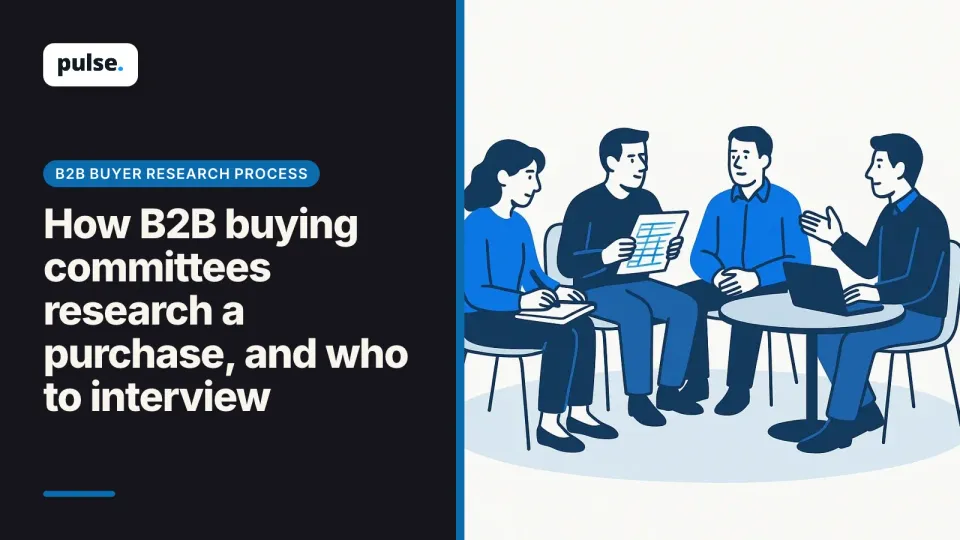
Map the B2B buyer research process by interviewing each buying committee role about the same purchase, then reconcile what each of them saw.
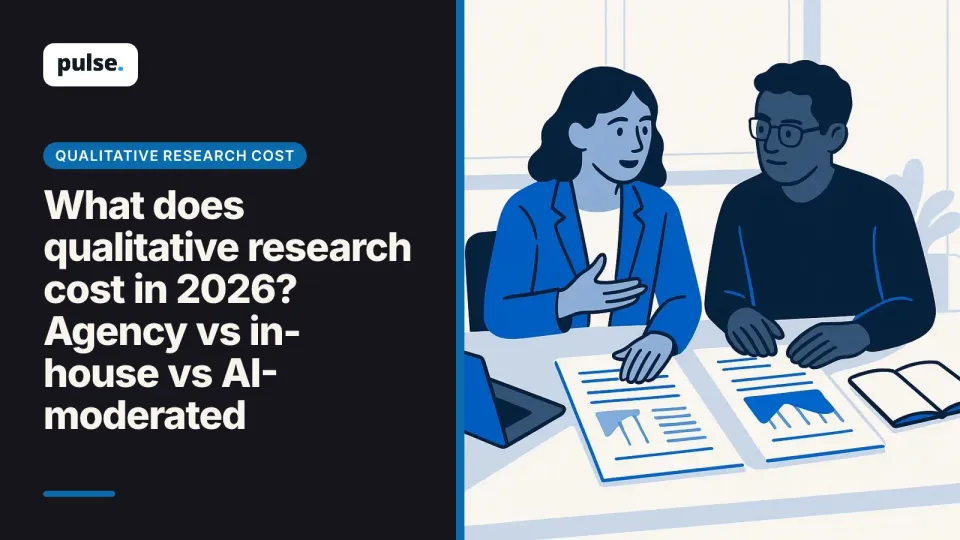
Qualitative research cost comes from seven lines. See how agency, in-house and AI-moderated studies move each one, and compare quotes line by line.
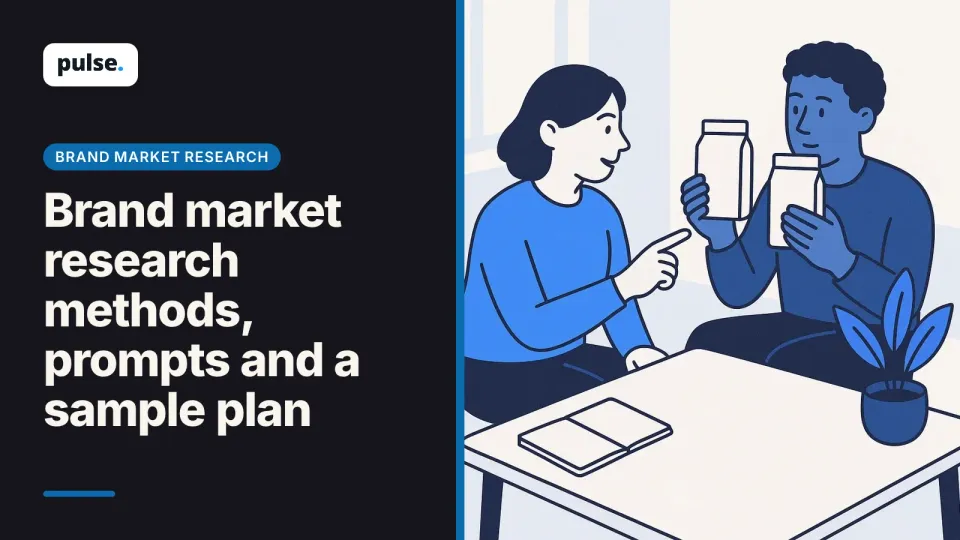
A practical guide to brand market research: which study answers which brand decision, interview prompts that work and a sample plan.
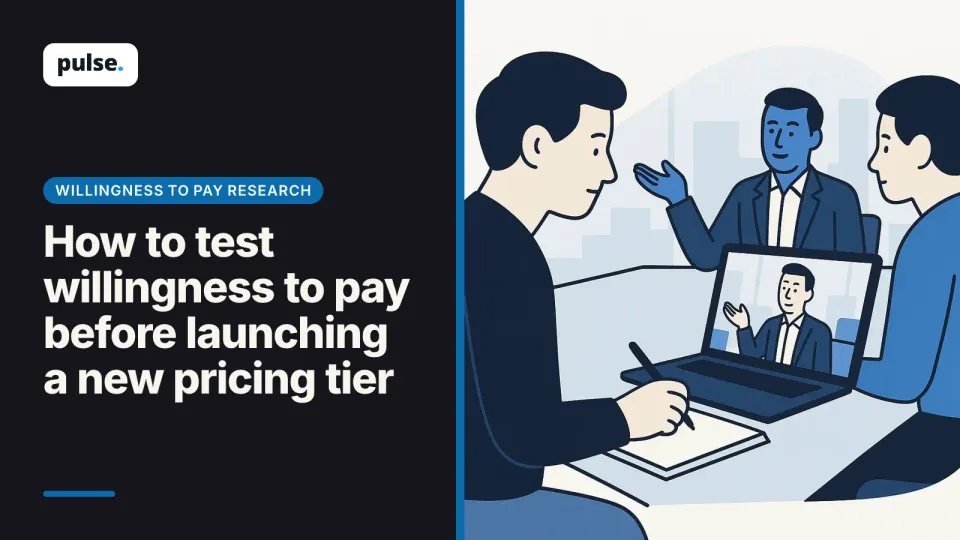
Willingness to pay research for a new tier: who to interview, what to show, which survey method fits, and how to check stated answers against behavior.
A voice of customer report gets acted on when it opens with the decision, shows the evidence behind each finding and names an owner.
Build a competitive landscape analysis from your buyers first. Learn which alternatives they weighed and why, then fill in the facts with desk research.
B2B customer research stalls when senior buyers ignore the ask. How to get the introduction, what to offer, how long to ask for and what to ask.
Customer satisfaction metrics help leadership only when each is tied to a decision. Match CSAT, NPS, CES and churn to what they trigger.
Questionnaire question types compared: closed, scaled, ranking and open, what each lets you analyze, and how to pick one per decision.
Types of bias in research, grouped by the stage where each enters a study, with how it shows up in a customer interview and how to check for it.
Voice of customer programs that stop at survey scores miss the why. Set the cadence, owners and interview waves that explain each score.
Research participant recruitment from your customer base: build a fair CRM list, settle consent and incentives, and rotate past the loud accounts.
Consumer product testing for brand teams: which test answers which launch question, how to recruit real users, and how interviews explain the ratings.
How in-house teams run market research in financial services: methods, consent and PII review, recruiting and sample questions.
New product development needs a different research question at each stage. The question, the method and the evidence each gate review needs.
Exploratory research turns a vague business problem into a precise question. Learn how to scope it, which methods fit and when to stop.
User personas earn trust when every attribute traces to interview evidence and a measured share of customers. Here is how to build them that way.
Transcription in qualitative research shapes what your analysis can prove. Pick a style, set a spec, check it against audio and keep quotes traceable.
A feedback loop with customers closes when a finding gets an owner, the change ships, the same customers confirm it worked, and they hear about it.
Choose a sampling method by the claim your customer study has to support, with a decision table for probability and non-probability sampling.