What a representative sample means for 20 interviews
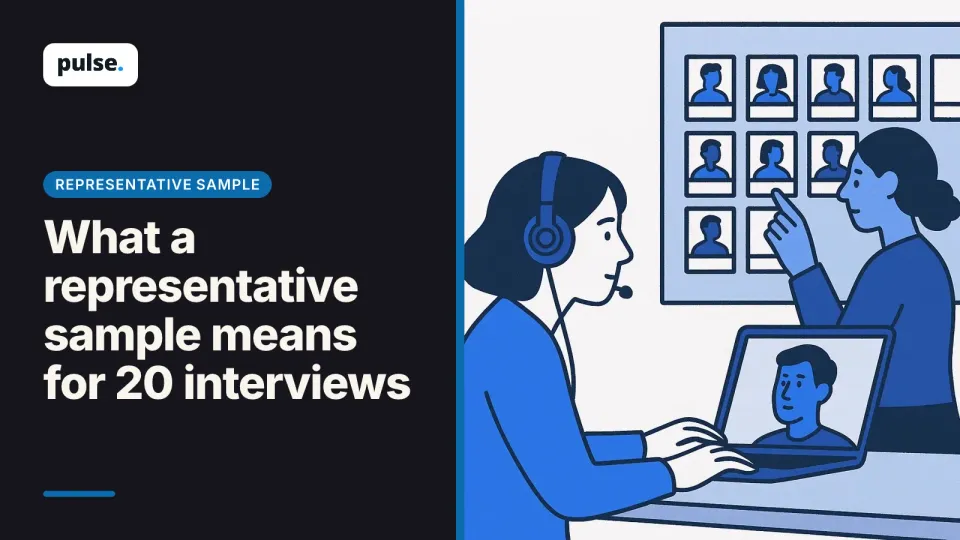
A representative sample of 20 interviews covers the segments a decision turns on. See what that lets you claim, and what only a survey can.
The Pulse blog covers customer interviews, survey design and qualitative analysis for product and research teams. Pulse runs AI-moderated customer interviews and returns a themed report with the real quotes behind every finding.
A representative sample of 20 interviews covers the segments a decision turns on. See what that lets you claim, and what only a survey can.
Design and run questionnaires that answer a real decision: set the objective, pick a mode, order and pilot questions, then analyze the results.
Market sizing rests on guesses about who buys, who pays and who would switch. Here is how to test those guesses with customer interviews and a survey.
Churn interview questions for fintech teams that find quiet switchers, screen for the moment money moved, and probe trust, fees and onboarding.
Qualitative market research explains why buyers choose, pay and switch. Match methods to pricing, positioning and market-entry decisions.
Brand lift shows a campaign moved recall or consideration among people who saw it. How to check the number, and the questions that explain why it moved.
Sampling bias enters an interview study at the recruit source, the screener, the incentive and the calendar. Here are the checks to run first.
Build an empathy map from interview transcripts so every note points to a real quote. What goes in each quadrant, and how to label your guesses.
Monadic pricing shows each respondent one price. See when that beats price laddering, what it costs in sample, and how interviews explain the result.
Purposive sampling picks B2B participants on purpose. Set criteria tied to the decision and explain the choice to stakeholders who expect random.
Thematic coding holds up when the codebook does. See what each entry needs, how to test it between coders and how to keep it stable across studies.
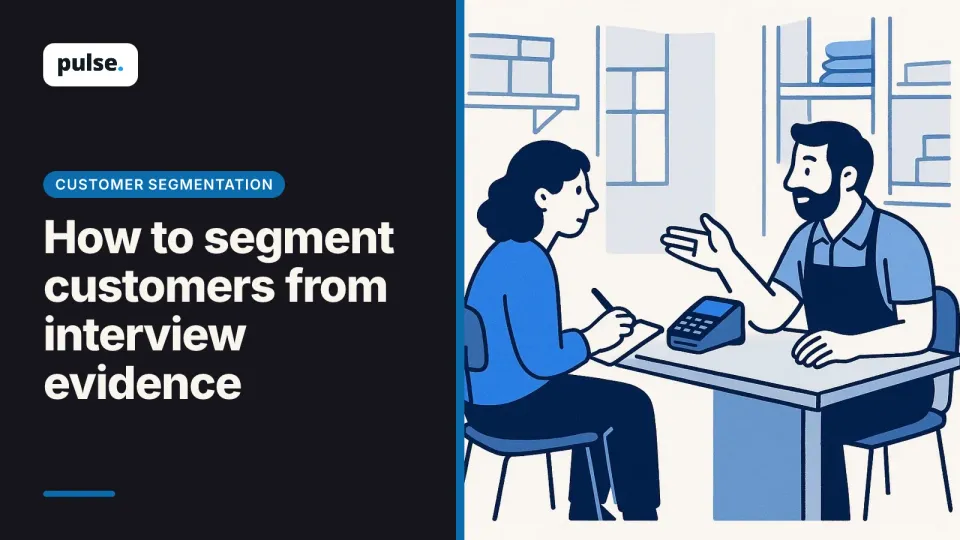
Customer segmentation from interviews groups customers by the needs and triggers they describe, then sizes each group with data you already hold.
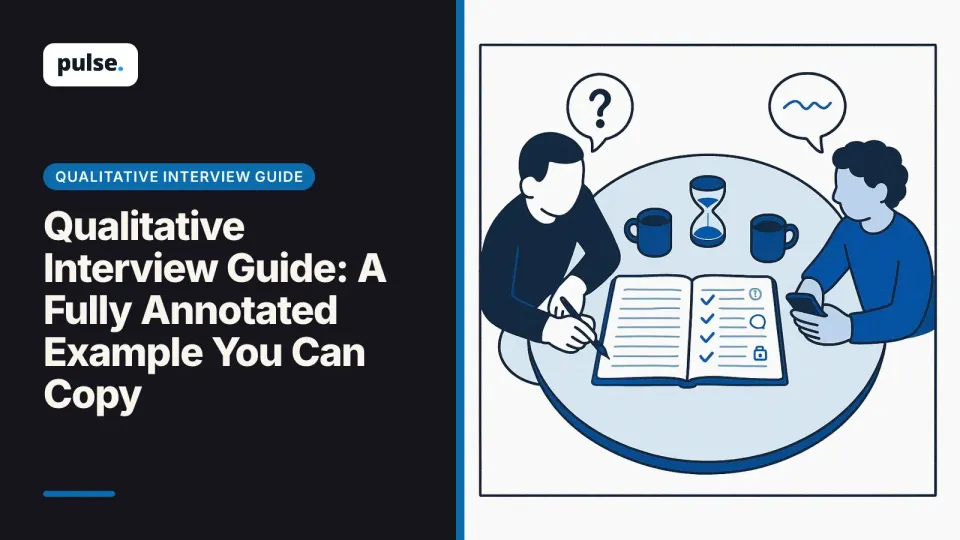
Build a qualitative interview guide that works: structure, probe examples, a full annotated template, and tips for AI-moderated interviews.
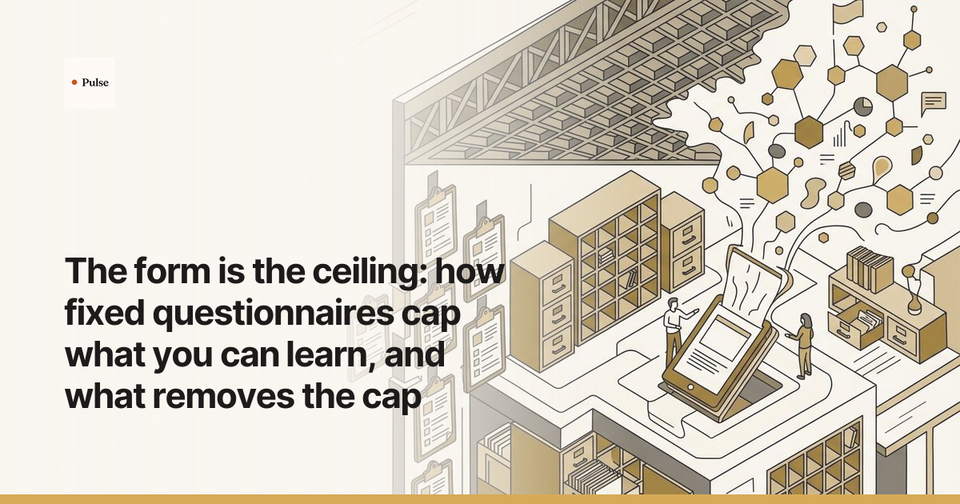
Fixed questionnaires trap research inside existing assumptions. Discover why static surveys miss critical customer realities and how dynamic voice probing fixes it.
survey methodology
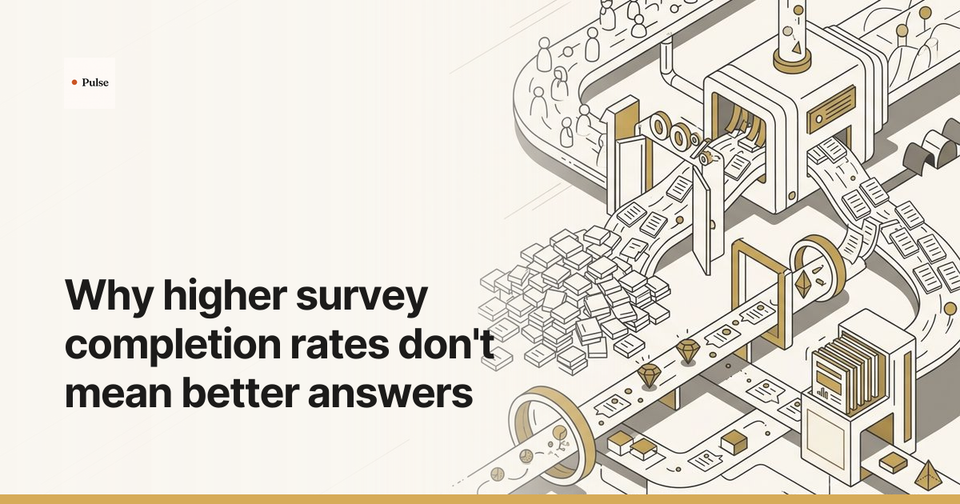
High survey completion rates measure friction reduction rather than response validity. Here is why optimizing for completion conceals satisficing and bad data.
survey methodology
Audit automated interview transcripts for leading questions and sycophantic drift using four structural tests to ensure reliable qualitative evidence.
ai moderation
Learn how to audit AI interview synthesis back to raw transcripts using a 4-step protocol covering quote provenance, context, and negative cases.
qualitative research
Complete 20 qualitative voice interviews in 48 hours. Learn how to calibrate screeners, automate voice moderation, and audit transcripts with rigor.
ai voice interviews
Spoken AI interviews capture unscripted episodic recall and root causes that typed survey fields sanitize through post-rationalisation and visual editing.
user interviews
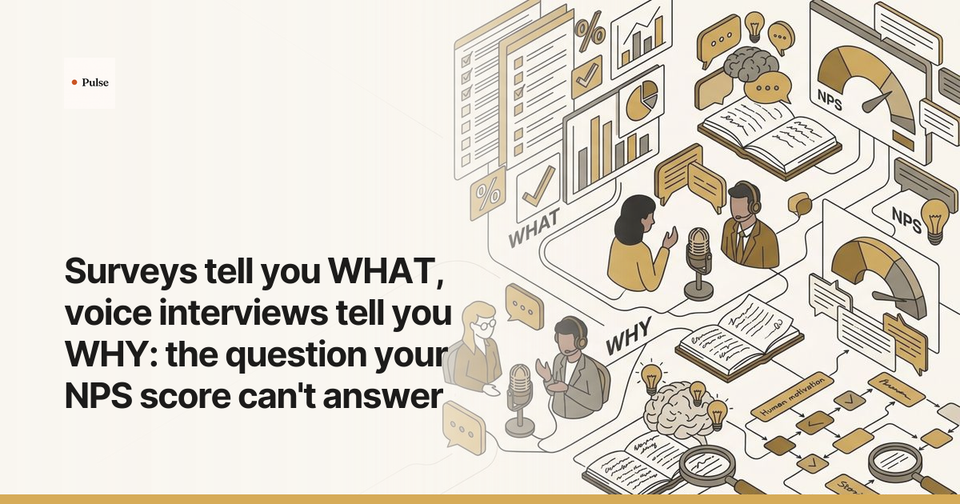
NPS scores show sentiment shifts but hide operational causes. Learn how conversational voice interviews diagnose the friction behind your survey ratings.
nps survey
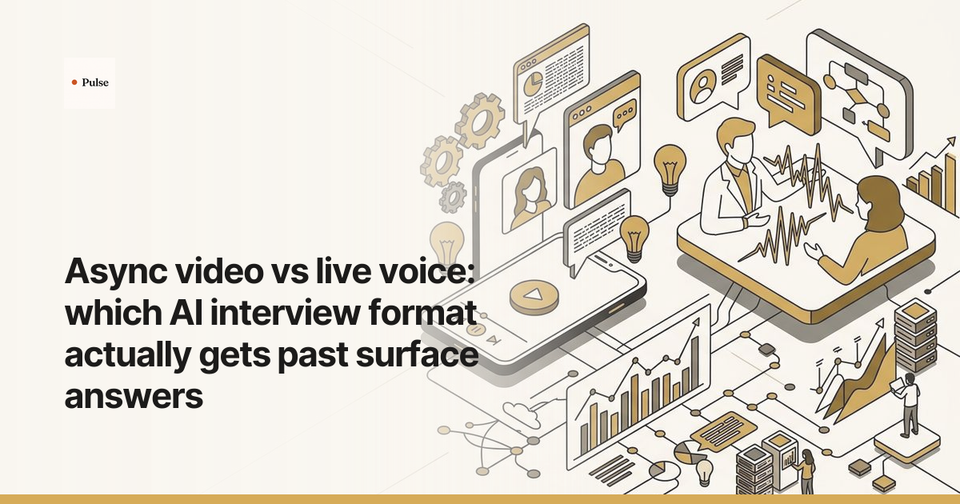
Async video offers convenience, but live voice interviews provide deeper insights. This guide compares both AI interview formats to help you choose the right one.
ai interviews
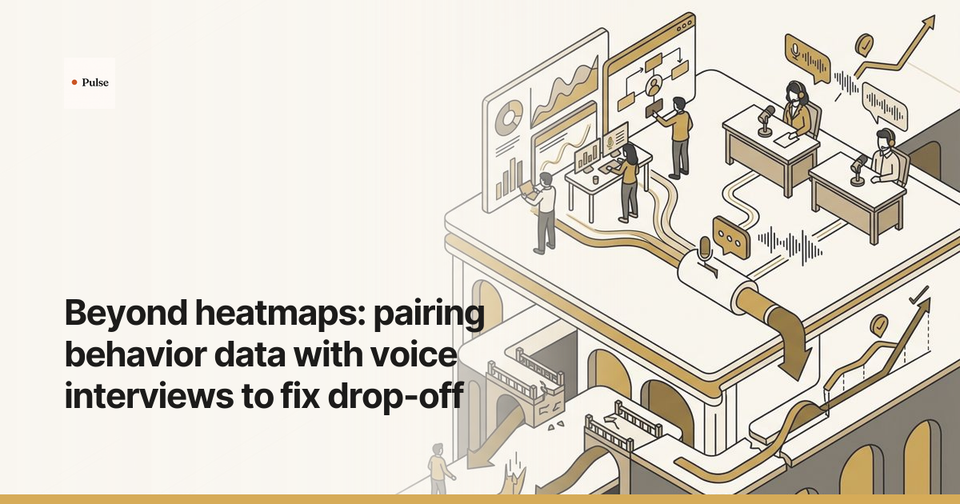
Your analytics show what is happening, but not why. To fix user drop-off, you need to pair quantitative behavioral data with qualitative voice interviews.
user research
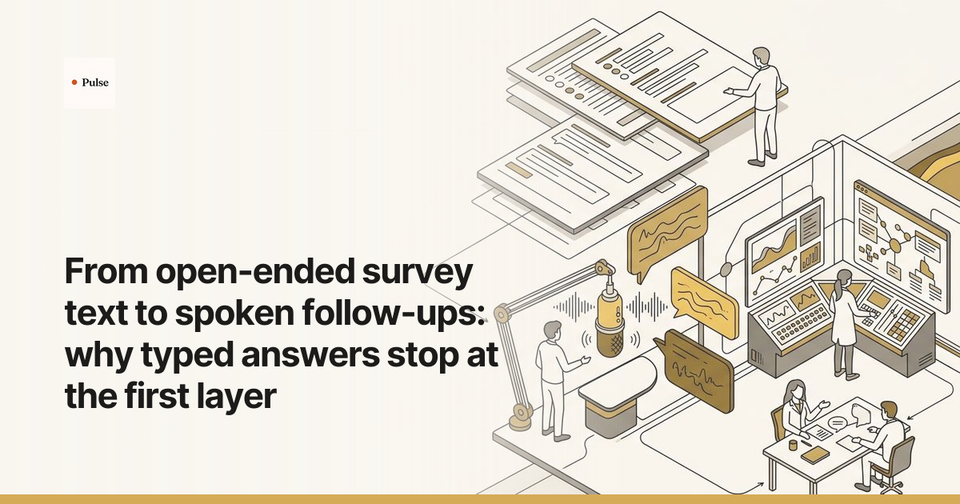
Typed answers to open-ended survey questions offer only surface-level feedback. Learn why this data is risky and how to use it to start deeper, spoken follow-ups.
surveys
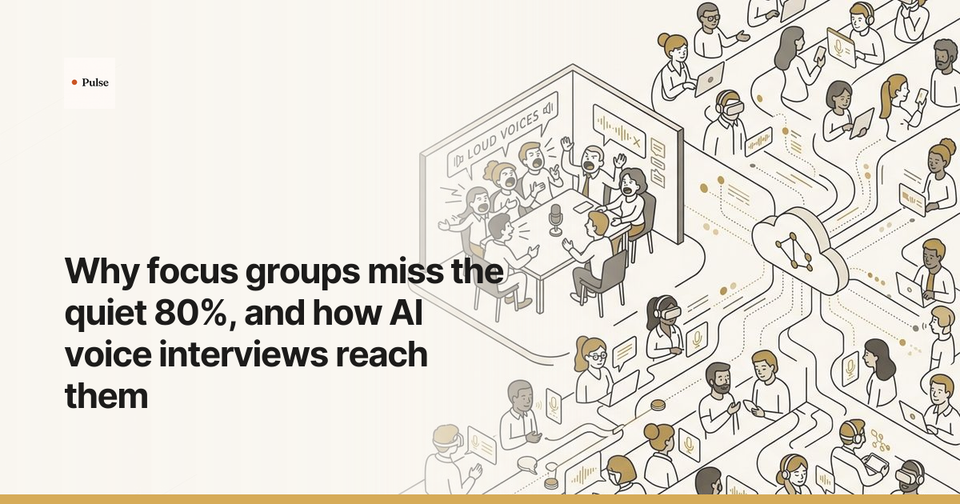
A single outspoken person can derail a focus group, skewing your research. AI-moderated, one-on-one interviews remove group dynamics to capture honest feedback.
focus groups
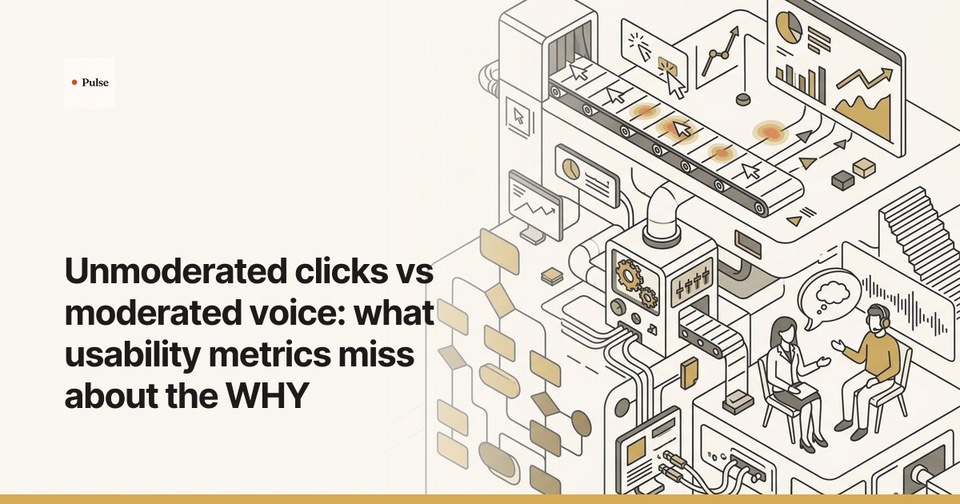
Unmoderated click testing provides quantitative 'what' data, but moderated voice interviews reveal the qualitative 'why' behind user actions. Learn when to use each.
usability testing
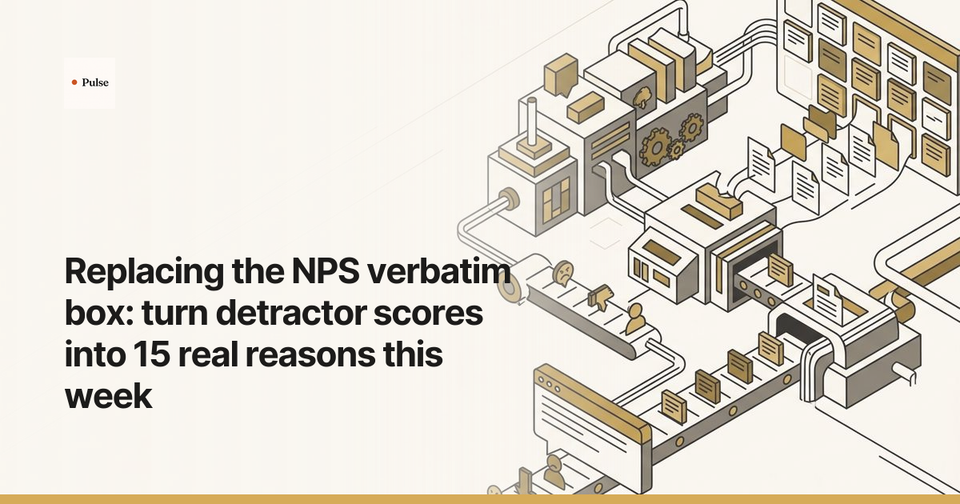
The NPS verbatim box delivers vague, unusable feedback. Learn how to replace it with focused follow-up interviews to uncover the real 'why' behind detractor scores.
nps
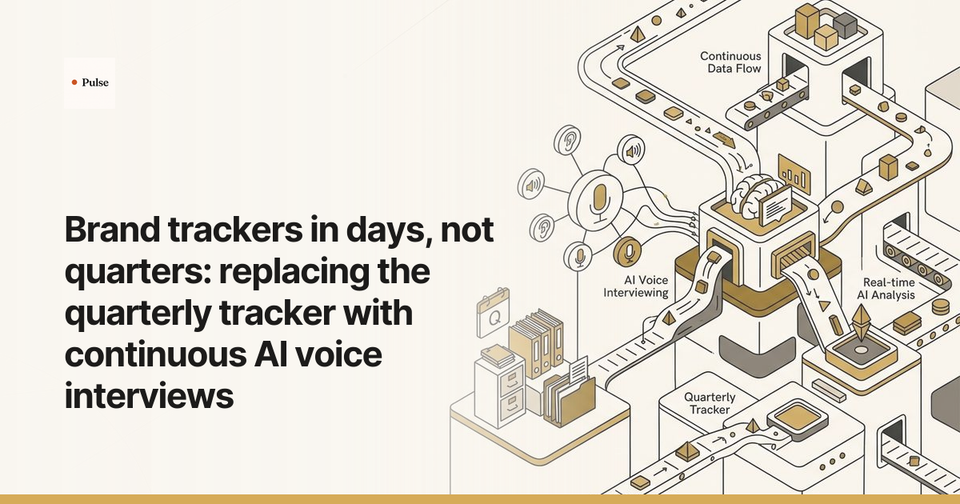
Traditional brand trackers are too slow. Learn how continuous brand tracking with AI-moderated voice interviews provides a faster, more diagnostic alternative.
brand tracking
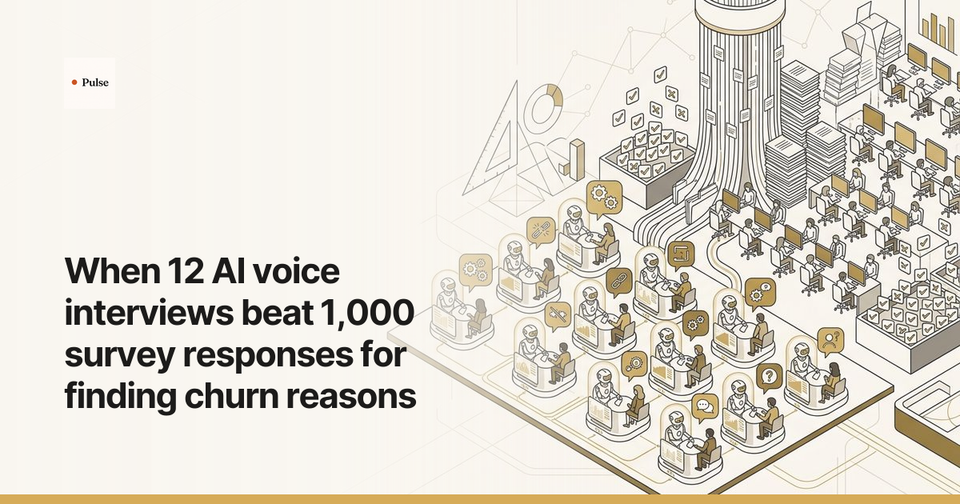
Why are customers churning? Learn why 12 in-depth AI voice interviews can reveal more actionable insights than 1,000 survey responses could.
customer churn
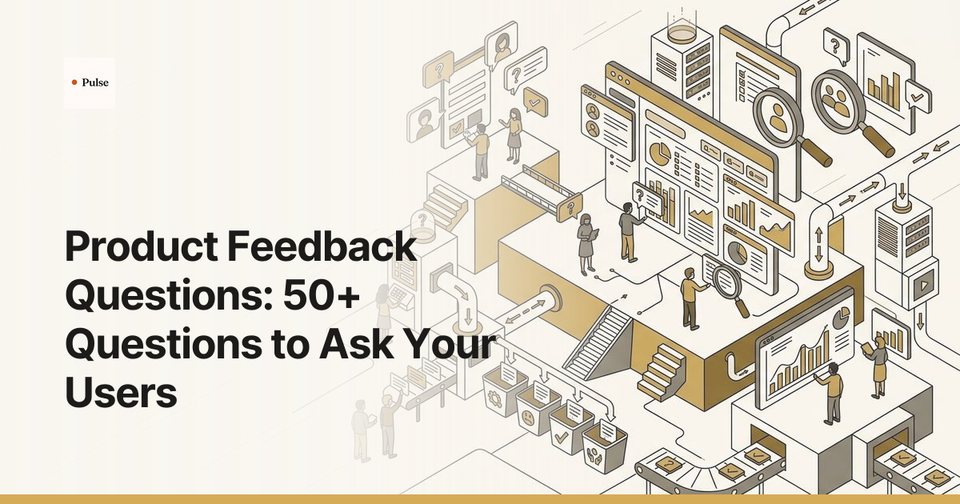
Get over 50 product feedback questions to move beyond generic opinions and uncover actionable insights about user behavior, unmet needs, and friction.
product feedback