When a concept test says yes and the launch still fails
Concept test results overstate demand when a yes costs the respondent nothing. How to read them, what to check before launch, and what to ask after.
B2B concept testing research has to reach every role that signs off. Who to recruit, what to ask each role and how to read a split verdict.
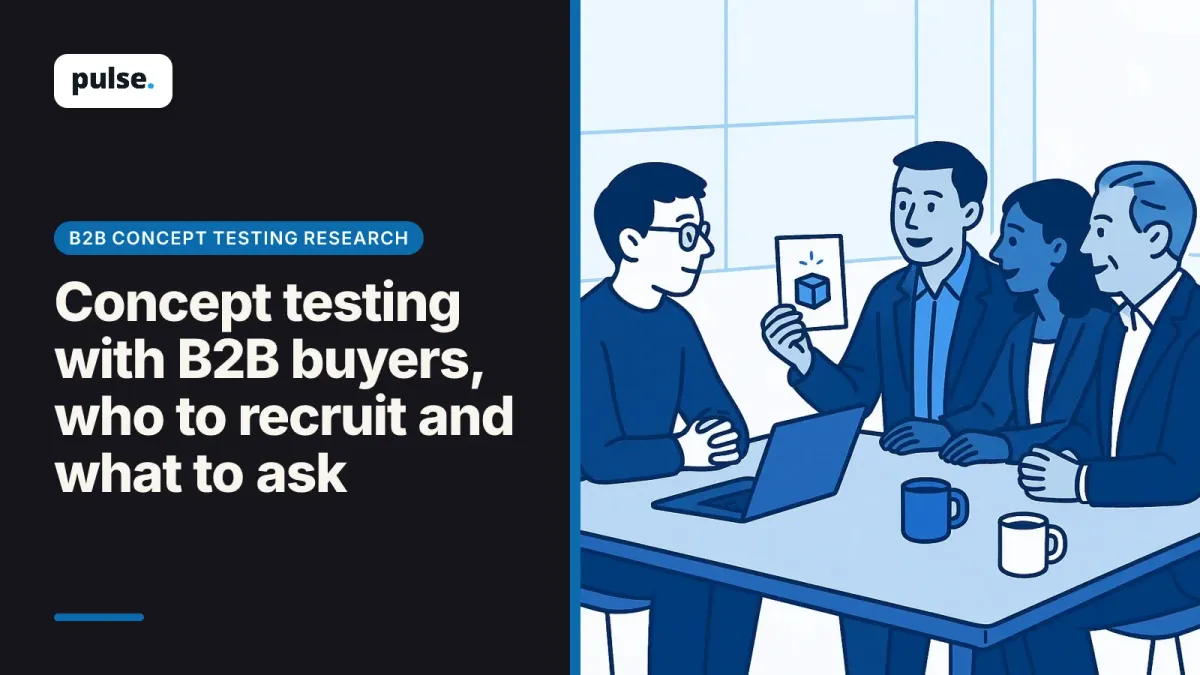
A product team shows a new idea to the people who would use it, hears a yes, then watches the deal stall when IT or finance says no. B2B concept testing research avoids that. It recruits every role that signs off on the purchase, asks each one what only they can judge, and reads the results role by role.
In a B2B sale, a group decides together. If only users have seen the idea, every other approval is a guess, and you find out after the launch budget is spent.
The steps below tell you who to put in the study, what to ask each person, and whether the idea is ready for build budget.
A B2B purchase is a group decision, and each role judges a different part of it. The user judges fit with their week. The budget owner judges value. IT judges the rollout, procurement judges the terms and the sponsor judges priority. So recruit a group for each role, because one kind of person can only test one part.
| Role | What they judge | Screen for | What a no from them means |
|---|---|---|---|
| Day-to-day user | Fit with how they work | Uses a tool like this weekly and helped choose it | Bought, then not used |
| Budget owner | Value against what it replaces | Held or asked for the budget last time | No business case yet |
| IT evaluator | Setup, security review, rollout effort | Checked the technical fit last time | Rollout blocked, whatever users think |
| Procurement or finance | Terms, risk, other options | Ran or signed off the commercial review | The deal stalls at contract stage |
| Executive sponsor | Priority against other projects | Approved the last purchase or set its priority | The idea waits for a later year |
Ask the people who will act on the result which decision the test feeds: build, change or stop. Without it, a split result turns into an argument about what the study was for.
Ask what each person did the last time their company bought a tool like this: evaluate, recommend, approve or block? Job titles mean different things in different companies, so a title alone can fill the IT slot with someone who has never approved a tool.
Use current customers, companies that looked at your product and chose something else, and buyers who solved the problem another way, such as a spreadsheet. Lost deals in your CRM name the budget owners and IT evaluators who took part in a real decision.
With one overall target, the easiest role to reach can fill most of the study, leaving too few approvers to read. Set a minimum for each role, and keep recruiting until each one is met.
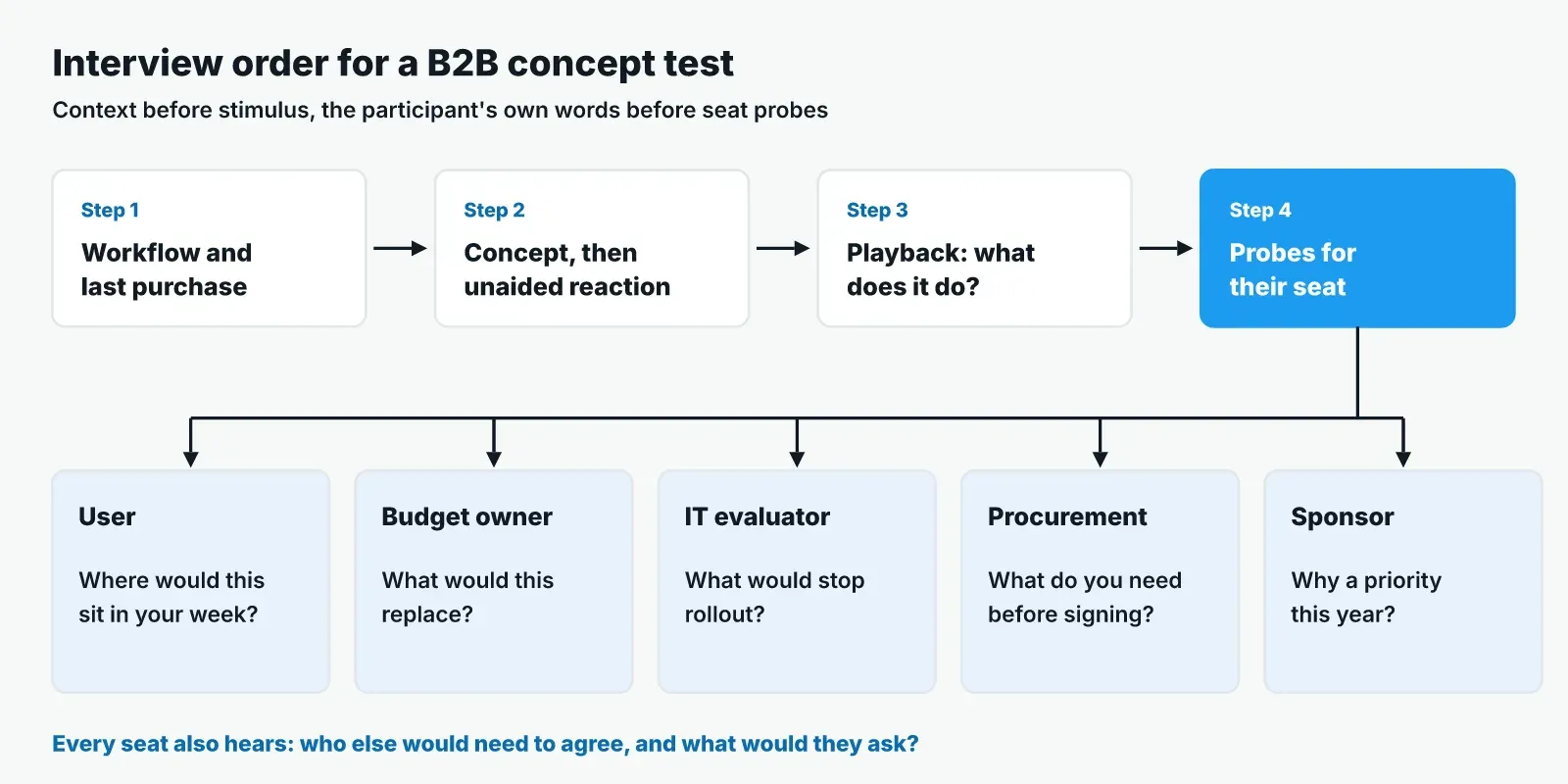
Ask how the person works today and how they last bought before you show anything. Then show the idea, hear their first reaction, and ask them to explain it back. Only then ask the questions for their role. This order stops your idea from coloring how people describe their own work.
Ask what they do today and who was involved last time they bought. These answers are your baseline, heard before your idea is in the room.
Describe the idea in the buyer's own words, with one plain line on what it replaces, and ask what they think before you prompt. The guide to concept testing methods and examples covers ways to present it.
Ask: "In your own words, what does this do?" If they get it wrong, every later answer is about an idea they did not see. Note it, and fix the description before the next round.
Ask a few questions only that role can answer:
Swap "Would you buy this?" for "Who else would need to agree, and what would they ask?" The answer shows you the whole buying group, including roles you did not recruit.
| Weak question | Stronger question | What you learn |
|---|---|---|
| Would you buy this? | Who else would need to agree to this, and what would they ask? | Who decides, and what they will object to |
| How much do you like this idea? | What would this replace in how you work today? | Whether they would switch, and from what |
| Would this work with your systems? | Walk me through what your team checks before a new tool goes live. | The real review steps, in order |
For more on question writing, see writing interview questions that do not lead.
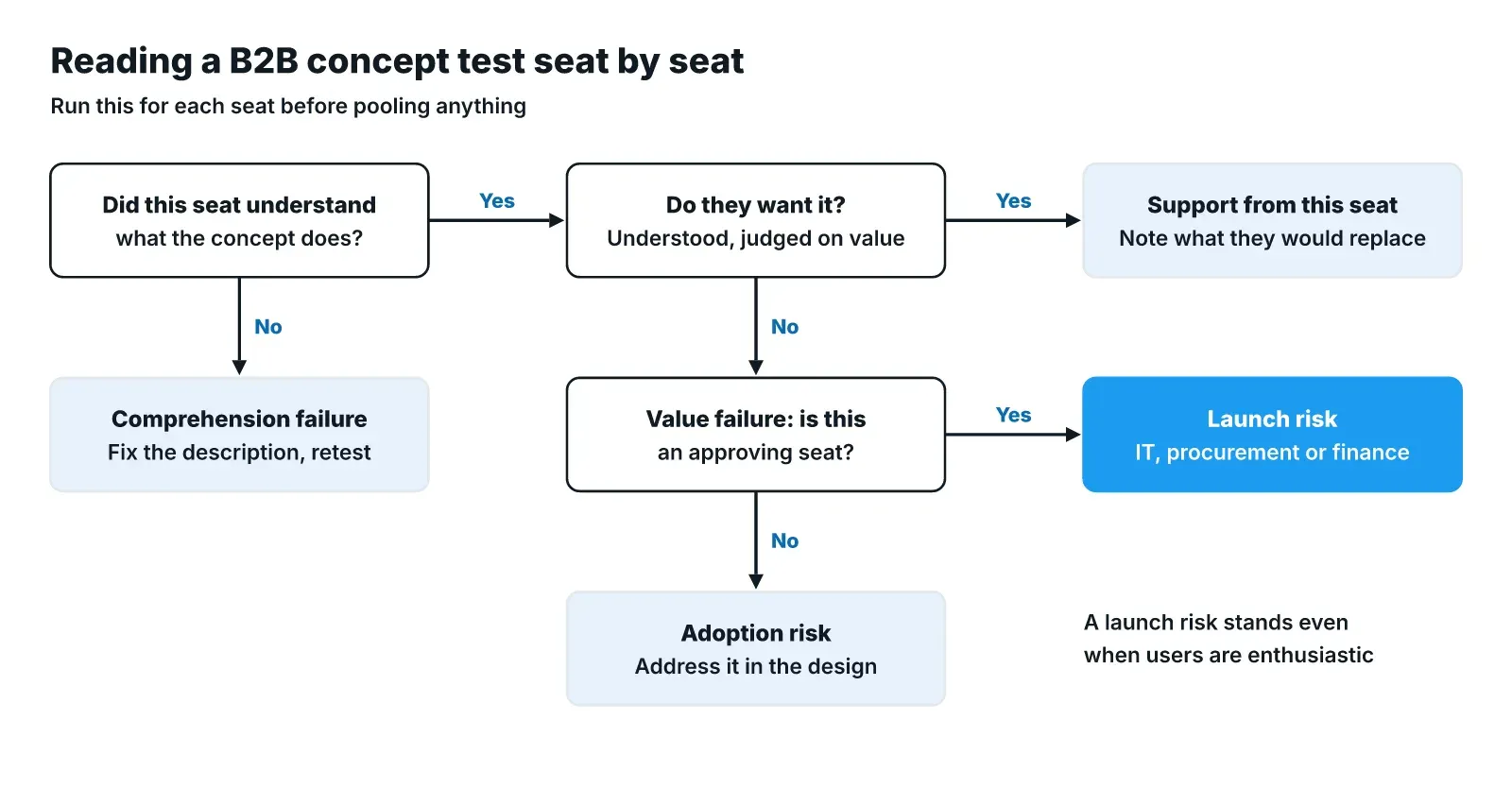
Report each role on its own first, then compare them, because an average hides the split a B2B concept test is there to find. Next, sort every no into two kinds. Either the person misunderstood the idea, or they understood it and do not want it. Fix the first kind and retest before you judge the second.
A misunderstanding is about your description. For illustration, an IT lead who thinks the product needs a new data connection, when it uses an existing one, is saying no to the description, and you can fix that.
A real objection is about the idea, and its weight depends on the role. When IT, procurement or finance raise the same objection again and again, treat it as a launch risk, even if users are keen. When users object, the risk is a product that gets bought and then sits unused.
Illustrative example: an insights team at a large payments company wants to know if merchants would buy a tool that matches card payouts to orders. Three roles sign off on that purchase: operations staff, finance controllers and IT leads. The team recruits all three, asks each its own questions, and reads the split before anyone commits build budget.
| Option | What it can tell you | What it cannot tell you |
|---|---|---|
| Survey of operations staff | How many users like the idea | Why, or whether IT and finance would approve |
| Interviews with users only | Why users want it and where it fits their week | Whether the purchase gets past IT and finance |
| Interviews with all three roles | Each role's reasons and objections, and where they clash | How many merchants share them, which a later survey can count |
Only interviews with all three roles answer the question, so the team picks them. It recruits controllers and IT leads from its own merchant list, where account managers know who approved what.
In this illustration, the roles split. Operations staff want it. IT leads object that another connection to the accounting system means a review they would rather not start. Controllers ask which tool it replaces, and the description does not say. So the team rewrites how the product connects, adds a line on what it replaces, and retests with IT leads and controllers before it asks for build budget.
This rule holds for any B2B sale. When a role that approves the purchase raises the same objection across interviews, fix it and retest that role before anything else.
A B2B concept test needs time from senior people with full calendars, and Pulse is built for that. It recruits people to the profile your screener describes, with fraud checks on every one, or invites your own customers from a list. Each person takes the interview by link, with no call to schedule.
The AI moderator asks every person the same clear questions and asks a follow-up when an answer is vague. Answers are grouped into themes, each quote linked to its interview, so you can report role by role and the head of IT can read what IT evaluators said. Your team's time goes to the call on a split result.
Before your next concept test, list the roles that sign off on the purchase and set a minimum for each. To see how a study like this would run, book a demo.
Run one before you commit build or launch budget to an idea that a group of people will buy. Look at your past deals in the category. If they needed sign-off from IT, finance or procurement, a test that hears only users leaves those approvals as guesses.
No single number fits every study. Set a minimum for each role, then keep interviewing a role while new objections still come up. The number depends on how varied each role is across your market, how complex the idea is and how many segments you compare.
The guide to how many user interviews you need explains what moves the number.
A concept test asks whether buyers want the offer: do they understand it, believe it and want to switch to it? A message test asks whether the words describing an offer land with readers. Run the concept test first, then test the message for the idea that survives.
Concept test results overstate demand when a yes costs the respondent nothing. How to read them, what to check before launch, and what to ask after.
How do AI interviews work in customer research? Follow one session from screener to follow-up question to a theme traced to its transcript.
Jobs to be done research gets harder when one account has many roles and business units. How to recruit, interview and merge jobs across them.