Replacing the NPS verbatim box: turn detractor scores into 15 real reasons this week
The NPS verbatim box delivers vague, unusable feedback. Learn how to replace it with focused follow-up interviews to uncover the real 'why' behind detractor scores.
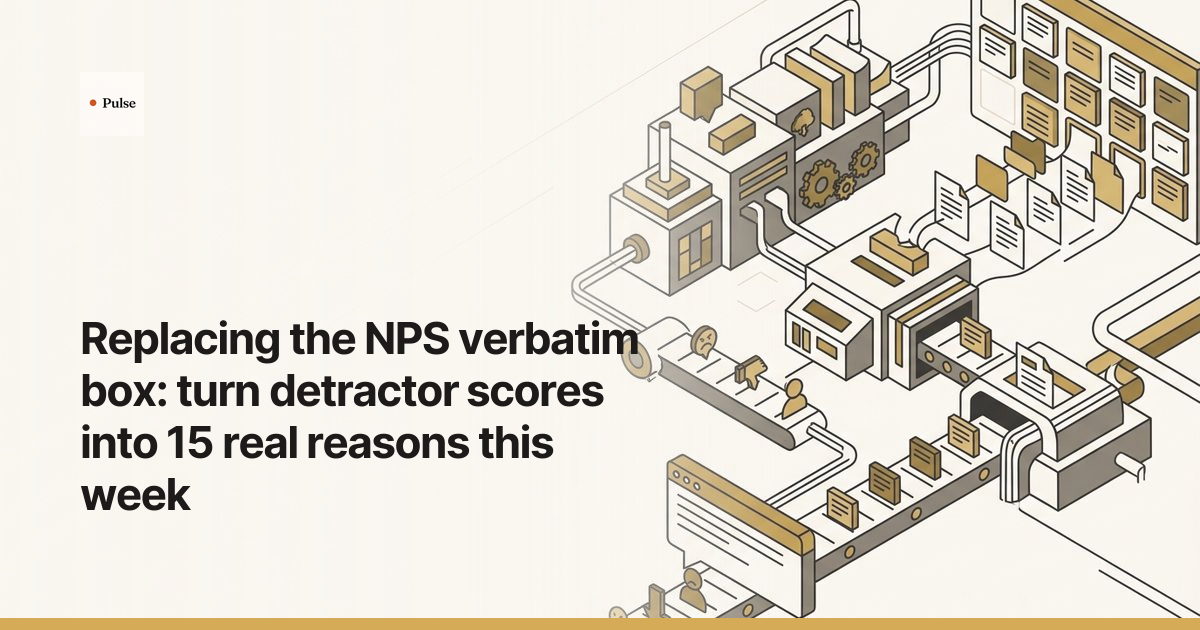
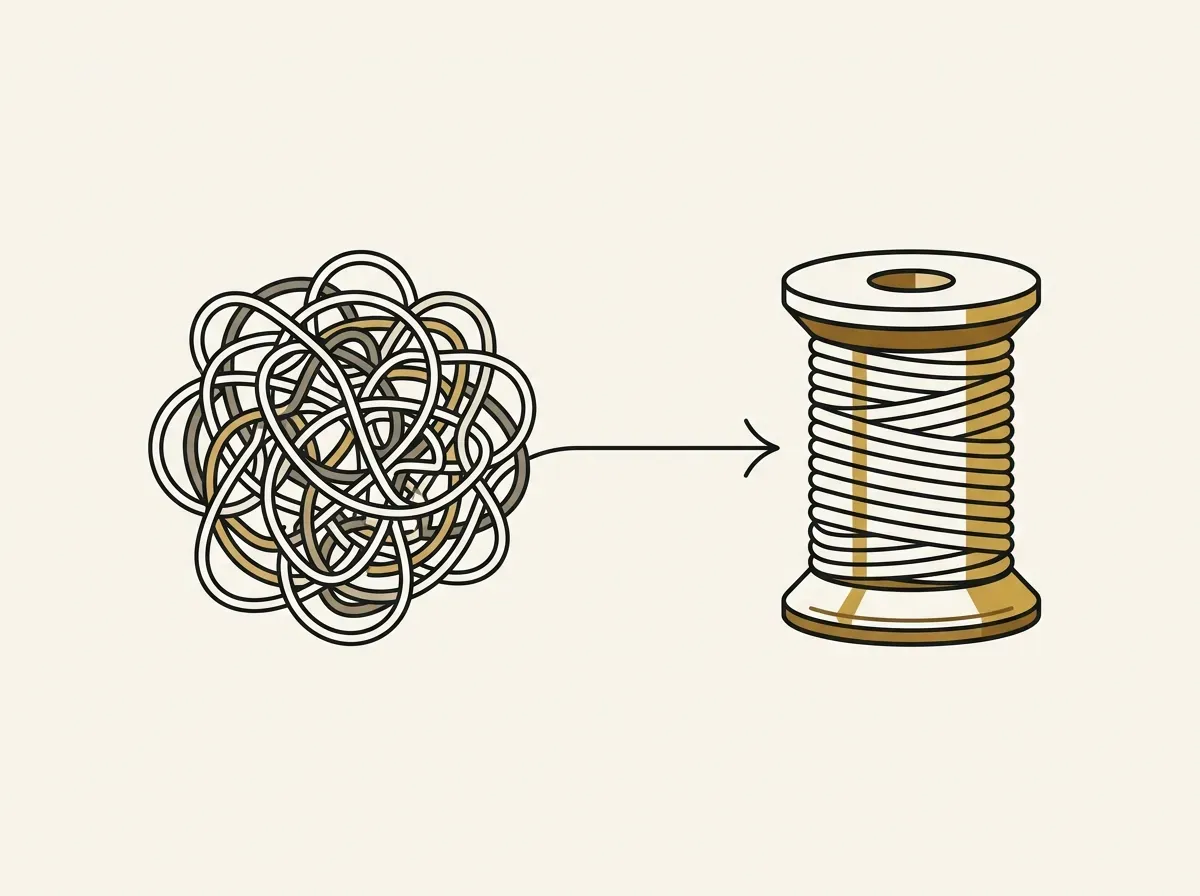
The free-text box in your Net Promoter Score survey is where insight goes to die. It promises to deliver the "why" behind a detractor's score but instead provides a stream of brief, context-free, and often emotional feedback that is impossible to act on. The solution is not to analyze this shallow data more intensely, but to replace it with a process that generates real evidence: short, focused, follow-up interviews with the detractors themselves.
The Problem: Your NPS Verbatim Box Is a Dead End
The open-ended verbatim box on an NPS survey rarely explains why a customer is unhappy in a way a business can use. It collects shallow complaints like "too expensive," "buggy," or "bad support" that lack the specific context needed to inform a product roadmap, change a pricing strategy, or fix a service design flaw. It gives you a score you cannot explain and a list of symptoms you cannot act on.
This is not just an impression. A significant portion of respondents who give a score skip the text box entirely. A 2021 study by the Pew Research Center found that while closed-ended questions see nonresponse rates of 1-2%, open-ended questions have an average nonresponse rate of around 18%. For those who do answer, the feedback is often too vague to be useful. Teams are left with a number they can't defend and a list of complaints they can't prioritize, leading to analysis paralysis and inaction.

Why It Happens: The Limits of a Single Text Box
A static text box fails because it is a passive collection method in a situation that demands an interactive conversation. It cannot probe for more detail, ask for a specific example, or clarify an ambiguous statement. It captures an initial reaction from a respondent whose goal is to finish the survey, not to provide a thoughtful, detailed account of their experience.
The format is a symptom of a larger methodological issue. Academic critiques have long argued that NPS oversimplifies the complex nature of customer loyalty. Studies have found no strong evidence that NPS is a superior predictor of business growth compared to other satisfaction metrics. The verbatim box is an attempt to add depth, but it is the wrong tool for the job. It cannot ask "What were you trying to accomplish when the bug occurred?" or "Compared to whom do you find us expensive?" A real conversation can.
What Doesn't Fix It: More Survey Questions
Trying to solve the problem by adding more conditional open-ended questions to the survey only makes it worse. This approach increases survey length, which harms completion rates and still yields similarly shallow answers. Building complex logic trees in survey tools creates a frustrating experience for the respondent and relies on the researcher guessing all the right follow-up questions in advance.
This method completely fails to uncover the "unknown unknowns"—the surprising, critical issues that only emerge from genuine, open-ended conversation. You can build a survey branch for "buggy," but you will never guess your way to the discovery that a specific bug only affects users on a certain browser version when they try to generate a quarterly report for their board.
How to Fix It: A 3-Day Detractor Interview Sprint
The solution is to treat a detractor score as a signal to start a conversation. A rapid, focused interview sprint can get to the root causes of dissatisfaction within a single week.
- Identify and Segment. On day one, pull a list of customers who gave a detractor score (0-6) in the last 30 days. Prioritize based on account value, recent activity, or other business-critical factors. Your goal is to find 5-7 people to speak with.
- Recruit with a Personal Ask. Send a simple, direct email asking for a 15-minute conversation to understand their experience. Be transparent and empathetic. Acknowledge their feedback and explain that you want to learn from it. Offer a fair incentive for their time; for a 30-minute B2B interview, incentives typically range from $85 to $150, depending on the professional's seniority.
- Conduct the Interviews. Over the next two days, hold the conversations. The goal is not to defend the product or solve a support ticket. It is to listen. Use a semi-structured guide focused on their experience, the job they were trying to do, and the impact of the issues they faced.
- Synthesize and Share. On the final day, synthesize the findings. Group the recurring themes and specific examples into a concise report. Focus on the 10-15 concrete reasons for dissatisfaction you uncovered.
For teams that need to do this at scale, this manual sprint can become a continuous insights program. AI-moderated interviews from Pulse can run these conversations consistently and in parallel, turning hundreds of detractor scores into structured, research-grade findings every week. However, simply applying AI is not a silver bullet. In a Q3 2026 analysis of customer feedback platforms, Forrester warned that while many companies are using LLMs to analyze feedback, the results are "not always reliable." The most effective approach combines AI's speed with human oversight to ensure findings are trustworthy.

What Good Looks Like: From Vague Complaint to Actionable Insight
A successful detractor sprint transforms generic feedback into specific, evidence-backed reasons for dissatisfaction that product and leadership teams can act on. It provides the "why" with enough detail to be useful.
- Before: A verbatim comment says, "The reporting is confusing."
- After: An interview insight details how three finance users at separate companies could not complete their quarterly board reports. The "date range" filter in the reporting UI does not support custom fiscal quarters, forcing them to export three separate monthly CSV files and merge them manually in a spreadsheet, a process that takes two hours and is prone to error.
The goal is not just a list of complaints, but a structured set of findings, each with context, user impact, and direct evidence from the conversations. This is the kind of insight that justifies a feature change. It is why the German career platform PowerUs makes it a practice to interview users who give a detractor score. They know that survey scores do not build better products, but understanding customer struggles does. And as Forrester has noted, journey-based NPS surveys can overstate actual customer loyalty, making direct conversation even more critical for grounding decisions in reality.
Stop chasing the "why" in a text box that was never designed to provide it. Start a conversation with your detractors this week, and you will have more actionable insight by Friday than your last six months of NPS verbatims combined. To see how you can run dozens of these interviews automatically, get started with Pulse.
Frequently Asked Questions
How many detractors do I need to interview to get meaningful insights? Start with 5-7 interviews. In qualitative research, you are seeking explanatory depth and recurring patterns, not statistical significance. You will often find that the core themes begin to repeat after just a handful of conversations.
What if customers don't agree to be interviewed? If your initial response rate is low, refine your recruitment email and incentive. A personal, empathetic request from a researcher or product manager often works better than a generic marketing email. Frame the conversation as a chance for them to provide expert feedback that will shape the product's future.
Can't sentiment analysis on the verbatim text solve this? Sentiment analysis confirms what the score already told you: the feedback is negative. It can categorize comments as "angry" or "frustrated," but it cannot explain the specific product flaw or service failure that caused that sentiment. To understand the "why" behind the score, you need more context than a text box can provide.