Async video vs live voice: which AI interview format actually gets past surface answers
Async video offers convenience, but live voice interviews provide deeper insights. This guide compares both AI interview formats to help you choose the right one.
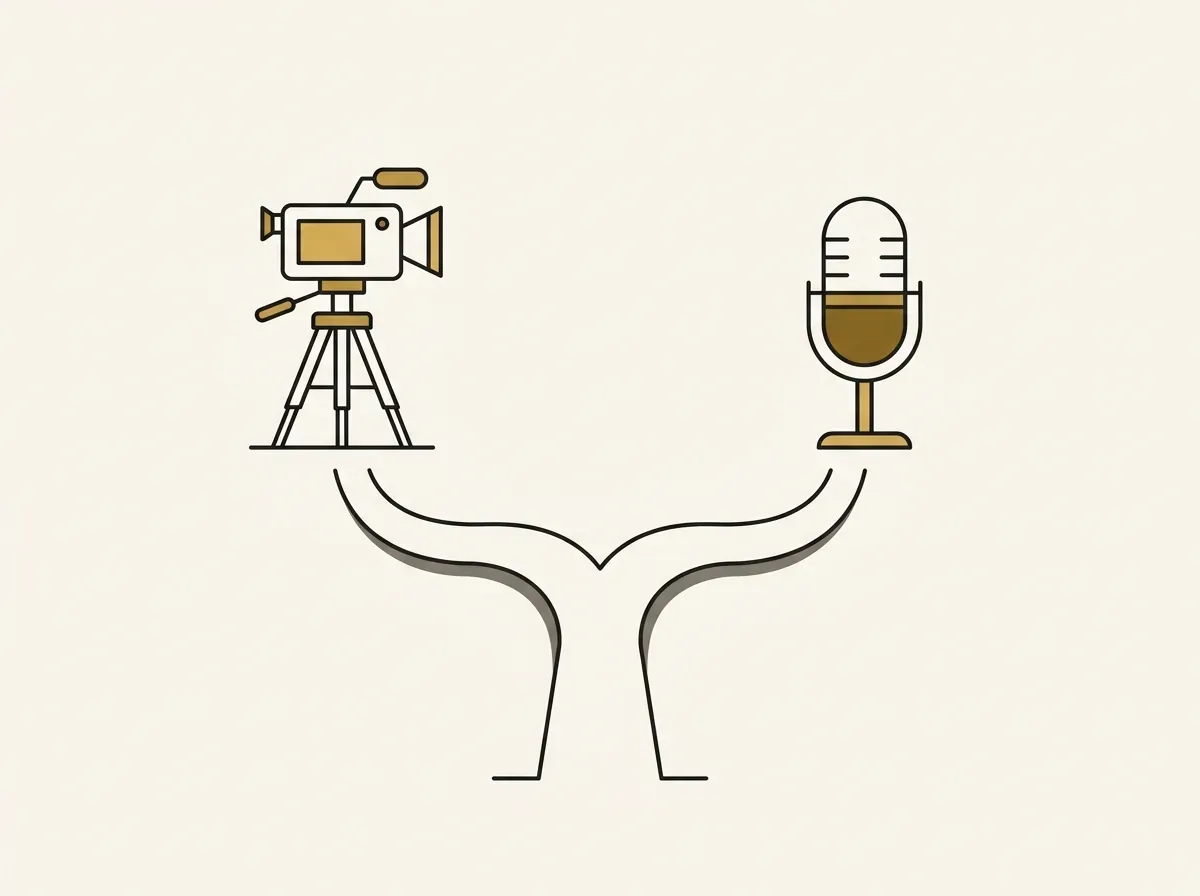
The choice between asynchronous video and live voice interviews is a direct trade-off between participant convenience and conversational depth. Choose AI-moderated live voice interviews when your goal is to explore complex topics, uncover unexpected insights, and get past rehearsed answers. Choose asynchronous video when your priority is collecting reactions to simple stimuli at scale, especially with a geographically dispersed audience that is difficult to schedule.
How Asynchronous Video Interviews Work
Asynchronous video interviews prioritize participant flexibility over live interaction. In this format, a researcher sends participants a link to a platform where they read or watch a set of pre-recorded questions. On their own time, participants record and submit their video responses to each question one by one.
There is no live moderator, human or AI. The questions are static, meaning there is no opportunity for real-time clarification or for a moderator to probe deeper based on a participant's answer. If a response is vague or hints at a more interesting story, the interview cannot adapt. The output is a collection of separate video clips, which the research team must then watch, transcribe, and synthesize to find patterns, often including non-verbal cue analysis.

How Live Voice AI-Moderated Interviews Work
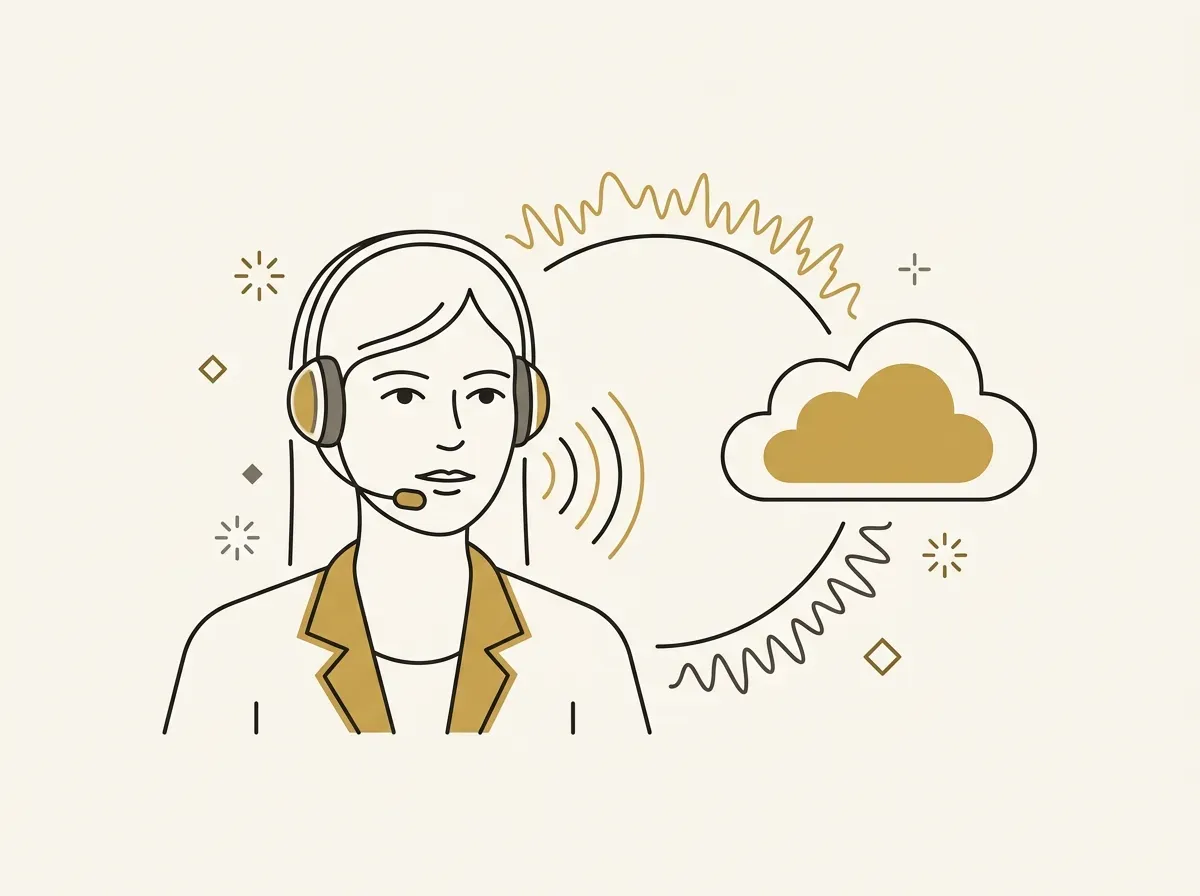
Live voice interviews use AI to replicate the dynamic nature of a conversation. Participants join a scheduled call, a common method for conducting qualitative research remotely. An AI moderator guides the conversation in real time, asking questions from a discussion guide and listening to the participant's responses.
The crucial difference is the AI's ability to analyze responses and ask relevant, pre-defined follow-up questions. If a participant gives a surface-level answer, the AI can probe for more detail. If they mention an interesting but unexpected topic, the AI can explore that tangent before returning to the guide. This dynamic probing is what uncovers the "why" behind an answer. Platforms like Pulse deliver a full audio recording and an instant, structured transcript, turning unstructured conversation into research-ready data.
Where Each Format Wins: A Head-to-Head Comparison
The best format depends entirely on the research goal. One prioritizes depth and discovery, while the other prioritizes scale and convenience. The right choice requires understanding the specific strengths and weaknesses of each approach.
| Criterion | AI-Moderated Live Voice | Asynchronous Video |
|---|---|---|
| Depth of Insight | Wins. The ability to ask real-time, adaptive follow-up questions allows the interview to go beyond initial responses and explore nuance. | Loses. Static questions cannot probe deeper, often resulting in surface-level answers. |
| Uncovering 'Unknowns' | Wins. Conversational format allows for exploring unexpected topics that arise naturally, which is critical for exploratory research. | Loses. The format can only collect answers to questions you already know to ask. |
| Participant Candor | Mixed. Some participants feel more comfortable in a guided conversation. The AI moderator can reduce social desirability bias compared to a human. | Mixed. The absence of a live moderator can encourage honesty, though some participants report discomfort with non-verbal tracking technologies. |
| Speed and Scalability | Loses. Requires scheduling, which limits the number of interviews that can be run simultaneously. | Wins. Can be sent to thousands of participants at once, collecting responses across time zones without coordination. |
| Participant Scheduling Burden | Higher. Participants must commit to a specific time slot, which can be a barrier for busy professionals. | Lower. Participants can respond whenever is convenient, significantly reducing friction. |
| Data Analysis Effort | Lower. Provides a single, coherent transcript that is often auto-structured, making synthesis faster. | Higher. Generates a collection of separate video clips per participant that must be individually reviewed and organized. |
How to Choose the Right Format for Your Study
Making the right choice starts with clarifying your research objective. Are you validating a known quantity or exploring an unknown territory? The answer determines which trade-offs are acceptable.
Use asynchronous video for:
- Simple concept reactions: When you need a quick signal on an ad, a feature name, or a packaging design.
- Message testing: For initial checks on the clarity and resonance of marketing copy.
- Global studies with simple questions: When you need to collect straightforward feedback from a very large, geographically diverse sample.
Use AI-moderated live voice for:
- Exploratory and foundational research: When you are trying to understand a problem space, like in a jobs-to-be-done study.
- Mapping complex B2B buyer journeys: When you need to understand the roles, motivations, and pain points of multiple stakeholders.
- Understanding the "why" behind survey data: When your quantitative data shows a trend but cannot explain the reason for it.
- Interviewing senior professionals: When the subject matter is complex and requires a thoughtful, conversational exchange.
Before launching your next study, ask your team:
- Are we testing a clear hypothesis or trying to form one?
- Is the risk of a shallow, incomplete answer greater than the need for maximum scale?
- Do our research questions require follow-up probes to be answered properly?
Frequently Asked Questions
Can an AI moderator really build rapport like a human?
While human interviewers are better at generating emotional warmth, recent studies show this may not be essential for collecting honest, detailed answers. A 2026 experiment found no significant statistical difference between AI-moderated and human-led interviews in terms of participant comfort or willingness to disclose information. The goal is trust and disclosure, which AI can achieve effectively.
Do participants give more honest answers when they aren't face-to-face?
The absence of a live human interviewer can reduce social desirability bias, which is the tendency to give answers that are viewed favorably by others. By removing the element of direct social judgment, both asynchronous and AI-moderated formats can encourage greater self-disclosure, especially on sensitive topics. Participants report feeling free to speak their minds without a person on the other end.
How do completion rates for async video compare to scheduled live interviews?
Asynchronous video studies suffer from high drop-off rates. According to 2026 industry analysis, average completion rates are between 55% and 65%. In contrast, for scheduled live interviews (human or AI), the key metric is the show-up rate. Benchmarks for user research from 2026 report an average show-up rate of 80% to 85% for confirmed participants, implying a standard no-show rate of 15-20%.
Which format is better for interviewing busy B2B executives?
This is a classic trade-off. The difficulty of scheduling senior leaders makes asynchronous formats appealing. However, the topics discussed with these professionals are often complex and strategic, demanding the depth that only a live, probing conversation can provide. While general user research show-up rates are high, 2026 data shows that B2B meetings booked via cold outreach can have no-show rates between 35% and 45%. The best approach is often a hybrid: use live voice interviews for deep exploration with a small group, then use their insights to inform a scalable study.
Ultimately, the goal of research is not just to collect answers, but to generate insights that lead to better decisions. To do that, you need to get past the surface. Choose the interview format that gives you the depth you need. To see how AI-moderated voice interviews can work for your team, you can run your first study with Pulse.