Why focus groups miss the quiet 80%, and how AI voice interviews reach them
A single outspoken person can derail a focus group, skewing your research. AI-moderated, one-on-one interviews remove group dynamics to capture honest feedback.
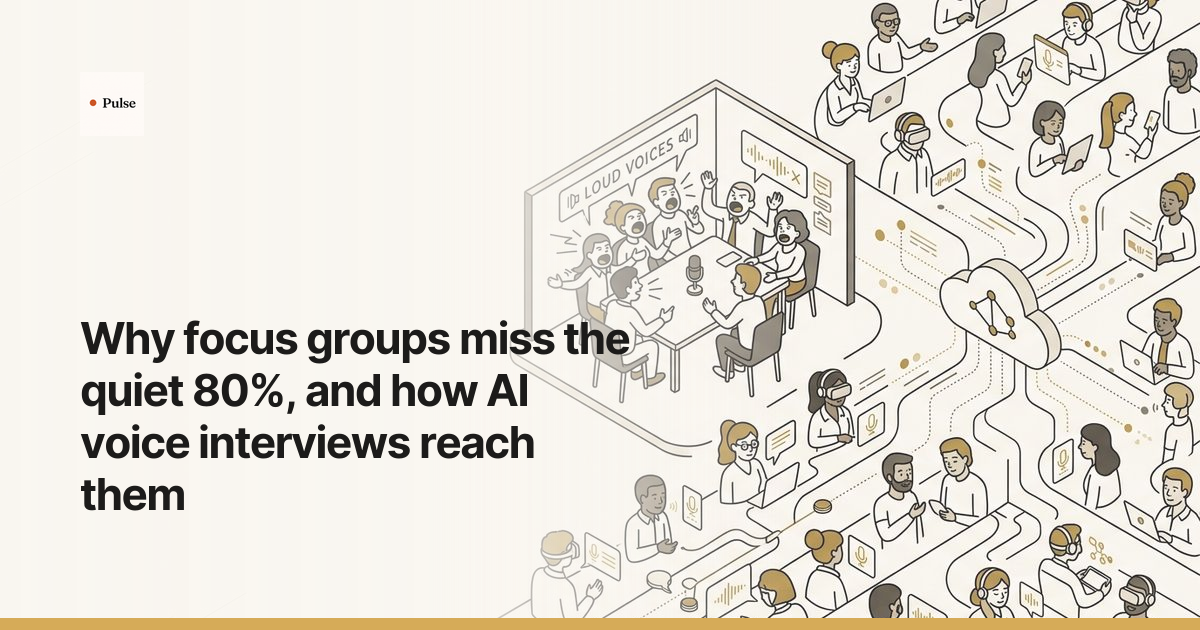
A single, outspoken person can derail a focus group, leading your team to act on the opinion of one participant instead of eight. This is not a rare failure; it is a structural feature of group discussions that privileges the most confident voices. AI-moderated, one-on-one voice interviews systematically remove the group dynamics that silence the majority, allowing research teams to capture more representative and honest feedback from every single participant.
The Problem: Why Group Discussion Isn't Group Opinion
Focus groups often capture the views of the most dominant 20% of participants, not a true group consensus. This happens because of predictable group dynamics that cause the "quiet 80%" to self-censor or conform. The result is a research outcome based on the opinions of the most extroverted members, not necessarily the most typical customers.
This participation inequality is a well-documented challenge in qualitative research. When a few individuals produce the majority of the content, the study effectively analyzes the input of two participants despite having recruited and paid for eight. While not a direct measure, the "90-9-1 rule" first described by Jakob Nielsen in 2006 for online communities provides a useful analogy. It posits that 90% of users are "lurkers" who observe, 9% contribute occasionally, and 1% account for most activity. In a focus group, a similar dynamic means you are primarily hearing from your super-contributors, not your entire sample.
Consider a concept test for a new feature. One participant's loud, early criticism can anchor the conversation, creating a negative cascade. Other participants, who may have had nuanced or even positive feedback, become hesitant to voice a dissenting opinion and either stay silent or soften their views to align with the group.
The Psychology Behind the Silence
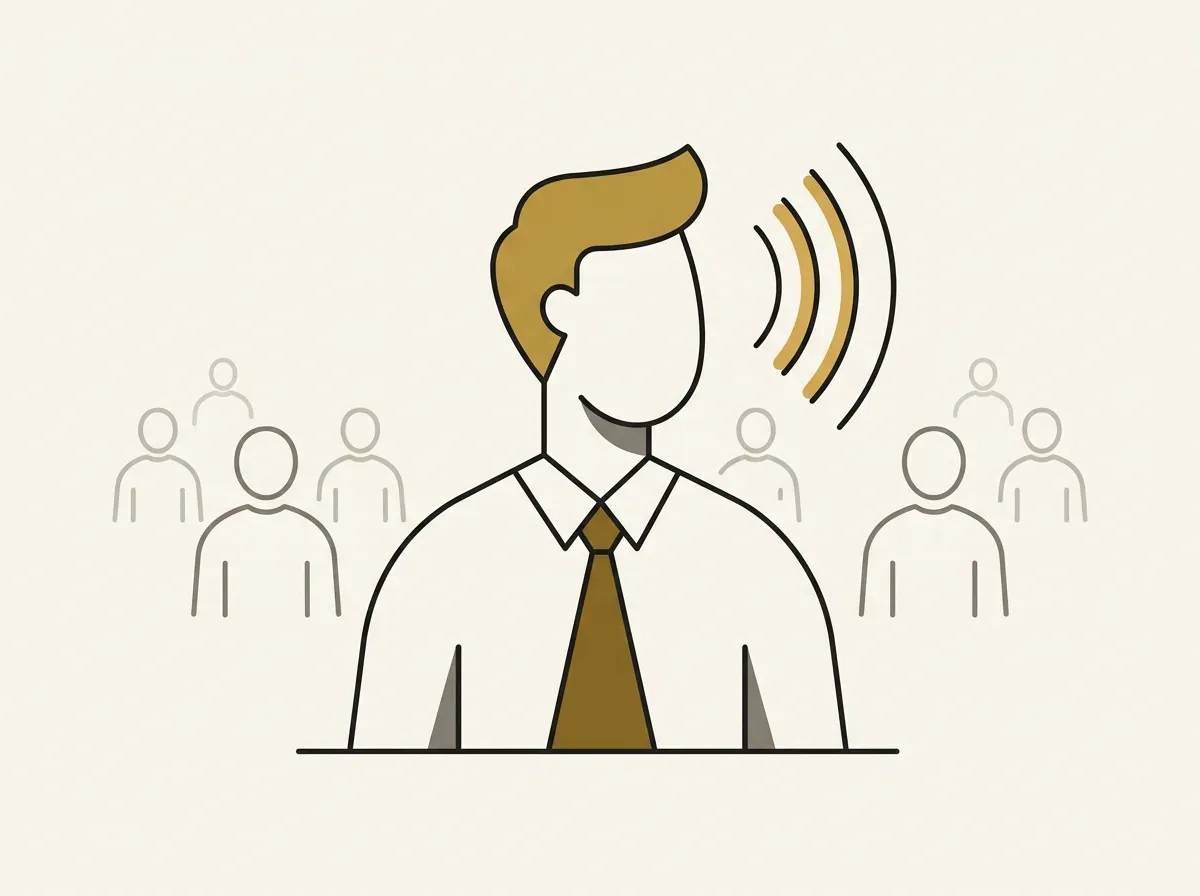
The social pressure in a group setting activates several well-documented cognitive biases that prevent participants from sharing their true thoughts. Experienced moderators use specific techniques to mitigate these biases, but the group environment itself creates the risk.
Three key biases are consistently at play:
- Social Desirability Bias: This is the tendency for participants to give answers they believe will be viewed favorably by others, rather than what they actually think. This conscious or unconscious effort to "look good" results in over-reporting socially acceptable behaviors. In a group setting, this can be amplified as participants feel pressure to conform to what they perceive as the group's norms.
- The Spiral of Silence: Developed by Elisabeth Noelle-Neumann, this theory posits that people are less likely to voice an opinion if they perceive it to be in the minority, fearing social isolation. As those with the minority view stay quiet, the majority opinion appears even more dominant, reinforcing the silence in a self-perpetuating spiral.
- Dominance Bias: Assertive participants can monopolize the conversation, either by taking up a disproportionate share of speaking time or by setting the conversational frame early on. As a result, the findings reflect the ideas of a few dominant voices instead of the full range of individual perspectives. A 2018 review of focus group methodology identified these group dynamics as a persistent threat to data quality.
How AI Voice Interviews Create a Space for Individual Truth
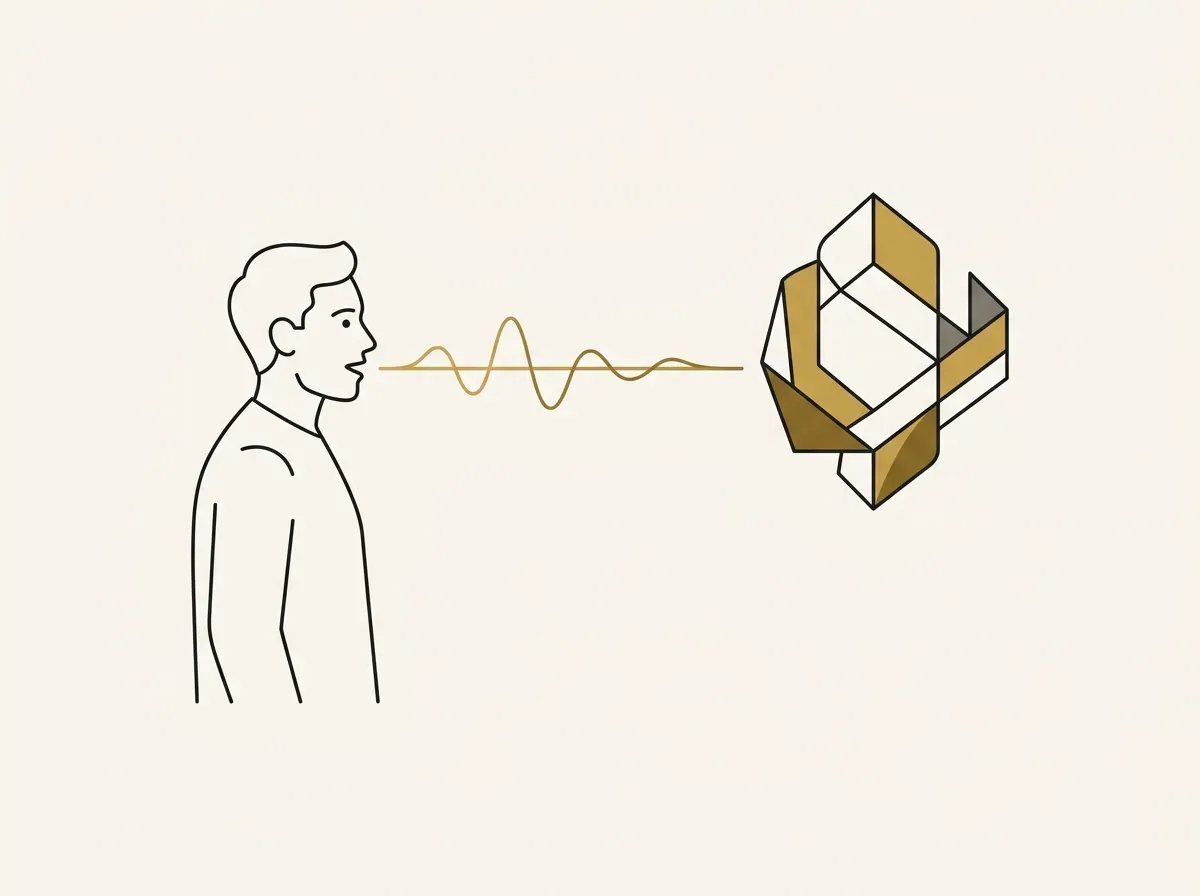
AI-moderated voice interviews remove the audience, eliminating group dynamics entirely. Each participant responds in a private, one-on-one setting, speaking their thoughts aloud as they complete a task or answer questions. This structure directly neutralizes the social pressures that distort focus group data.
This approach solves the "loudest voice" problem by design. Every participant gets an equal and uninterrupted opportunity to speak, uninfluenced by the opinions of others. The interview is standardized, ensuring every question is asked consistently. This is particularly effective for sensitive topics. For instance, a 2019 study found that when discussing body image, participants in individual interviews disclosed more personal thoughts and feelings than those in focus groups, citing a more positive interpersonal climate.
Speaking to a standardized AI moderator can also reduce social desirability bias, as participants often feel less judged. Platforms like Pulse conduct these individual interviews at scale, running hundreds in a single day to gather candid feedback with perfect consistency.
What You Hear from the Newly Heard Majority
By systematically reaching the "quiet 80%," research uncovers the nuanced objections, hesitant positives, and critical details that dominant voices often obscure. Instead of receiving group-filtered feedback, you get rich, individual stories that reveal the "why" behind customer behavior with much greater clarity.
Research comparing methodologies confirms this. A 2017 randomized study found that on a per-person basis, individual interviews generated significantly more unique themes and ideas than focus groups. You simply hear more from each person you talk to.
Imagine a company believed a complex new feature was a key selling point based on enthusiastic focus group feedback. A subsequent round of one-on-one AI interviews could reveal a different story: most users actually find the feature confusing but were afraid to admit it in front of their peers. This insight, gathered from the previously silent majority, prompts a pivot to a simpler solution. This approach also lets you spot patterns with higher confidence. If 15 out of 25 individual interviews mention the same subtle usability issue, it is a much stronger signal than one person mentioning it once in a focus group.
Stop acting on the opinion of the loudest person in the room. Run 100 customer interviews by tomorrow morning and hear what every customer really thinks.
Frequently Asked Questions
Are focus groups ever useful?
Yes, but for a different purpose. Focus groups are valuable for observing group interaction, brainstorming new ideas, or understanding how social dynamics influence opinions. They are less reliable for gauging individual, unbiased beliefs or testing concepts where honest, uninfluenced feedback is critical.
Can an AI understand nuance like a human moderator?
The primary strength of an AI moderator is not interpretation but creating a bias-free collection environment. It captures verbatim responses with perfect consistency, scale, and speed. This leaves the nuanced work of analysis and interpretation to the research team, who can work from a cleaner, more reliable dataset free of interviewer or group bias.
How many voice interviews replace one focus group?
This compares two different approaches to research. Instead of gathering eight people for one 90-minute discussion, you might conduct 20 or 30 shorter, individual interviews. This allows you to find patterns and reach data saturation with much higher confidence, knowing that each data point is an independent, uninfluenced opinion.
Are participants comfortable talking to an AI?
Many people report feeling less pressure and judgment when speaking with an AI compared to a human interviewer. Research consistently finds that people are willing to disclose personal information to automated systems. For example, a 2024 study concluded that people provide personal information to AI and humans equivalently, suggesting a high level of comfort with the format.