Beyond heatmaps: pairing behavior data with voice interviews to fix drop-off
Your analytics show what is happening, but not why. To fix user drop-off, you need to pair quantitative behavioral data with qualitative voice interviews.
user research
Get 50+ field-tested user interview questions to uncover real customer insights. Learn the principles of effective question design and avoid common research mistakes.
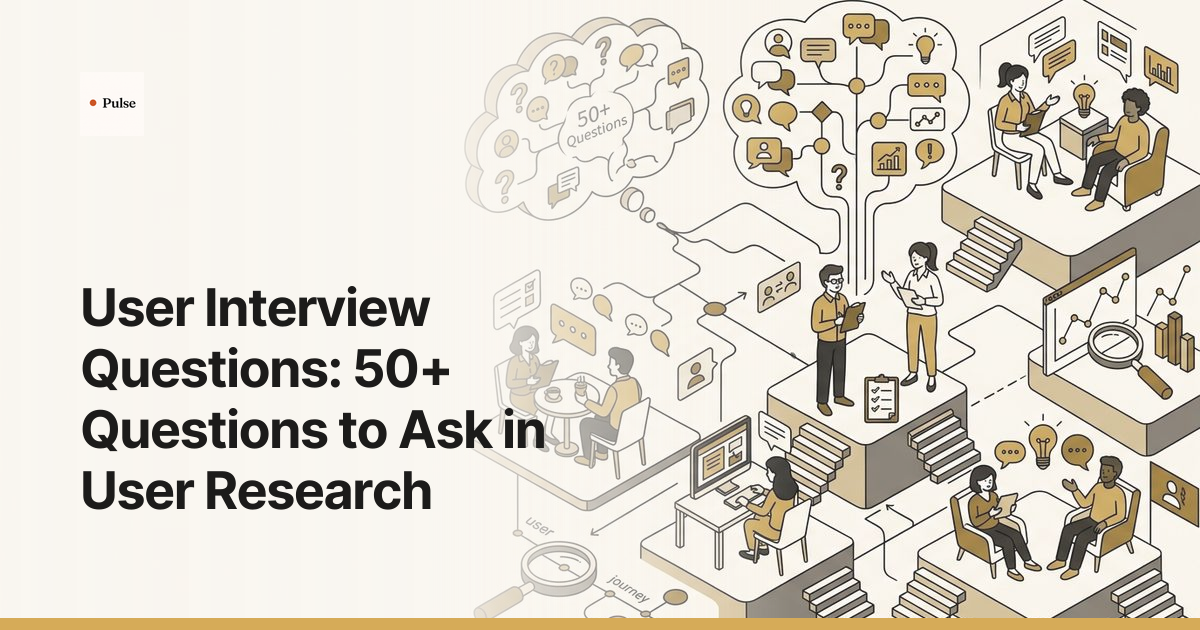
A well-crafted user interview question can be the difference between a superficial anecdote and a foundational insight. The best questions uncover stories about past behavior, grounding product decisions in reality, not speculation. Getting this right means avoiding the biases that lead teams to build something nobody uses.
This guide provides a structured approach to writing and asking better user interview questions. It covers the principles of effective question design and offers more than 50 field-tested questions, categorized for each stage of your research conversation.
A great user interview question prompts a story about a specific, past experience. It focuses on what a person has actually done, not what they imagine they might do in the future. This is because the gap between what people say they will do and what they actually do is one of the most persistent challenges in research.
Effective questions are open-ended, starting with words like “How,” “What,” “Why,” or phrases like “Tell me about…” They create space for the participant to share details you would never think to ask for. The greatest benefit is that they allow you to find more than you anticipate; you don't know what you don't know. Research from Nielsen Norman Group confirms that open questions encourage participants to share unexpected motivations and mental models you knew nothing about.
Most importantly, a good question is neutral. It avoids suggesting a "correct" answer or framing the topic in a way that influences the response.
Here is an example of a weak question transformed into a strong one:
These questions are designed to build rapport and understand the user’s world before you mention your product. The goal is to make the participant comfortable and establish a baseline understanding of their role and environment. This practice is central to human-centered design. As the learning platform IDEO U explains, the goal is to design with people, not just for them, which reframes participants as active collaborators in the research process.
This set of questions aims to uncover the core problem or the "job to be done" that your product might solve. The most effective way to do this is to ask for specific stories about past events. This grounds the conversation in reality and helps you understand the context, motivations, and pain points that drive behavior.
A foundational example comes from Clayton Christensen's research on what "job" customers "hired" a milkshake to do. Initial research focused on product attributes like flavor failed to increase sales. By interviewing commuters, his team learned the milkshake's real job was to make a long, boring drive more interesting. According to Harvard Business School, this "Jobs to be Done" framework reveals that understanding the user's specific goal in a particular circumstance provides a much clearer path to innovation than focusing on demographics or product features.

These questions explore how users currently solve the problem, whether they use your product, a competitor's, or a manual workaround. The goal is to understand their existing mental models and workflows, including what works for them and where the friction is. Understanding the contrast between what people say versus what they do is critical here.
These questions are for use while a participant is interacting with a product or prototype. They are designed to prompt the user to "think aloud," narrating their expectations, thought process, and reactions as they complete a task. The key is to ask observational, non-leading questions.
Concluding the interview effectively is just as important as starting it well. These questions help summarize key takeaways, give the participant a final chance to share their thoughts, and ensure you haven't missed anything important.
The quality of your research depends on collecting unbiased data. Poorly phrased questions can introduce cognitive biases that lead participants to give you inaccurate or misleading answers. Recognizing these common interview question mistakes is the first step to avoiding them. Here are three types of questions to avoid.

A leading question suggests a particular answer or contains an assumption. This pressures the participant to agree with the interviewer, which can be a result of confirmation bias or social desirability bias. These leading questions can invalidate your findings by creating false consensus.
Closed questions can be answered with a simple "yes" or "no." While useful for screeners, they shut down conversation during an interview and prevent you from gathering rich, detailed stories.
Questions about the future ("Would you use this?" or "How much would you pay for this?") are notoriously unreliable. They ask people to predict their own behavior, which they are very poor at doing. It is far more effective to ask about past actions.
Designing the right questions is the first step. The next is running interviews consistently, without interviewer drift, and at a scale that uncovers real patterns. Traditional moderated interviews are slow and expensive, making it hard to talk to more than a handful of users.
Pulse runs AI-moderated interviews that ask your best questions perfectly every time. You can run hundreds of interviews overnight, and the report builds as each one finishes, so structured, research-grade insights are ready minutes after the last interview. This allows you to move from anecdotal evidence to robust qualitative data, ensuring every product decision is grounded in what customers have actually done, not just what they say they will do.
Talk to 100 customers by tomorrow morning.
Your interview guide should contain 5-10 core, open-ended questions focused on your primary research goals. A guide is not a rigid script; it's a flexible framework. The bulk of the conversation will come from your follow-up and probing questions based on the participant's answers.
Yes, absolutely. Some of the most valuable insights come from unexpected tangents. As Nielsen Norman Group advises, you should use an interview guide, not a strict script. If a participant brings up a relevant topic you hadn't planned for, follow their lead with probing questions like "Tell me more about that."
To ask about sensitive topics, build rapport first and frame questions neutrally. Instead of asking directly "Is this too expensive?", ask about value: "How do you currently budget for tools like this?" or "What value would a solution like this provide for you?" This avoids putting the participant on the defensive.
A user interview is a conversational method focused on understanding a user's context, goals, and pain points ("Why and when would you do X?"). A usability test is an observational method focused on evaluating how easy a product is to use by watching a person perform specific tasks ("Can you do X?").
Your analytics show what is happening, but not why. To fix user drop-off, you need to pair quantitative behavioral data with qualitative voice interviews.
user research
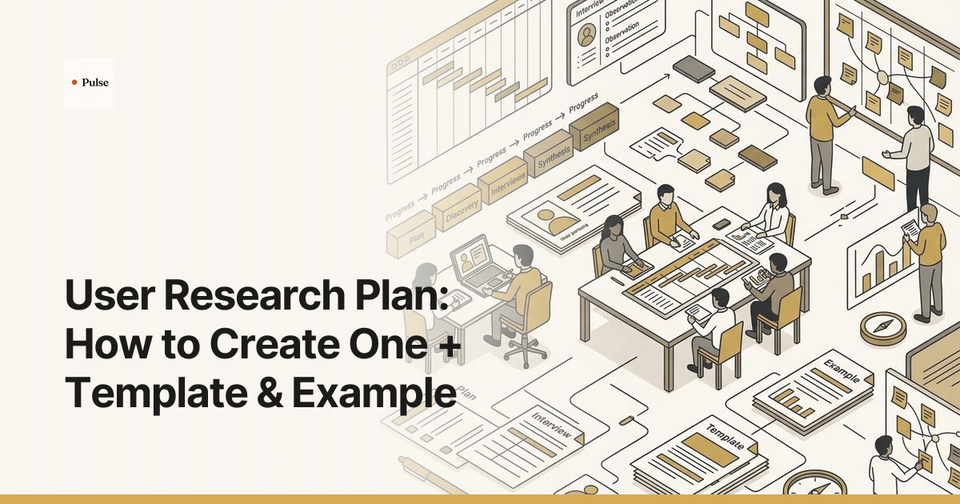
A user research plan is a strategic document that aligns stakeholders and defines scope. Learn the key components and use our template to create one.
user research
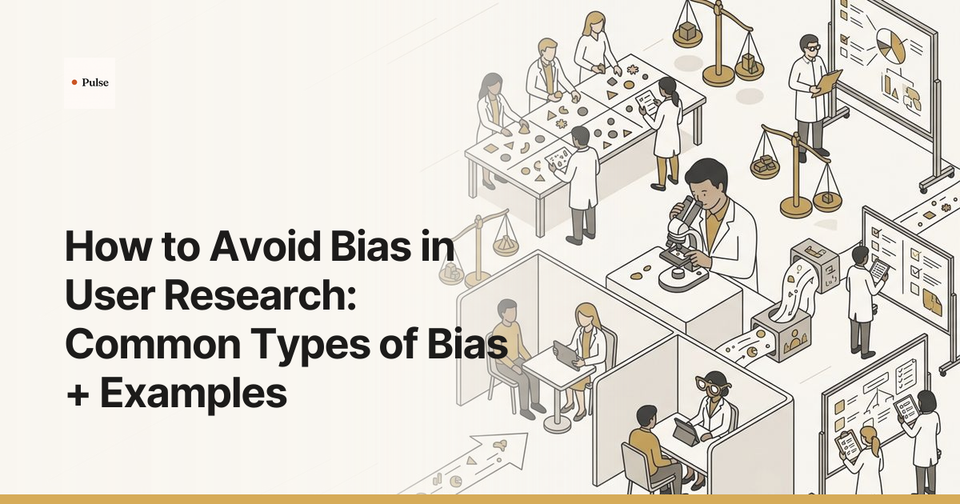
Research bias is any systematic error that favors certain outcomes over others, leading to flawed insights. Learn the common types and how to fix them.
user research
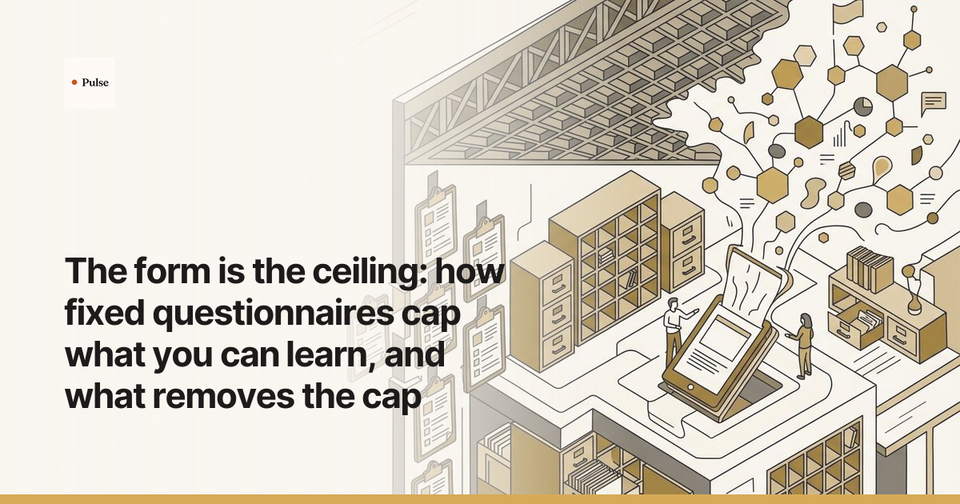
Fixed questionnaires trap research inside existing assumptions. Discover why static surveys miss critical customer realities and how dynamic voice probing fixes it.
survey methodology
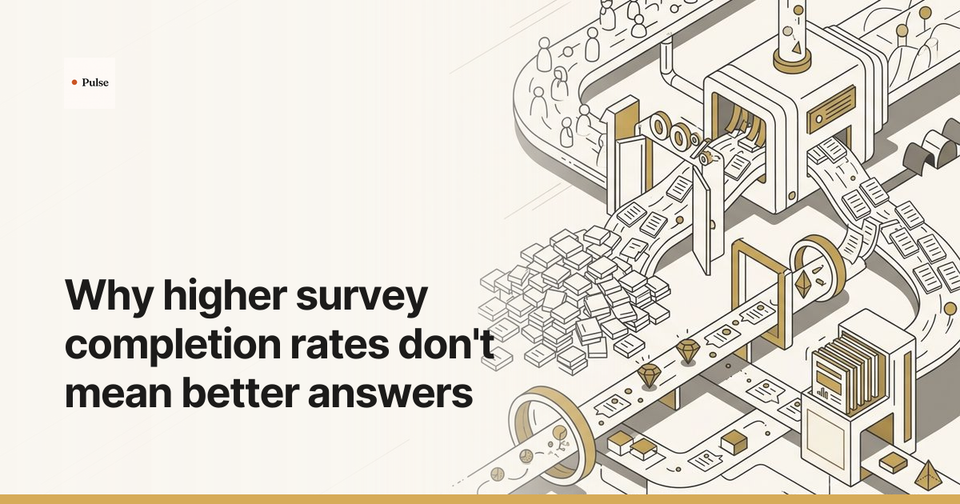
High survey completion rates measure friction reduction rather than response validity. Here is why optimizing for completion conceals satisficing and bad data.
survey methodology
Audit automated interview transcripts for leading questions and sycophantic drift using four structural tests to ensure reliable qualitative evidence.
ai moderation