Beyond heatmaps: pairing behavior data with voice interviews to fix drop-off
Your analytics show what is happening, but not why. To fix user drop-off, you need to pair quantitative behavioral data with qualitative voice interviews.
user research
A user research plan is a strategic document that aligns stakeholders and defines scope. Learn the key components and use our template to create one.
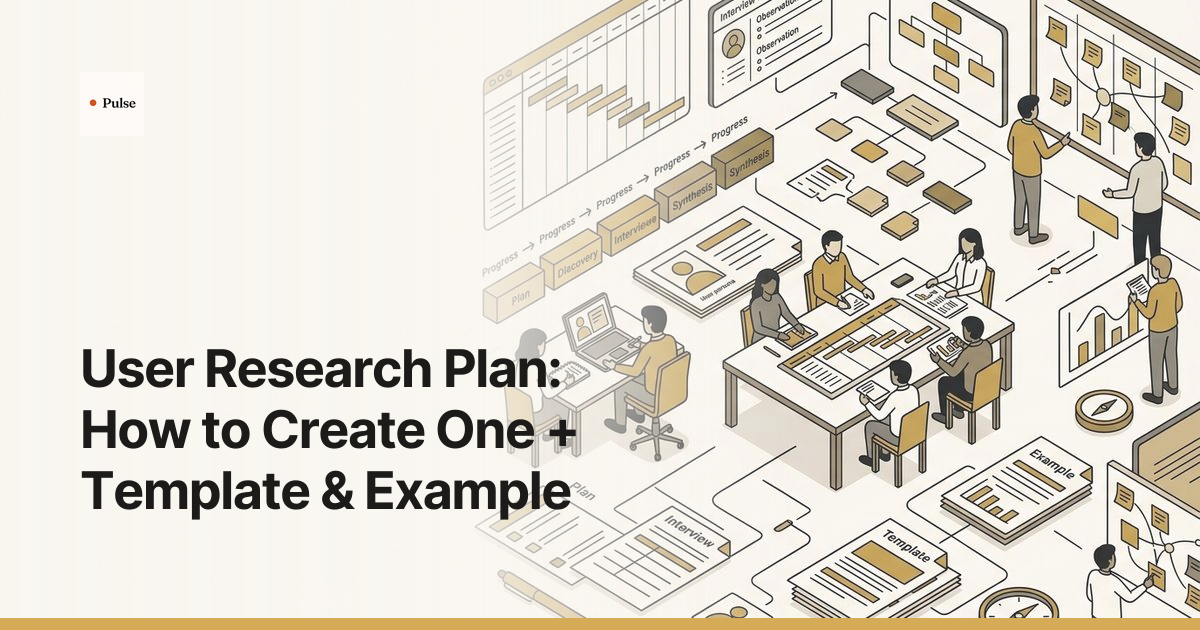
A user research plan is the single most important document for ensuring a study produces clear, actionable insights. It is not a bureaucratic hurdle to be cleared; it is a strategic tool that aligns stakeholders, defines scope, and connects research activities directly to business goals. Without a plan, research risks becoming a series of interesting but aimless conversations.
This guide provides a step-by-step process for creating a user research plan that prevents wasted effort. We will cover the critical components, provide a reusable template, and walk through a practical example.
A user research plan is a strategic document that outlines the what, why, who, how, and when of a research study. It serves as the single source of truth for the entire project, ensuring everyone from executive stakeholders to engineers is aligned on the goals and scope before fieldwork begins. It is a living document, designed to be updated if the study's direction changes based on early findings.
A research plan is critical because it forces stakeholder alignment on business goals, prevents scope creep, and secures resources by making a clear business case for the study. Investing a few hours in a plan saves weeks of wasted effort building features that miss the mark. A 2024 analysis of 431 startup post-mortems by CB Insights found the most-cited root cause of failure, at 43%, was poor product-market fit—a problem that originates from a failure to conduct foundational research.
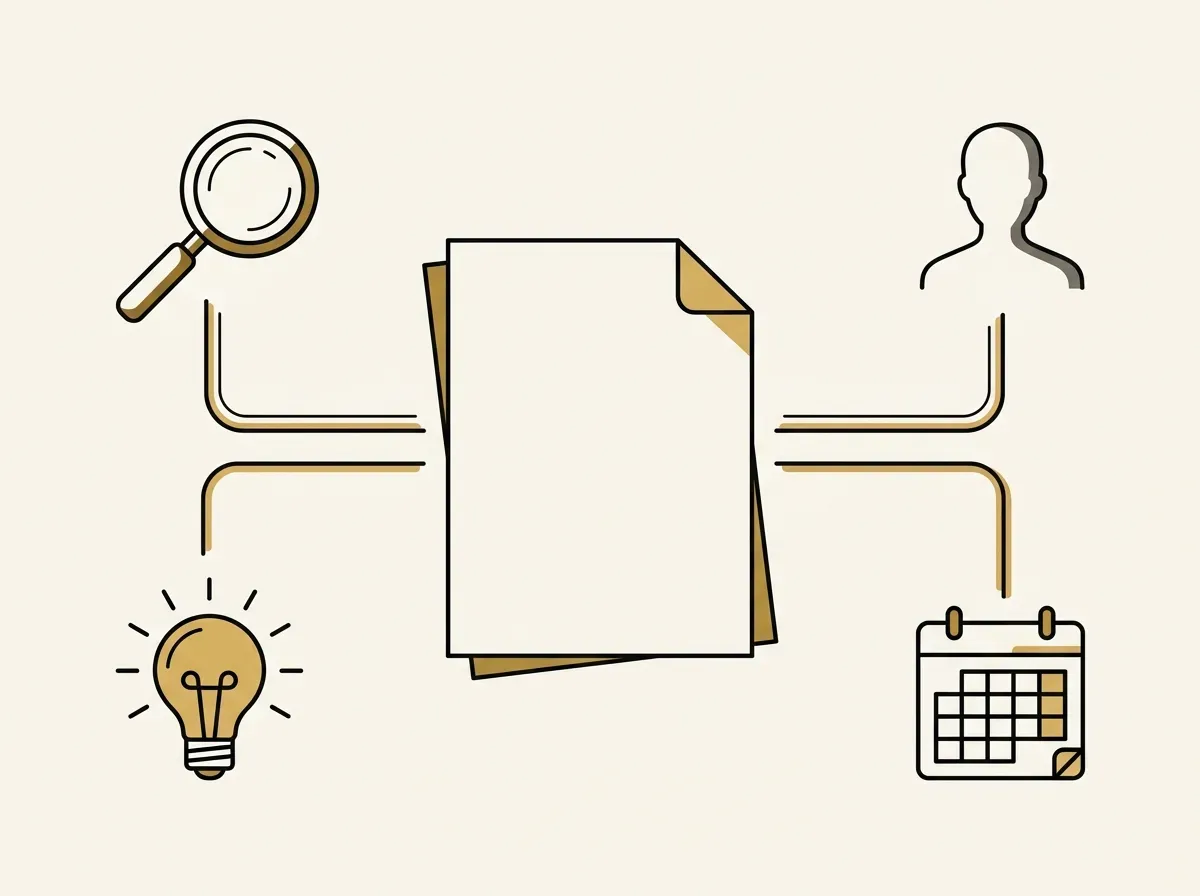
A well-structured plan achieves four key outcomes:
A strong research plan contains eight core sections, from the business background to the final deliverables. According to the Nielsen Norman Group, every effective plan must outline the study's purpose, who will participate, and the research method. You can use the following sections as a reusable template for your own studies.

Start with the context. Why is this research needed now? What events, data points, or business questions prompted this study? This section should briefly summarize any previous research and clearly state the business decision this work will inform.
What does the team need to learn? Frame these as 2-4 high-level, actionable goals. Avoid vague language like "understand users." Instead, use specific verbs that point toward an outcome, such as "Identify the primary barriers to feature adoption" or "Evaluate the usability of the new checkout flow."
These are the specific, answerable questions the study will address to meet your goals. They are questions for the research team, not the questions you will ask participants. For example, a research question might be: "How do users currently manage their team's budget?"
Which research method will you use, and why is it the right choice for your questions? Be specific. Instead of just "interviews," state "60-minute, remote moderated interviews via video conference." Justify the choice: "Interviews were chosen over a survey to capture detailed stories about users' workflows and pain points."
Who do you need to learn from? Define the key characteristics of your target participants. This should include demographics, behaviors (e.g., "has used the product at least 3 times in the last month"), and technical criteria. This section should also include the screener questions you will use to qualify or disqualify potential recruits.
Outline the key dates and milestones for the study. Include deadlines for planning, recruitment, fieldwork, analysis, and sharing the findings. Also specify session length, tools needed (e.g., prototype links, recording software), and who is responsible for each part of the process.
List the key people involved in the project. Define their roles and the expectations for their involvement. Who needs to review the plan? Who will be observing sessions? Clarifying this upfront ensures the right people are included at the right times. For a practical guide on this, review how product managers and researchers can collaborate on a plan.
What will be the output of the research? Be clear about what you will produce and when it will be shared. Examples include a slide deck presentation, a journey map, a set of personas, or a report with video highlights. This sets expectations for how the findings will be communicated.
Let's walk through a concrete example.
Scenario: A B2B SaaS company that makes project management software has recently launched a powerful new analytics feature. Three months post-launch, adoption is far below expectations, and the development investment is not paying off.
Here’s how they could fill out key sections of their research plan:
This brief plan transforms a vague problem ("low adoption") into a focused, actionable study designed to inform a critical business decision. A real-world example of a completed government plan shows these same principles in practice.
Even experienced teams can make mistakes that undermine a study's impact. The most common pitfalls, often highlighted in guides on product management research errors, happen during the planning stage.
A user research plan does more than just organize a study; it builds confidence. It shows your team and your stakeholders that the research is rigorous, focused on the right problems, and designed to deliver a return on investment.
A solid plan ensures you ask the right questions. When you're ready to get answers at a scale that delivers robust, research-grade insight, Pulse runs hundreds of AI-moderated interviews, and the report builds as each one finishes, so structured findings are ready minutes after the last interview.
A research plan should be as long as necessary to align the team, but no longer. For most studies, 2-5 pages is sufficient. The goal is clarity and shared understanding, not exhaustive documentation. Focus on being concise and actionable.
Your core stakeholders should review the plan. This typically includes the product manager, lead designer, and engineering lead. The goal is less about a formal "approval" and more about ensuring everyone is aligned on the goals and approach before the study begins.
A research question is the high-level question the team needs to answer (e.g., "What are the key drivers of customer churn?"). An interview question is a specific question you ask a participant to gather data that helps answer the research question (e.g., "Tell me about the last time you considered switching to another provider.").
A research plan is a living document, and it is common for it to evolve. If you learn something in early sessions that changes your approach, you should update the plan. Document the change and communicate the reason to your stakeholders to maintain alignment.
Your analytics show what is happening, but not why. To fix user drop-off, you need to pair quantitative behavioral data with qualitative voice interviews.
user research
Research bias is any systematic error that favors certain outcomes over others, leading to flawed insights. Learn the common types and how to fix them.
user research
Learn the key differences between moderated and unmoderated research. This guide compares the pros, cons, and best use cases to help you choose the right method.
user research
Fixed questionnaires trap research inside existing assumptions. Discover why static surveys miss critical customer realities and how dynamic voice probing fixes it.
survey methodology
High survey completion rates measure friction reduction rather than response validity. Here is why optimizing for completion conceals satisficing and bad data.
survey methodology
Audit automated interview transcripts for leading questions and sycophantic drift using four structural tests to ensure reliable qualitative evidence.
ai moderation