How to Avoid Bias in User Research: Common Types of Bias + Examples
Research bias is any systematic error that favors certain outcomes over others, leading to flawed insights. Learn the common types and how to fix them.
Most product teams build a feature based on enthusiastic user interviews, only to watch it fail at launch. The failure often traces back to a systematic error in the research itself: the team interviewed only their happiest customers, asked leading questions, or unconsciously focused on feedback that confirmed their own beliefs. This isn't a failure of intent; it's a failure of process.
Research bias is any systematic error that favors certain outcomes over others, leading to flawed insights and costly product decisions. The consequences are significant: a 2024 analysis by CB Insights found that 43% of failed startups cite poor product-market fit as a reason for their failure. This waste is rooted in a poor understanding of customer needs, often caused by biased research. This guide provides a practical, stage-by-stage framework for reducing bias, not by demanding perfection from individual researchers, but by building a more rigorous process.
The Problem: How Unseen Bias Skews Research Outcomes
Cognitive bias is a feature of the human brain, not a bug. We rely on mental shortcuts, or heuristics, to make sense of a complex world. As foundational research by psychologists Amos Tversky and Daniel Kahneman established, these shortcuts help us make quick judgments but can also lead to predictable errors. In user research, these errors can cause a team to misinterpret customer needs, overestimate demand for a feature, and build the wrong product. A 1974 paper on the topic, Judgment under Uncertainty, remains a cornerstone of the field.
Most bias in research is unconscious. It stems from natural cognitive patterns, not a deliberate attempt to manipulate results. A product manager who has spent six months developing a feature will naturally be more attuned to positive feedback about it. A researcher who hears a particularly memorable complaint in their last interview of the day may give it more weight than it deserves. The result is a distorted picture of reality that can lead to expensive mistakes, like building a niche feature that was mistakenly identified as a universal need.
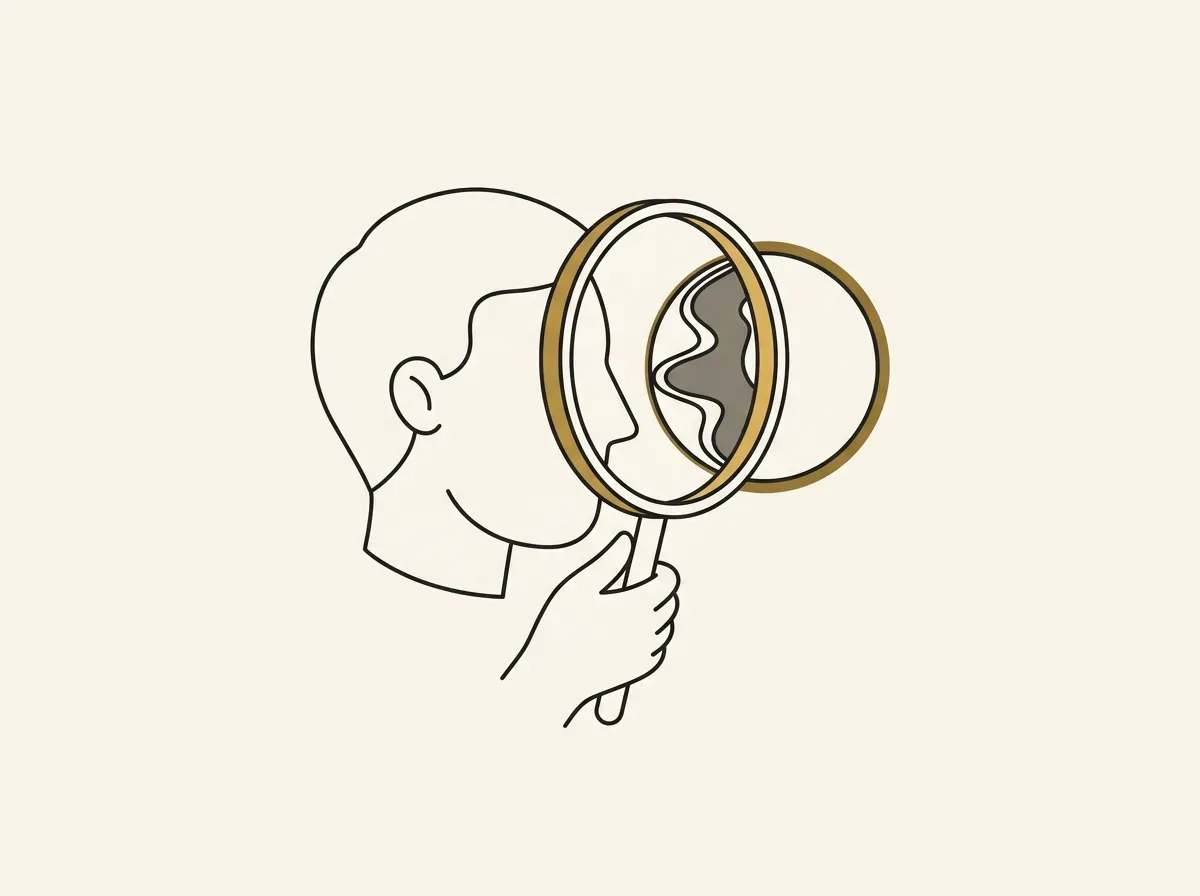
Common Types of Bias in User Research
Recognizing different forms of bias is the first step toward mitigating them. While dozens of specific biases have been identified, most in user research fall into a few common categories.
Confirmation Bias
This is the tendency to seek, interpret, and recall information in a way that confirms your existing beliefs or hypotheses. It’s one of the most pervasive and damaging biases in product development. A recent analysis noted that marketers acknowledge that confirmation bias is a prevalent issue in their decision-making.
- Example: A researcher who believes a new design is more intuitive asks, "You found this new design much easier to use, right?" instead of, "How did this design compare to the previous one?"
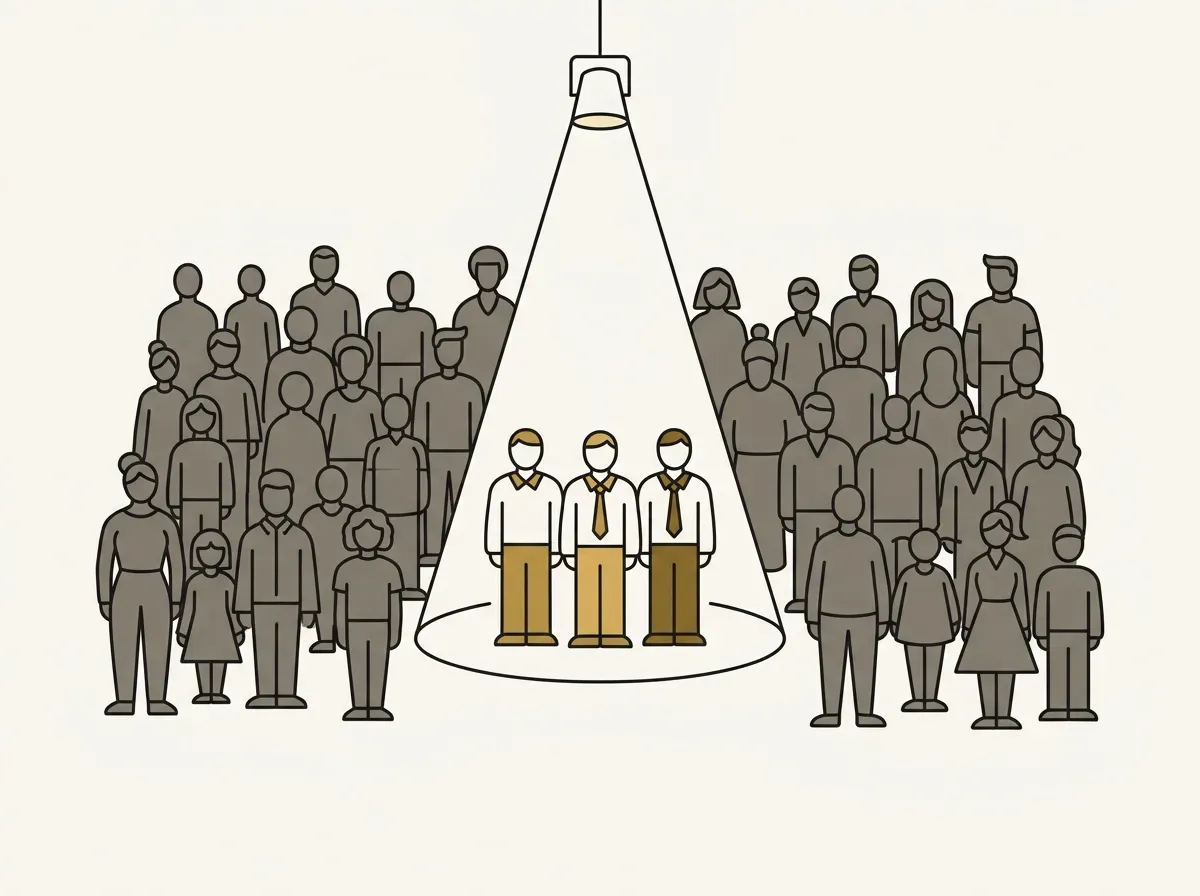
Selection and Sampling Bias
This occurs when your participant pool does not accurately represent your target user base. If your sample is skewed, your findings will be skewed, no matter how well you conduct the interviews.
- Example: Recruiting participants for a general consumer banking app by posting a link only to your team's tech-savvy Twitter followers. The feedback will likely overlook the needs of less technical or older users.
Social Desirability Bias
Participants in a study may give answers they believe will be viewed favorably by the researcher or others. They want to be seen as helpful and agreeable, which can lead them to overstate positive feelings or understate negative ones.
- Example: In a concept test, a participant claims they would "definitely" pay $20 a month for a new feature, not because it's true, but because they want to please the interviewer.
The Framing Effect
The way a question or problem is presented influences the response. Tversky and Kahneman famously demonstrated this in a 1981 study on the framing of decisions where participants were asked to choose between two treatments for a disease expected to kill 600 people. This scenario, often called the Asian disease problem, shows how choice can depend on framing outcomes as gains or losses.
- Positive Frame: When Program A was framed as "saves 200 lives," 72% of people chose it.
- Negative Frame: When the identical Program C was framed as "400 people will die," only 22% chose it.
The outcome is the same, but the frame—gains versus losses—reverses the preference. In user research, asking "What problems did you have with this feature?" frames the experience negatively, while asking "How would you describe your experience with this feature?" allows for a more neutral response.
The Hawthorne Effect (Observer Effect)
People behave differently when they know they are being observed. The act of conducting research can change the very behavior you are trying to understand, a phenomenon known as the observer effect.
- Example: During a moderated usability test, a participant meticulously reads every word of instructional text on the screen, a behavior they would never exhibit when using the app on their own.
Recency Bias
This is the tendency to give more weight to the most recent information you've received. After a day of back-to-back interviews, the feedback from the last, most vivid participant can overshadow the patterns from the five who came before.
- Example: In a team debrief, the conversation focuses almost entirely on a unique issue raised by the final interview participant, even though it was never mentioned by anyone else.
How to Systematically Reduce Bias in Your Research Process
You cannot eliminate bias entirely, but you can build a process that identifies and corrects for it. This requires deliberate tactics at each stage of the research lifecycle.

Stage 1: Study Design and Recruitment
A study built on a biased sample is biased from the start. Rigor at this stage is the highest-leverage way to improve the quality of your insights.
- Write Neutral Screeners: Your screening questionnaire should filter for behaviors and contexts, not attitudes. Instead of asking, "Are you interested in a better way to manage your finances?" (which invites social desirability bias), ask behavioral questions like, "What tools, if any, have you used to manage your finances in the past six months?"
- Define Precise Population Criteria: Be specific about who you need to learn from. "Users of our product" is too broad. "Users who have completed at least one project in the last 30 days and work in teams of 5-10 people" is better. Create distinct segments and recruit for each.
Stage 2: Moderation and Fieldwork
During the interview, the researcher is the primary instrument. Maintaining neutrality is critical.
- Ask Open-Ended, Non-Leading Questions: Focus on past behavior, not future speculation. Use a semi-structured guide to ensure you ask well-formed, neutral questions.
- Leading: "Was it frustrating when you couldn't find the save button?"
- Neutral: "Walk me through what you were trying to do on this screen."
- Use AI Moderation for Consistency: Human interviewers, no matter how well-trained, can subtly vary their tone and phrasing, introducing bias. Tools that conduct AI-moderated interviews can ensure every participant gets the exact same question asked in the exact same way. This removes the risk of interviewer-introduced bias and provides clean, consistent data at scale.
Stage 3: Synthesis and Analysis
This is where confirmation and recency biases are most dangerous. The goal is to challenge your own interpretations.
- Involve Multiple Analysts: Never synthesize alone. Have at least two people code the data or review the interview transcripts independently, then compare notes. This simple step often reveals how differently two people can interpret the same conversation.
- Practice Peer Debriefing: Engage a colleague who is familiar with research methods but not involved in the project. Walk them through your findings and evidence. Their job is to act as a friendly skeptic, asking probing questions that challenge your assumptions and force you to defend your interpretations with direct evidence.
- Trace Every Insight to Evidence: For every theme or finding you report, link it directly back to the specific quotes or observed behaviors that support it. This creates an audit trail that holds the analysis accountable to what users actually said and did.
What Good Looks Like: An Example of Debiased Research
Consider a team exploring a new feature for their project management tool.
- Biased Approach: The product manager drafts a research plan to "validate demand" for the feature. They recruit five of their happiest, most engaged customers for interviews. During the sessions, they ask, "Wouldn't it be great if you could automate your weekly reports with a feature like this?" They get enthusiastic agreement and conclude that demand is universal. The feature launches to low adoption.
- Debiased Approach: The team's research goal is to "understand how teams currently create and share weekly reports." They define three specific segments: new users, power users, and recently churned users. Their screener asks about past reporting behaviors. In the interviews, they ask open-ended questions like, "Tell me about the last time you prepared a weekly report." During synthesis, two researchers review the transcripts and find that while power users are desperate for automation, new users are still struggling with the basics, and churned users left because the tool felt too complex. The team decides to build the feature but markets it specifically to power users, while investing in better onboarding for new customers.
Frequently Asked Questions
Can you ever completely eliminate bias from research?
No, you cannot completely eliminate bias, because researchers are human. The goal is not to achieve perfect objectivity, which is impossible. The goal is to be aware of potential biases and build a systematic process with checks and balances to identify, challenge, and mitigate their impact on the final insights.
What's the difference between bias and a research finding I disagree with?
Bias is a systematic error in the research process that makes the findings unreliable. A finding you disagree with might simply be an inconvenient truth. The difference lies in the rigor of the method. If the research followed a debiased process with a representative sample and neutral questions, the finding is likely valid, even if it contradicts your beliefs.
How can you correct for bias after the research is already complete?
It is very difficult to correct for bias after the fact, especially sampling bias. If you realize your analysis was skewed by confirmation bias, you can re-analyze the data with a more critical lens or involve other analysts. But if the data itself was collected from the wrong people or via leading questions, the foundation is flawed and you likely need to conduct new research.
What is the single biggest mistake teams make that introduces bias?
The most common and impactful mistake is sampling bias: talking to the wrong people. Many teams default to interviewing friendly, engaged customers because they are easy to recruit. This creates a powerful echo chamber that validates existing ideas but fails to uncover the perspectives of skeptical, new, or churned users who often hold the most valuable insights.
Building a debiased research process requires discipline and a commitment to challenging your own assumptions. For teams that need to scale their research without scaling their biases, using tools that enforce consistency is critical. Pulse helps embed these practices by running hundreds of AI-moderated interviews that ask every participant the same well-formed questions, turning conversations into structured, traceable evidence. You can run 100 customer interviews by tomorrow morning.