Participant recruitment methods: 5 ways to find people
Participant recruitment methods compared by who you need: your own list, panels, referrals, networks and recruiters, plus a check before you set a date.
How to run a virtual shop-along in a store or online: when to watch instead of ask, how to set it up, what to watch for and what to ask after.

Say you work at a paint brand. The company just changed the look of its paint cans. The new cans are now on the shelves of a big home improvement chain. Your manager asks a simple question: do shoppers even notice them? But the stores are spread across many cities, and you can't visit them all.
A virtual shop-along lets you watch from your desk. A shop-along means you go shopping with a customer and watch what they do. In the virtual version, the shopper carries their phone with the camera on. Or they share their screen while they shop online. You see the shelf through their eyes, and you ask your questions after.
It works when you set it up with care, stay quiet during the trip and ask good questions straight after.
A virtual shop-along is a shopping trip you watch from somewhere else. The shopper goes to a real store with their phone camera on, or shops online while sharing their screen. You watch what they look at, pick up and skip. Then you talk with them about it.
In the paint study, a shopper walks down the paint aisle with their phone. You see the same shelf they see, and whether their eyes stop on the new can.
Why not ask people later? Because later, people give you tidy reasons. A shopper might say they always read the labels. But on the trip, they grab their usual can in two seconds. Watching shows what people do. Asking shows what they think they did.
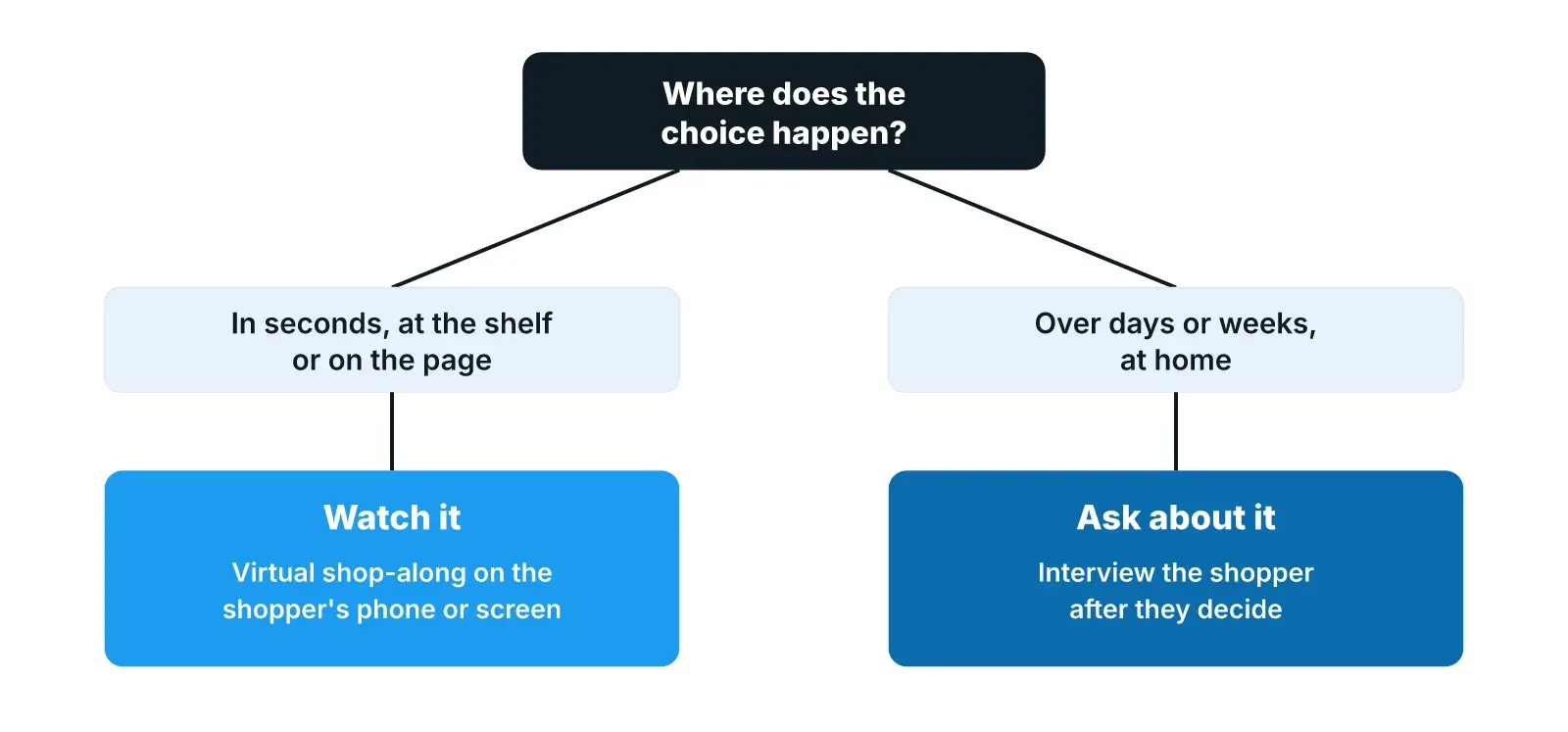
So use a shop-along when the choice happens in seconds, at the shelf or on the page. Noticing the new can is that kind of choice. If the choice happens at home over weeks, ask afterwards instead. A family that picked a wall color over a month is better heard in an interview.
A shop-along is one kind of field study. That means research done where people live, work or shop.
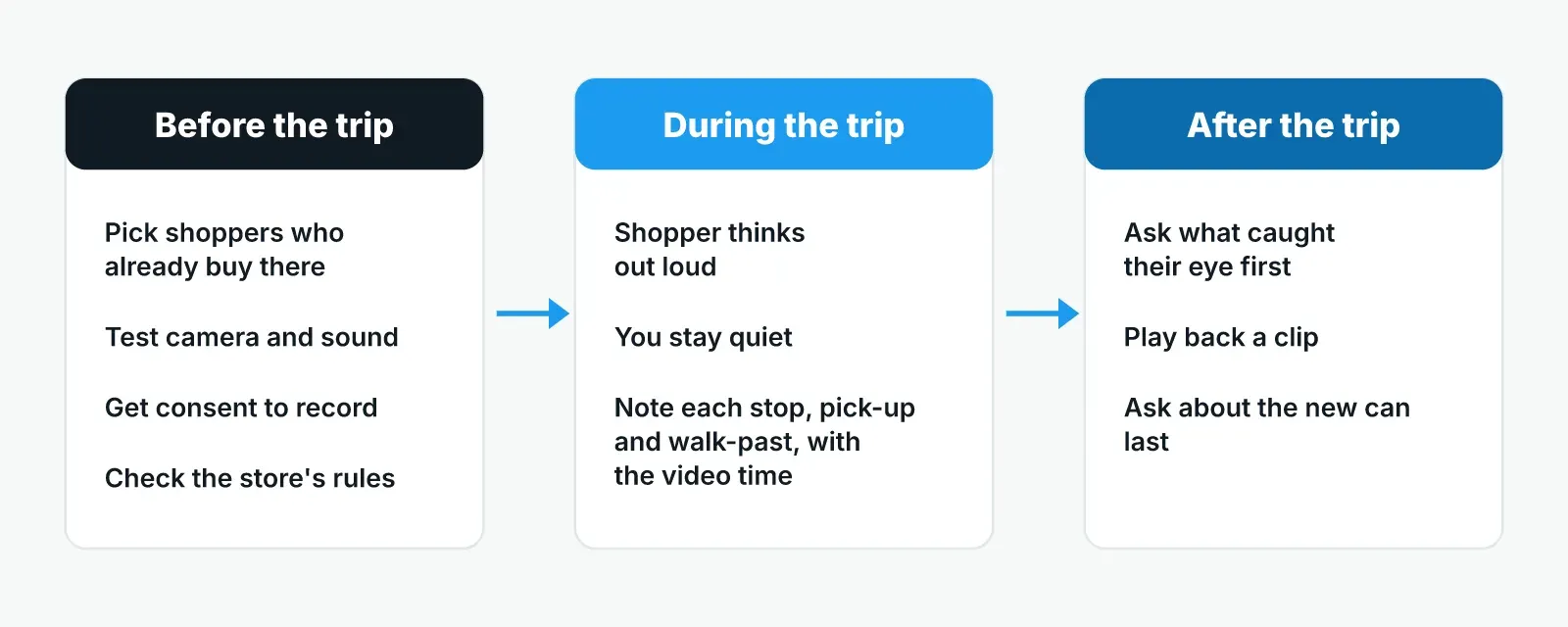
To run a virtual shop-along in a store, find people who already buy paint at that chain. Agree a time when they would shop anyway. Test their phone the day before. Then let them shop while you watch and stay quiet. Record only with their consent, and check the store's rules on filming.
Look for people who have bought paint at that chain recently. They know the store, so the trip feels normal. Ask them to shop on a day they planned to go anyway. A trip they need is more honest than one they make for you.
Do a short call the day before to check the camera and sound. Ask how they will hold the phone. A neck strap or a clip on the cart keeps both hands free and the video steady.
Ask the shopper to agree in writing that you can record the trip, and tell them who will see the video. Some stores don't allow filming inside. So check the store's rules first, or ask the store manager.
Ask the shopper to shop as they normally would and talk as they go. This is called thinking out loud. It means they say their thoughts, like "too pricey" or "where's the white?" Once they start, you stay quiet. If you speak at the shelf, you change what they do.
Write down each time they stop, pick something up, compare two cans or walk past. Add the time on the video, so you can find the moment later. In the paint study, watch the first moments at the shelf. Did their hand go to the new can or to their old favorite?
For store trips, the shelf shop-along template lists questions to use on the day.
To run a virtual shop-along online, the shopper shares their screen and shops with their own accounts. That keeps the trip real, with their own saved baskets and past orders. You watch what they search for, filter and read. Then you note where they stop or give up.
Say the same chain also sells your company's paint on its website. Some people pick a color online and then buy in the store, so that trip matters too.
Ask the shopper to close email and other private tabs before they share. Their address and card details may show at checkout, so they can stop sharing before they pay. Get their consent to record, as in the store.
Don't send them to your product page. Let them begin where they normally would: a search engine, the store's app or a saved basket. Where they start tells you where your paint needs to show up.
Note the words they type into the search box. Watch which filters they use, like price or finish, and which reviews they read. Each one shows what matters to them before they choose.
Note every pause, every click back and every closed tab. If a shopper scrolls past your paint three times, write it down. If they leave to check a price on another site, ask about it afterwards.
For online trips, the digital shop-along template lists questions to use.
Ask your questions straight after the trip, while the shopper still remembers it. Start with what they noticed first and what they nearly bought. Then play back a moment from the video and ask what they were thinking. Save questions about your own product for the end.
Good first questions are open. "What caught your eye first?" "What did you nearly pick up?" "Why that one?" Each lets the shopper tell the story in their own words.
Then play back one moment. Say a shopper picked up the new can, turned it over and put it back. Show them that clip and ask, "What were you thinking here?" Seeing the clip can help them recall a reason they would never have mentioned.
Keep the new can for last. If you ask "Did you see the new can?" too early, the rest of the talk turns into a talk about the can. That's a leading question, one that hints at the answer you hope to hear.
When all the trips are in, read them side by side. List every moment of choice from each trip. Count how many shoppers stopped at the new can and how many walked past. Then look at what the people who stopped had in common. One trip is a story. A pattern across many trips is a finding.
So here is a simple rule. If the choice happens in seconds at the shelf, watch it. If it happens over weeks at home, ask about it.
Pulse runs shop-alongs as part of shopper and ethnography studies, with AI-moderated interviews. The AI moderator asks each shopper the same questions and asks a second question when an answer is vague. So you can run many trips without being on every call.
Video insights capture on-screen behavior and emotion that a transcript misses, and you read them beside what shoppers say. For the paint study, you see the hand reach for a can and hear why.
You can invite your own customers from a list, or have shoppers recruited to a profile, such as people who buy paint at that chain. Every participant goes through fraud checks. One study can also run across several markets at once from one brief.
Afterwards, Pulse groups what shoppers said into themes. Each theme comes with the quotes behind it, and every quote links to its transcript. Your team still decides what the trips mean for the new can.
To see it on your own study, book a demo, start on the $0 Explorer plan, or ask for a free study.
Let the trip run as long as the shopper's normal trip, then add a short talk afterwards. For a quick buy like paint, the time in the aisle may be short and the talk a bit longer. Don't stretch the trip to fill time, because a shopper watched for too long starts to act for the camera.
There's no fixed number. Start with a handful of shoppers in each group you care about, such as new buyers and loyal buyers. Read the trips as they come in. When new trips stop showing new moments of choice, you have enough for that group. This point is called data saturation.
Yes. "Accompanied shop" is another name for the same idea: a researcher goes along on a real shopping trip and watches. A virtual shop-along is the remote version, watched through the shopper's phone or screen.
It can. People who know they're watched may take more care, or read labels they usually skip. To lower this, pick a trip they planned anyway, stay quiet and don't name your brand until the end. It's also why you compare many trips before you decide.
Participant recruitment methods compared by who you need: your own list, panels, referrals, networks and recruiters, plus a check before you set a date.
Semantic vs latent themes, from Braun and Clarke's paper "Using thematic analysis in psychology", shown on real-life quotes, with when to use each.
How to choose a transcription service for research interviews: test each option on your own audio with five simple checks, from accuracy to data safety.