Sentiment analysis methods for interviews, quote by quote
Sentiment analysis methods compared for interview data, and how to keep every label next to its quote so anyone can check a theme before you report it.
First-time investor research for investing apps: why surveys get polite answers, who to recruit, and how interviews find the real hesitation.
People keep signing up for the investing app at the company where you work. They look at a few funds and leave without putting in any money. The survey your team sent says they'll start soon. So what is stopping them, and how many people feel that way?
Studying people before their first investment is called first-time investor research, and money makes it a sensitive topic.
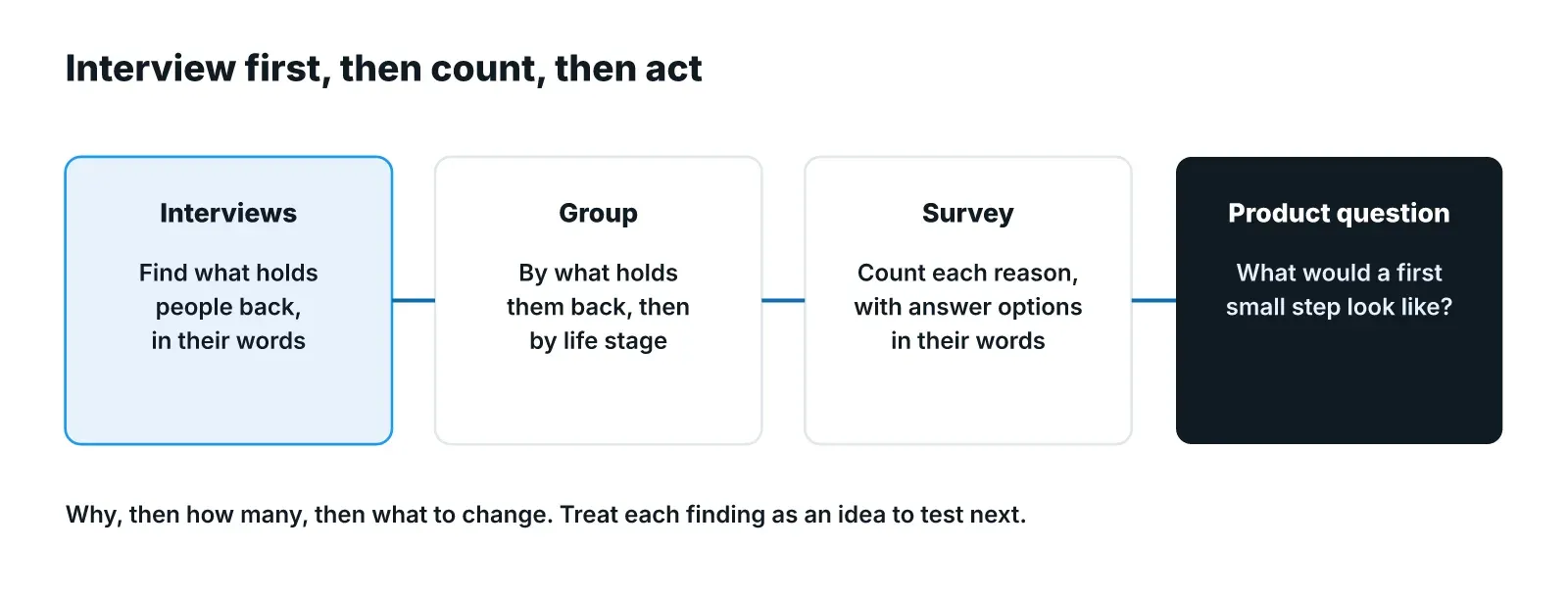
If you want to understand what stops them, talk to them in interviews that ask a second question. If you want to estimate how many share each reason, survey a larger group afterwards, using the reasons the interviews found.
The work runs in four steps, from recruiting people by what they've done to counting the reasons they give.
Say the app's survey offered reasons such as "not enough money", "need to learn more" and "will start soon". Most people ticked the safe one. When a question touches money, people tend to pick the answer that makes them look careful. A survey has no way to ask what sits behind it.
Researchers call this social desirability bias, which means giving the answer that makes you look good to whoever is asking. Money is a topic where it often shows up, because people feel judged on how they handle it.
A survey also counts only the reasons someone on the team thought to list. A fear nobody imagined, like looking foolish in front of a partner or a parent who once lost money, has no box to tick. An open text box helps a little, but there's a separate guide on why typed survey answers stay short.
The survey shows which box felt safest to tick, and it can't show what the person was afraid of.
The people the company most needs to hear from signed up and never put money in, and they're the least likely to answer a survey. So recruit them by what they have done, not by how they describe themselves. Three groups cover most of what the team needs to learn:
Each group stalls at a different point, so each one shows the team a different problem.
The screener is the short set of questions that decides who takes part. Screen on behavior, with a question like "Have you ever bought shares, funds or gold as an investment?" and plain answer options. A label like "beginner investor" works badly, because people apply it to themselves in very different ways.
Recruit across income levels, ages and languages. Don't screen out people with small savings, because they are often the people the app is built for. Keep the thank-you for taking part unrelated to investing, such as a gift card, so nobody joins only to get free shares.
A question like "What is your risk tolerance?" makes a first-time investor feel tested, so they guess. Interviews work better when they make not investing feel normal, ask about real moments in plain words and follow up on the easy answers. They also stay well clear of advice.
Open by telling the person the interview is about their own experience, and that there are no right answers. A participant who feels judged spends the interview defending their choices instead of describing them.
Scales and finance terms make people guess. Stories make them remember.
Before: "On a scale of one to five, how comfortable are you with investment risk?"
After: "Tell me about the last time you thought about investing. What happened next?"
The second question brings back an event, a feeling and a next step. Leave out words like ETF, asset allocation and risk tolerance unless the participant uses them first.
Beginner investing guides from banks and regulators keep asking the same questions. When should I start? How much money do I need? How much risk can I take? Should I get an adviser? Those questions are a ready-made list of worries, so ask what the person believes about each one, and don't correct them.
"I'll start next month" is a common answer, and it ends the conversation unless someone asks more. Good follow-ups keep it going:
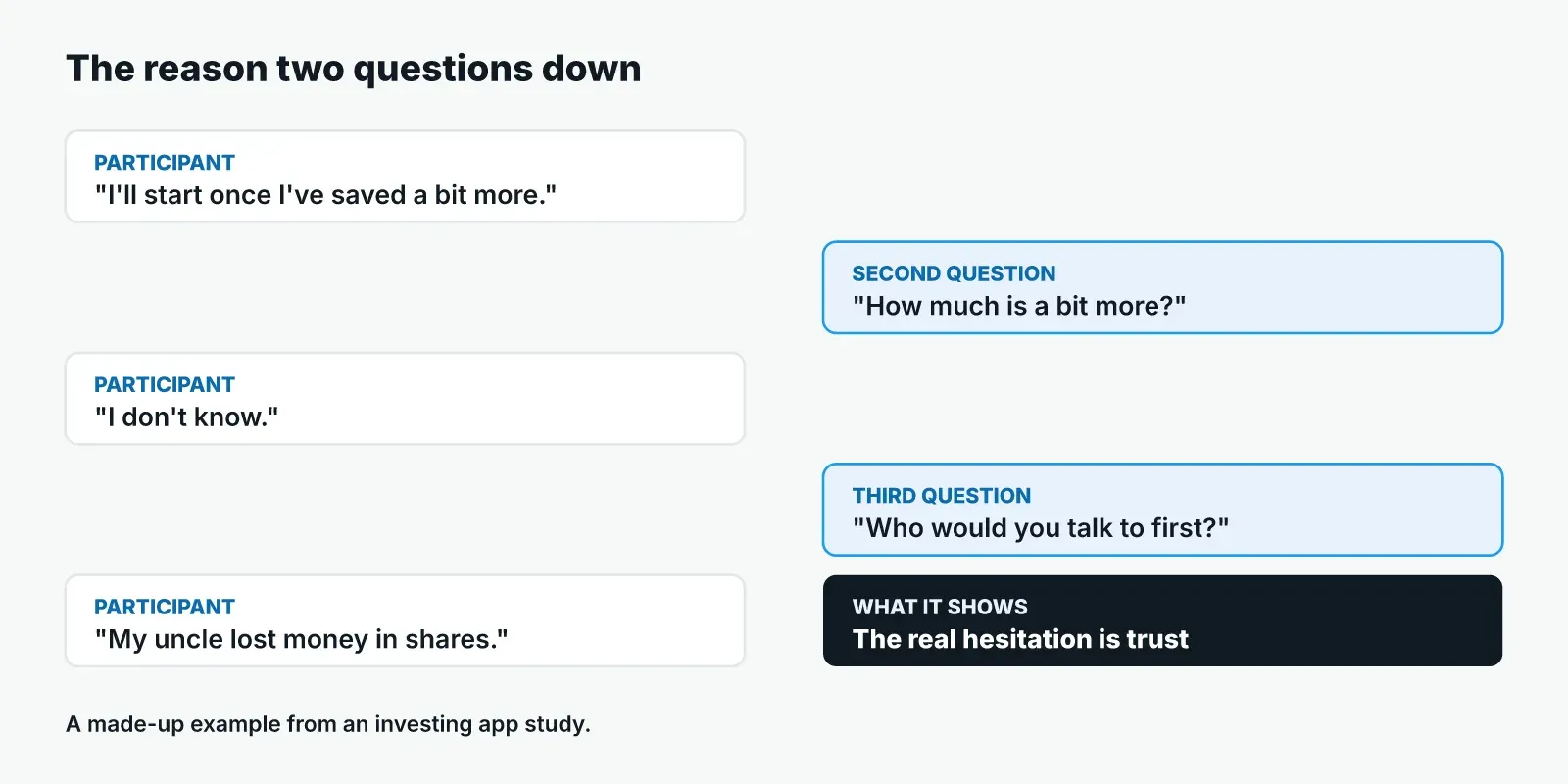
Say a participant tells the interviewer she'll start once she has saved a bit more. Asked how much "a bit more" is, she says she doesn't know. Asked who she would talk to first, she mentions an uncle who lost money in shares. The real hesitation sat two questions down, and it was about trust.
A stated reason is where the interview starts. This kind of listening, aimed at how people feel as well as what they do, is often called empathy research.
If a participant asks what to invest in, the interviewer says they can't give advice and moves on. Once an interview turns into advice or a pitch, the person's later answers bend toward pleasing the interviewer. Agree the exact wording for that moment with the company's legal team before the study starts.
Once the transcripts are in, the product team wants to know what to change. Group what people said by what holds them back, then by life stage. Then count each reason with a survey written in the participants' own words.
Typical groups might be fear of losing money, feeling unqualified, not trusting the app and waiting for a life event. Life stage matters too, because a student and a new parent stall for different reasons.
Using interviews to find the reasons and a survey to count them is called mixed methods research. Write the survey's answer options in the participants' words, so it counts the reasons people gave instead of the reasons the team guessed.
Then turn each reason into a product question. If people feel unqualified, what would a first small step look like? If they don't trust the app, what would show them their money is safe? If a relative's loss holds them back, who in their life needs reassuring? Treat what you find as ideas to test in the next study, since one study speaks only for the people in it.
If the survey says people will "start soon" and sign-ups still don't turn into deposits, interview the people who stalled before you change the app.
First-time investor research needs people to talk about money in their own words, at their own pace. Pulse runs AI-moderated voice interviews that participants take on a phone or laptop by opening a link. There are no calls to schedule, and people can answer at home.
The AI moderator asks every participant the same well-formed questions from one guide. It asks a second question when an answer is vague, and its follow-ups build on what the person said earlier. So "I'll start later" gets a follow-up every time. Interviews can run in 240+ languages, on request, including every Indian language, and one study can run across several markets from one guide.
Surveys run beside the interviews in the same study, so the reasons and the counts arrive together. Pulse groups answers into themes with the quotes behind each one, and every quote links to its transcript. The research team still writes the guide, agrees the no-advice wording and decides what the app should change. To see how a study like this would run, book a demo.
Include them, because they may be the people the app is built for. Ask what amount would feel worth starting with and where that number comes from. "Too little money" can mean a tight budget, or a belief that investing needs a large sum. The second is something the app can address, and the interview tells you which one you're hearing.
Both, because they answer different questions. People who haven't signed up tell you what brings someone to the app. People who stalled tell you what stops them. If you can only do one, start with the people who stalled, because the company can already reach them and they are closest to the decision.
Yes, where you can. Many people find it easier to describe worries about money in the language they think in. In a country with several languages, let participants choose, and read the answers in the original language before you translate any quotes.
Sentiment analysis methods compared for interview data, and how to keep every label next to its quote so anyone can check a theme before you report it.
Your target market customers may not be who you planned for. Check sign-up and payment records, then interview the people who stay and who leave.
What a market research brief must say before the study starts, so everyone who asked for it agrees on the decision, the audience and the result.