How to choose an AI assistant for research
Choosing an AI assistant for research? Match it to the evidence your question needs, then test whether every finding opens to the source behind it.
Measure brand recognition honestly: hide the name, ask which company makes it, add a made-up brand, and ask before you hint.
Your team just redesigned the label on the company's paint cans. Your manager wants to know if shoppers will still know whose paint it is. So how do you ask without giving the answer away?
Knowing a brand from a cue, such as a logo, a color or the look of a can, is called brand recognition.
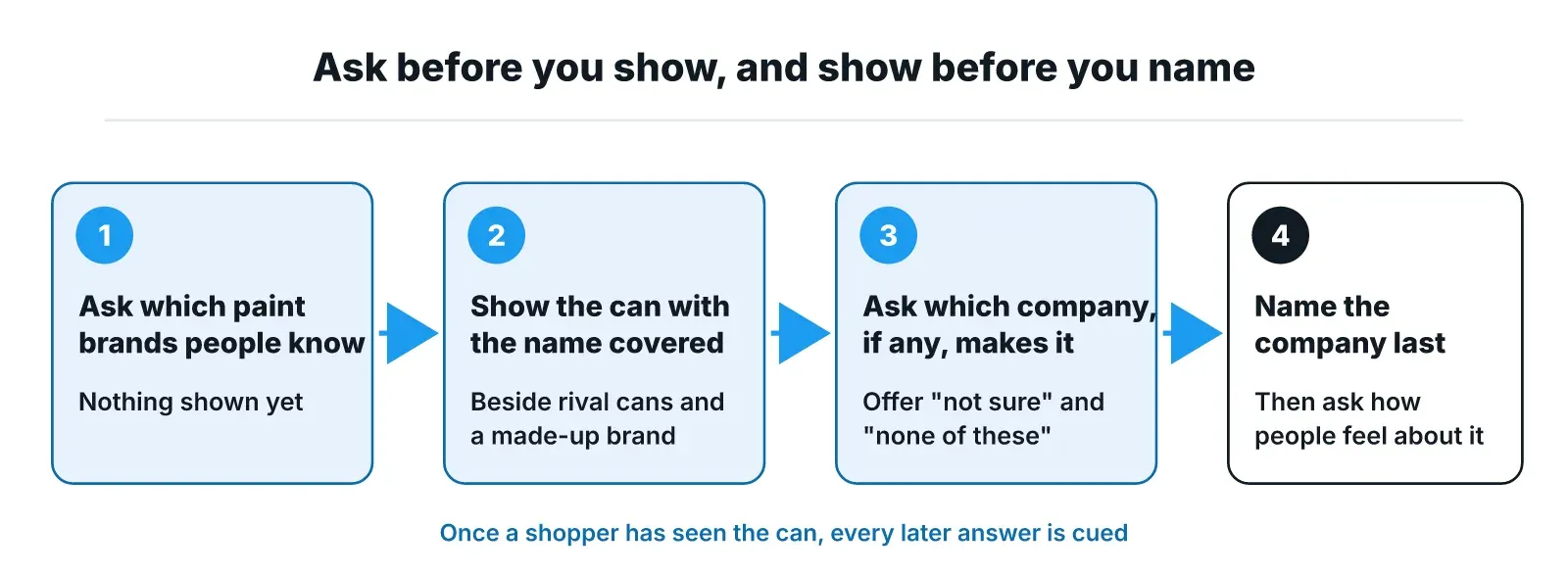
Ask which paint brands people can name before you show anything. Then show the new can with the name covered, and ask which company makes it. Add a made-up brand too, so you can see who says yes to anything.
The way you ask can create the yes you're trying to measure. So a few choices decide whether the answer is honest: what you show, the order you ask in, your words and how you check each yes.
Your manager asked a yes or no question, but a useful answer has more parts. A good brand recognition measure records whether people name the brand with no help and whether they know the can on sight. It also records whether they name the right company, a rival, or a brand that doesn't exist.
Each measure answers a different part of your manager's question.
| Measure | The question you ask | What it tells the paint team |
|---|---|---|
| Brand recall | "Which paint brands can you name?" (nothing shown) | Whether the company comes to mind with no help |
| Recognition | "Have you seen this can before?" (name covered) | Whether the new can looks familiar |
| Correct attribution | "Which company, if any, makes this paint?" | Whether the can points to the right company |
| Misattribution | The same question, answered with a rival's name | Whether the can looks like someone else's |
| False recognition | "Have you seen this can before?" about a made-up brand | How many people say yes to anything |
Brand recall is naming a brand with no help. Researchers also call it unaided recall, because nothing on the screen helps people remember. Recognition is the aided half: you show a cue, and people say whether they know it. Both sit inside brand awareness, the wider idea of whether people know the company exists at all.
Attribution is the step a quick survey tends to skip. A shopper can say "yes, I've seen that" and still think it's a rival's can.
A yes with the wrong company's name attached means the new label is helping a rival.
Once a shopper has seen the new can, they can't unsee it, so every answer after that is cued. Ask which paint brands people can name first. Then show the can with the name and logo covered, and ask which company makes it. Name the company only at the very end.
The same rule covers the invitation. If it says the survey comes from the company, people know which answer you hope for. So keep the name out of the invitation, the survey title and the screener. A screener is the short set of questions that checks each person fits the study.
Show the cue you want to measure on its own, such as the new label pattern on a plain can. If the question is which part of the design people know, test one cue at a time: the color, then the label shape, then the logo with the name taken out.
Show competitors' cans the same way, at the same size and picture quality. Otherwise the new can stands out because it looks different, and that extra attention looks like recognition. Rotate the order too, so the first can shown doesn't collect extra yeses for going first.
Say the team learns that shoppers know the color but not the new label pattern. That tells them which part of the redesign carries the brand, and which part is still new to people.
Shoppers like to be helpful, so a question that hints at an answer tends to get that answer. Word recognition questions so that "no" and "not sure" feel as easy to say as "yes". That means leaving out praise, and any hint that the can is yours or new.
Compare two ways to ask. "You've probably seen our new can. Do you recognize it?" tells people the can is yours, that it's new and that you expect a yes. "Which company, if any, makes this paint?" gives nothing away, and "if any" makes "I don't know" a fair reply.
A question that suggests its own answer is called a leading question. The post on how to spot a leading question walks through the same test in an interview transcript.
Offer "not sure" and "none of these" every time. Without them, people who don't know have to guess. And a guess between your can and two rivals lands on yours some of the time by chance.
Keep questions about liking until after recognition. If people first say how much they like the company, that feeling can color the answers that follow. One overall feeling spilling into other judgments is called the halo effect.
Even with fair questions, some people say yes to everything, out of politeness or haste. So add a made-up brand, or a label that was never sold, and report how many people say they recognize it. That share is your baseline for polite or careless yeses.
Researchers call this a foil, or a dummy brand: a brand that doesn't exist, mixed in with the real ones. If many people "recognize" a can that was never on a shelf, the real can's number carries the same habit.
If shoppers name a competitor for the new can, the cue looks like someone else's.
Then compare against the old can, measured the same way with the same kind of shoppers. A number on its own can't tell your manager whether the redesign helped. Comparing it with the old can's result can. To repeat the check after launch, read the post on tracking a brand measure over time.
The numbers say who knows the can. They can't say why some people mix it up with a rival, or what the new color makes them think of. For that, run a few short interviews: show the can, ask what comes to mind, and ask a second question when the answer is vague.
Suppose a shopper says the new can "looks a bit cheaper". A second question gets more: the old cans used a darker blue, so the new one looks like the store's own brand. That one reason tells the team what to change.
Once interviews show the common mix-ups, a short survey can count how often each one happens.
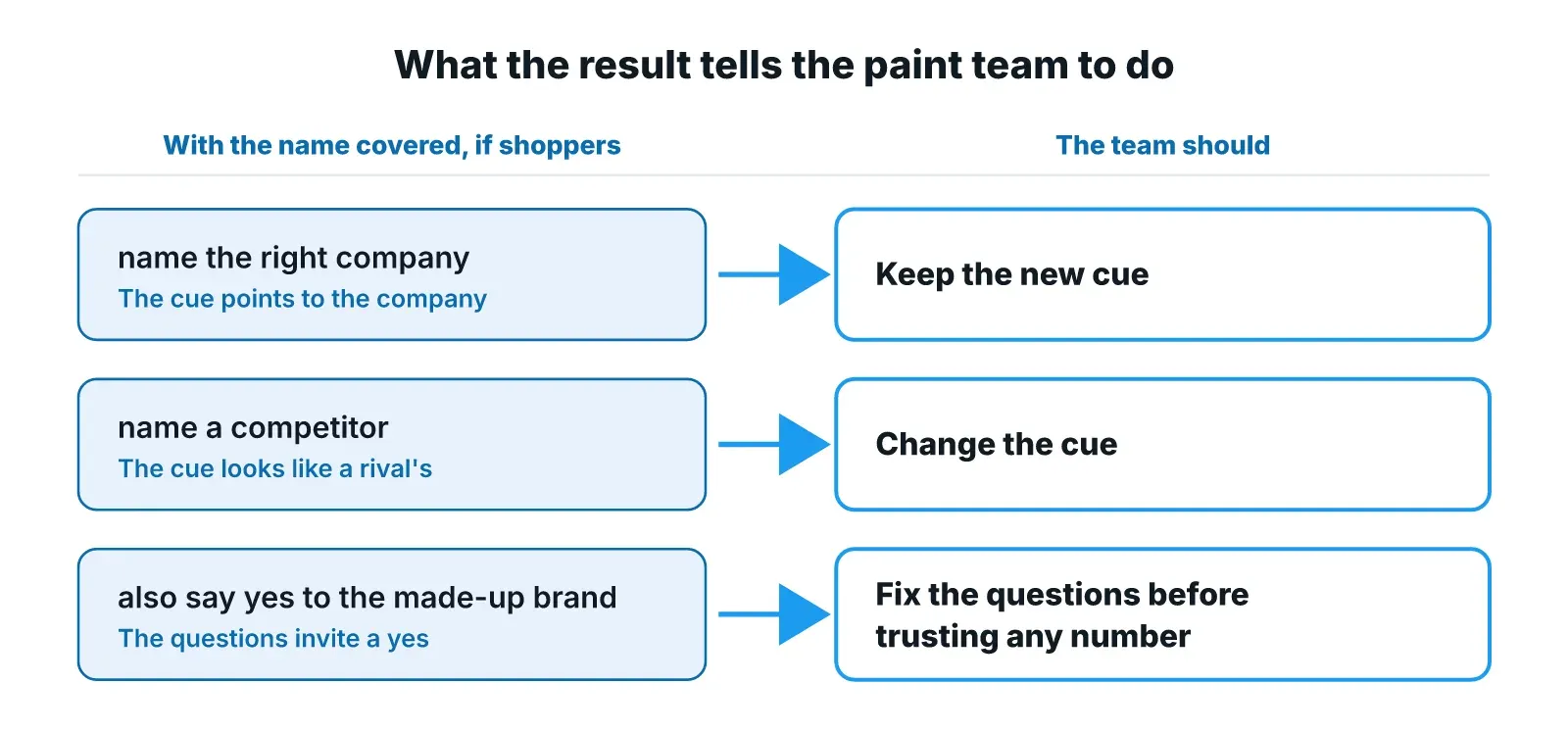
The decision then follows from three results. If people name the right company with the name covered, the cue works. If they name a competitor, change the cue. If they say yes to the foil too, fix the questions before you trust any number.
The paint team needs two things from one study: a count of who recognizes the new can, and the reasons some shoppers mix it up with a rival. Pulse runs surveys alongside AI-moderated interviews in the same study, so the numbers and the reasons arrive together.
Shoppers can be shown the can design during an interview and react to it on screen. The AI moderator asks every participant the same well-formed questions from one interview guide, so no interviewer drops a hint. Its follow-ups build on what the shopper said earlier, and a vague answer gets a second question.
Pulse groups the answers into themes, each with the quotes behind it, and every quote links to its transcript. Later, trackers repeat the same questions wave after wave, so any change after launch shows against the baseline.
If you'd like to see a brand recognition study set up this way, you can book a demo.
Brand awareness is the wider idea: does a person know the company exists at all? Brand recognition is one part of it, where the person knows the brand when they see a cue. Recall is the other part, where they name the brand with no cue. A brand can be easy to spot on a shelf and still rarely come to mind.
Brand recognition shows up whenever someone knows a brand before reading its name. A shopper spots their usual paint by the color of the can from across the aisle. A listener hears a short sound at the start of an ad and knows the company before the logo appears.
Start by measuring where you are, with the name covered and a foil in the list. Then change one cue at a time, such as the color, the label shape or the logo, and measure again the same way. If you change several cues at once, you won't know which one made the difference.
Recognition asks whether people know the brand. Perception asks what they think and feel about it, for example whether the paint seems like good value or cheap. Measure recognition first, with neutral questions, and perception after it. Interviews suit perception well, because the reasons behind a feeling rarely fit in a tick box.
Choosing an AI assistant for research? Match it to the evidence your question needs, then test whether every finding opens to the source behind it.
Jobs to be done interviews at scale: how to keep hundreds of interviews on track, sort what buyers say and check each reason across groups.
How to write a screener survey that lets the right B2B buyers into your interviews: role checks, hidden criteria, quotas and a test run.