What a market research brief must say before a study starts
What a market research brief must say before the study starts, so everyone who asked for it agrees on the decision, the audience and the result.
A brand awareness survey shows who remembers a brand and who only recognizes it. Learn who to ask, how to order questions and how to read the results.
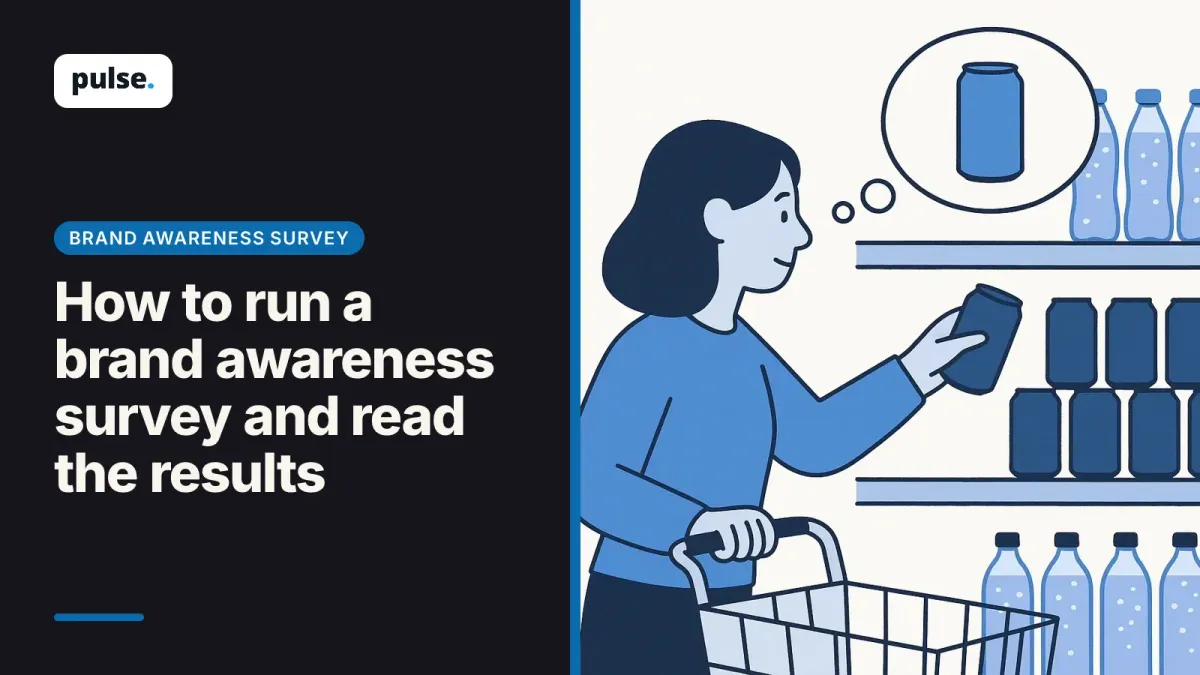
You work at a sparkling-water company that just launched in a new country. You walk into a supermarket there and find the company's cans on the shelf beside other brands. A shopper looks along the row and picks a different one. So do people here know the brand at all?
That is the question a brand awareness survey answers.
It asks people who buy sparkling water which brands they can name on their own, then which ones they recognize from a list. If you want to know who remembers the brand, read the first answer. If you want to know who would know it on the shelf, read the second.
Both answers depend on who you ask and the order you ask in. The most useful part comes later, when you read the gap between them.
Your manager wants one honest answer before the company spends more on the launch. But "knowing a brand" means two different things, so the survey measures both.
Some shoppers can name the brand without any help. Others only know it when they see the can. The first group is likely to think of it when they want a drink. The second group may pick it, but only when the can is in front of them.
Researchers have names for these. Naming a brand without help is called unaided recall. Picking it out of a list is called aided recognition, which is what most people mean by brand recognition. The first brand someone names is called top of mind, because it is the one they think of first.
Awareness is a share of buyers. To calculate it, count the sparkling-water buyers who named the brand and divide by all the buyers you asked. Then do the same for everyone who named it or picked it from the list. Keep the two shares separate, because they answer different questions.
Some teams call this branding awareness, and the survey measures the same two things. What people think of the brand once they know it is a separate brand perception study. Asking the same questions every few months to see what changes is brand tracking.
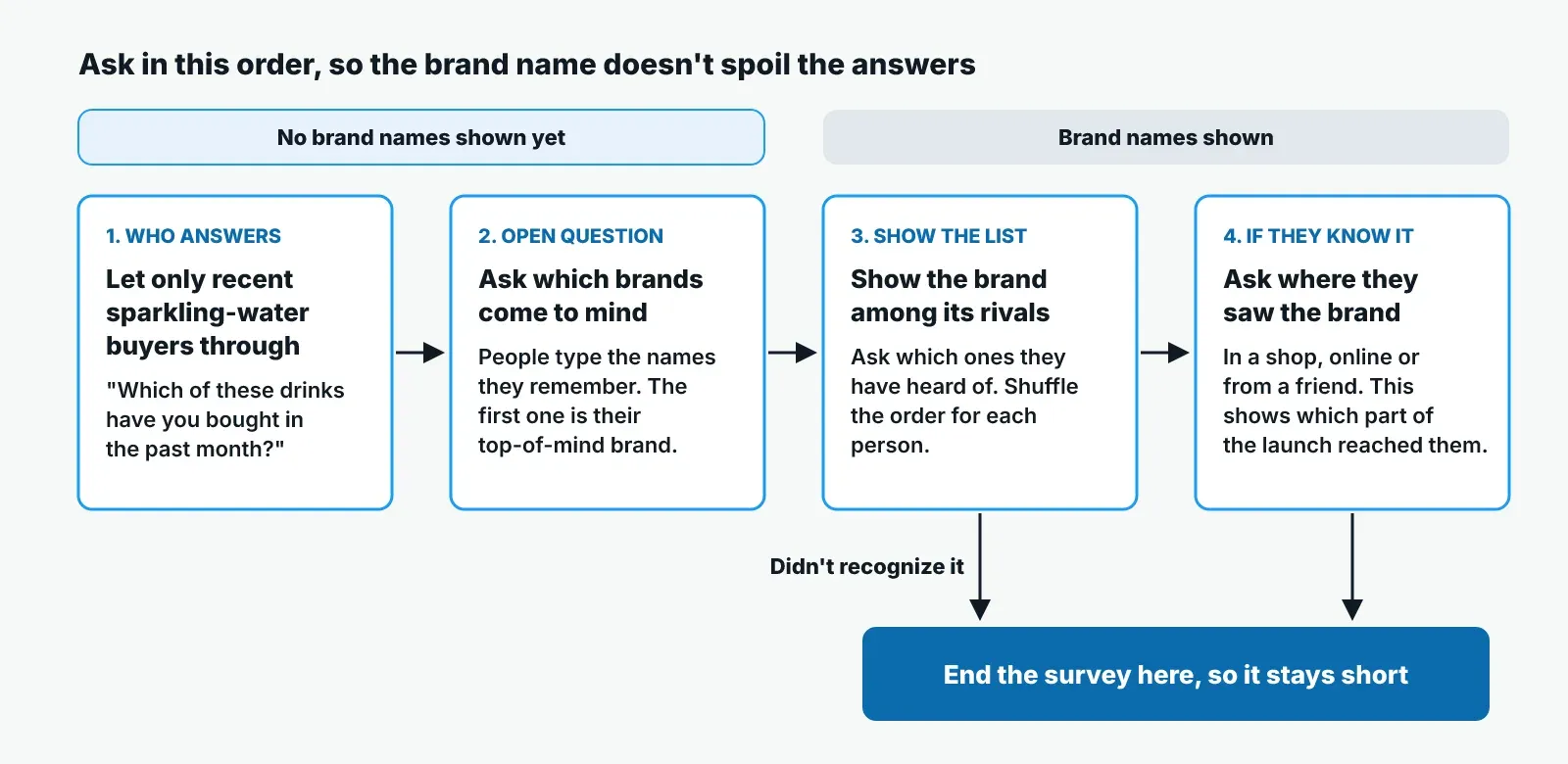
Two choices decide whether your result means anything: who answers, and when they first see the brand name.
If you only survey the company's own customers, every one of them knows the brand, so the number is useless. You want the whole shelf, so you ask people who recently bought any sparkling water in the new country.
You find them with a screener, which is a short question at the start that lets only the right people through. A simple screener asks, "Which of these drinks have you bought in the past month?" and lists sparkling water among several options.
If your manager needs a result for each city or age group, plan enough people in each group from the start, because a small group gives a shaky number. The sample size calculator helps you work out how many people each group needs. If the brand is launching in several countries, keep the same questions, order and screener in each one so the results compare.
Once people see the brand name, they cannot un-see it. So the open question always comes first: "When you think of sparkling water, which brands come to mind?" People type the names they remember, and the first name they type is their top-of-mind brand.
This is also why the brand name stays out of the survey invite and title. If the invite says the survey comes from the brand, everyone thinks of it first, and this answer is spoiled.
Next, show a list of brand names or can pictures and ask, "Which of these have you heard of?" Put the brand in with the brands it competes with on the shelf. Shuffle the order for each person, so no brand gains from always sitting in the same place.
Only the people who recognized the brand get this question: "Where have you seen or heard of it?" Options such as in a shop, online or from a friend show which part of the launch reached them. Then stop, so the survey stays short.
Wording matters as much as order. Pew Research Center's methodology notes for its 2025 social media survey (November 2025) say sampling error is only one source of error, and that question wording can add more. So test each question on a few people, then keep it the same every time you run the survey.
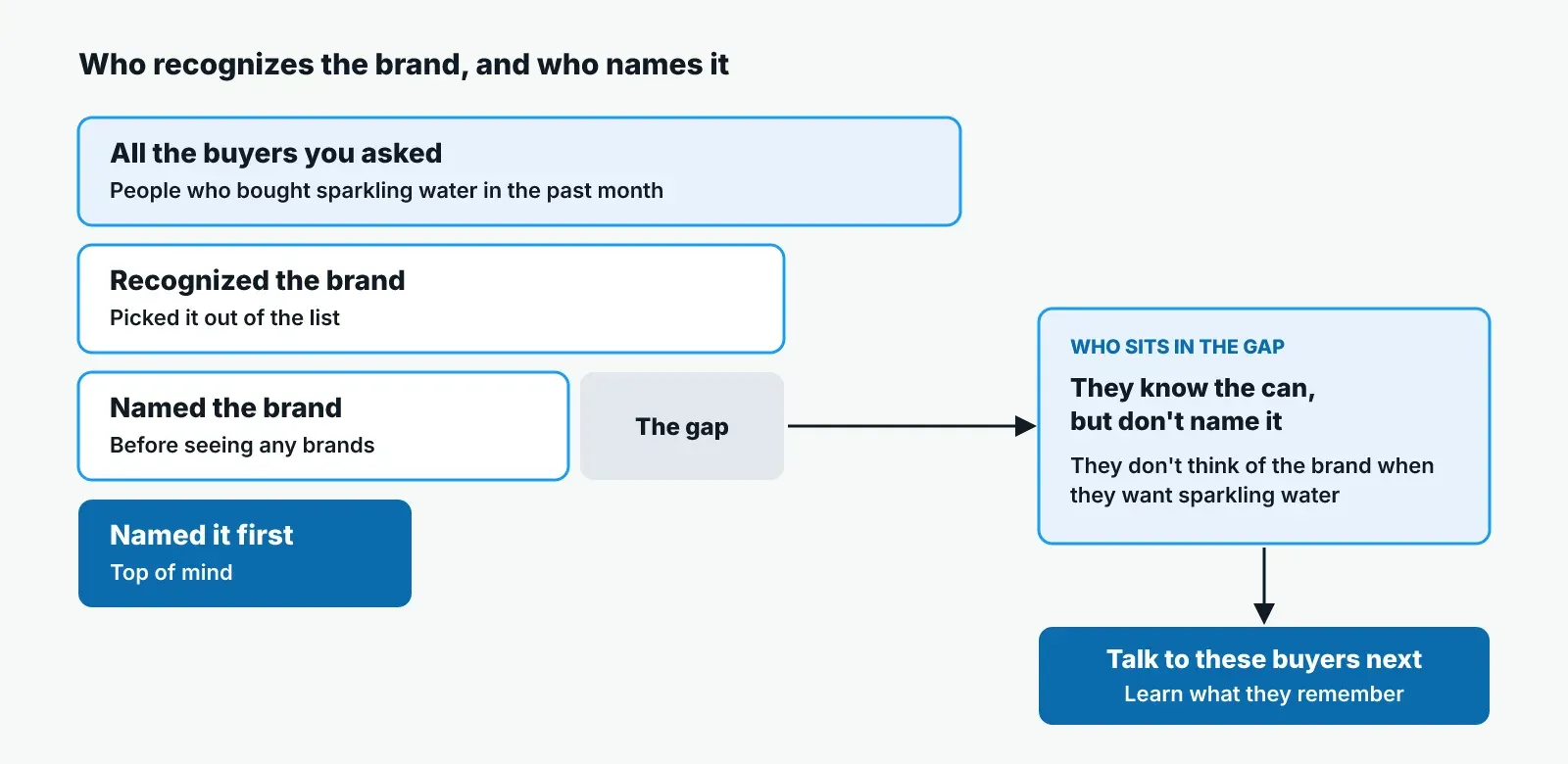
The results are back, and your manager wants to know what they mean. Put three numbers side by side for the brand and each rival: named first, named at all, and recognized from the list.
Each row in this table is a pattern you might see, with what it likely means and where to look next.
| Pattern in the results | What it likely means | What to do next |
|---|---|---|
| Many buyers recognize the brand, but few name it | Shoppers know the can on the shelf, but don't think of it when they want sparkling water | Talk to people who recognized the brand but didn't name it, to learn what they remember |
| Few buyers name or recognize the brand | Most buyers have not come across the brand yet | Check where the cans are sold and seen before you change the message |
| Many buyers name the brand, but few buy it | People already know the brand, so awareness is not what holds sales back | Study what people think of the brand once they know it |
| The numbers are very different from city to city | Each city is at a different stage of the launch | Report each city on its own, with enough people in each |
The gap between recognized and named is where your next decision sits.
Before you call any change real, check its margin of error. Every survey number wobbles a little, because you asked some buyers and not all of them. The margin of error is the size of that wobble, shown as a plus-or-minus range around the number.
Pew Research Center explains in a September 2025 guide to error bars that every survey finding it publishes comes with a margin of sampling error, usually calculated at a 95% confidence level. Even large surveys carry one. Pew's 2025 social media survey of 5,123 respondents had a margin of plus or minus 1.6 percentage points for the full sample, published in November 2025.
The launch survey will probably ask far fewer people, so its margin will be wider. A one-point rise between two surveys is likely noise.
Say the brand team launched in two cities, and your manager wants to know whether shoppers there know the brand before approving more spending. The team asks recent sparkling-water buyers in both cities, with enough people in each city to report it separately.
In the capital, many buyers recognize the can, but few name it when asked which brands come to mind. In the second city, few buyers do either. So the team has two different problems, and each city gets its own next step.
In the second city, the brand has not reached shoppers yet, so the team checks where the cans are stocked. In the capital, shoppers have seen the can, but it doesn't come to mind when they want a drink. So the team plans to talk to buyers who recognized the brand but didn't name it.
The people who recognize the brand but don't name it are the ones to talk to next.
They have seen the can, so they can say what they noticed and what they bought instead. The team will run the survey again after the next change worth measuring, such as a new shelf display, with the same questions, order and screener.
If your manager wants that check every few months, tracking awareness over time works the same way, as long as nothing in the survey changes. Running the same survey as a tracker covers how teams keep those checks frequent.
If you need to know how many sparkling-water buyers know the brand, run the survey. If you need to know why the ones who recognize it don't remember it, talk to them.
The survey shows how many buyers recognize the can, but it can't show why they don't remember it. Pulse runs surveys alongside AI-moderated voice interviews, so you can count first and then hear the reasons from the same kind of buyers. That is the idea behind surveys count, interviews explain.
You can recruit sparkling-water buyers in the new country from a panel of more than 200 million people globally, with a screener for each group and several groups in one study. Interviews run in more than 240 languages, enabled on request. The AI moderator follows each answer and asks a second question when a reply is vague.
Every theme comes with the quotes behind it, and each quote links to its transcript, so your manager can read what buyers said in their own words. You can read more about running a survey beside interviews. To plan the study for your company's next launch, book a demo.
Brand awareness is the share of people who buy the category that know a brand. Divide the number of buyers who named the brand without help by all the buyers you asked. Then divide the number who named it or recognized it from a list by the same total. Report the two shares separately.
Brand awareness research is any study that checks whether the people who buy a category know a brand. A brand awareness survey counts this across many buyers at once. Interviews can follow, to learn why buyers who recognize the brand don't remember it.
Send it to people who recently bought the category in the market you care about, whether or not they buy from the company. A screening question at the start lets only those buyers through. The company's own customers already know the brand, so a survey of them alone tells you nothing about awareness.
A brand awareness survey asks whether people know a brand. A brand perception survey asks what they think of it once they know it, such as whether it seems good value or fits their taste. Awareness comes first, because people can only have a view of a brand they have met.
What a market research brief must say before the study starts, so everyone who asked for it agrees on the decision, the audience and the result.
Research participant fraud explained: seven ways fake or dishonest participants get into a study, and the checks at each stage that catch them.
Why a user research repository goes unused after launch, and six habits that bring product teams back to check it before new research.