How to Write a User Research Interview Guide: Step-by-Step + Examples
Learn to create a user research interview guide that minimizes bias and produces reliable insights. This step-by-step guide covers objectives, structure, and questions.
An effective user research interview guide is a research instrument, not a script. It is the core document that ensures every conversation is focused, consistent, and directly tied to the study’s goals. Without a well-structured guide, interviews can devolve into casual chats that produce interesting anecdotes but no actionable evidence.
This step-by-step guide explains how to create an interview guide that minimizes bias and produces reliable, decision-grade insights. We will cover how to define your objectives, structure the conversation, and write questions that elicit honest, detailed stories about past behavior.
What Is a User Research Interview Guide?
A user research interview guide is a structured document that outlines the topics and questions for a qualitative interview. Its purpose is to ensure consistency across multiple sessions and keep the conversation focused on the research objectives. It is a guide, not a rigid script, allowing the researcher to probe and adapt to the flow of the conversation.
A complete guide contains five essential components:
- Research Objectives: A clear statement of what the team needs to learn.
- Participant Logistics: Key details about the participant (name, segment, schedule).
- Introduction Script: A standardized opening to set expectations and get consent.
- Thematic Question Blocks: Groups of open-ended questions, each tied to a research objective.
- Wrap-Up and Closing: A script for concluding the session and thanking the participant.
Step 1: Define Your Research Objectives First
Before writing a single question for a participant, you must define the questions your team needs to answer. According to user research expert Erika Hall, the most common mistake researchers make is starting with interview questions instead of first clarifying what the business needs to learn to make a decision. Your research objectives are the foundation of the entire study.
To set clear objectives, work backward from the business goal. Start with the broad question and break it down into specific, answerable components that can be investigated through interviews.
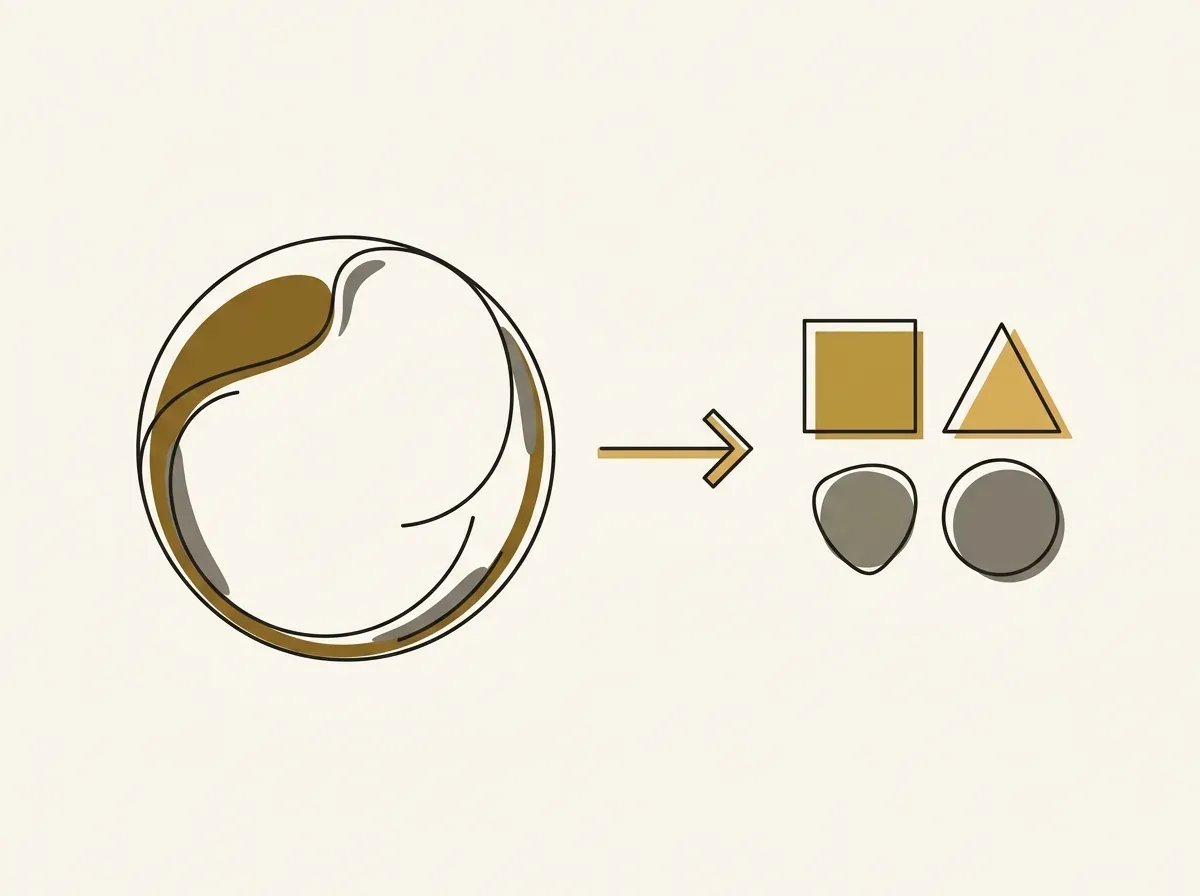
Worked Example: From Business Goal to Research Objectives
- Business Goal: We need to increase the adoption of our new "Project Templates" feature.
- Poor Research Objective: Find out why people are not using Project Templates. (This is too broad and assumes a problem.)
- Good Research Objectives:
- Understand the participant's current workflow for starting a new project from scratch.
- Identify the tools and methods they currently use to manage project setup.
- Determine their awareness and initial understanding of the "Project Templates" feature.
- Identify barriers or friction points they encounter when trying to use the feature.
With these objectives, you can now build question blocks that directly address each one.
Step 2: Structure the Interview Flow
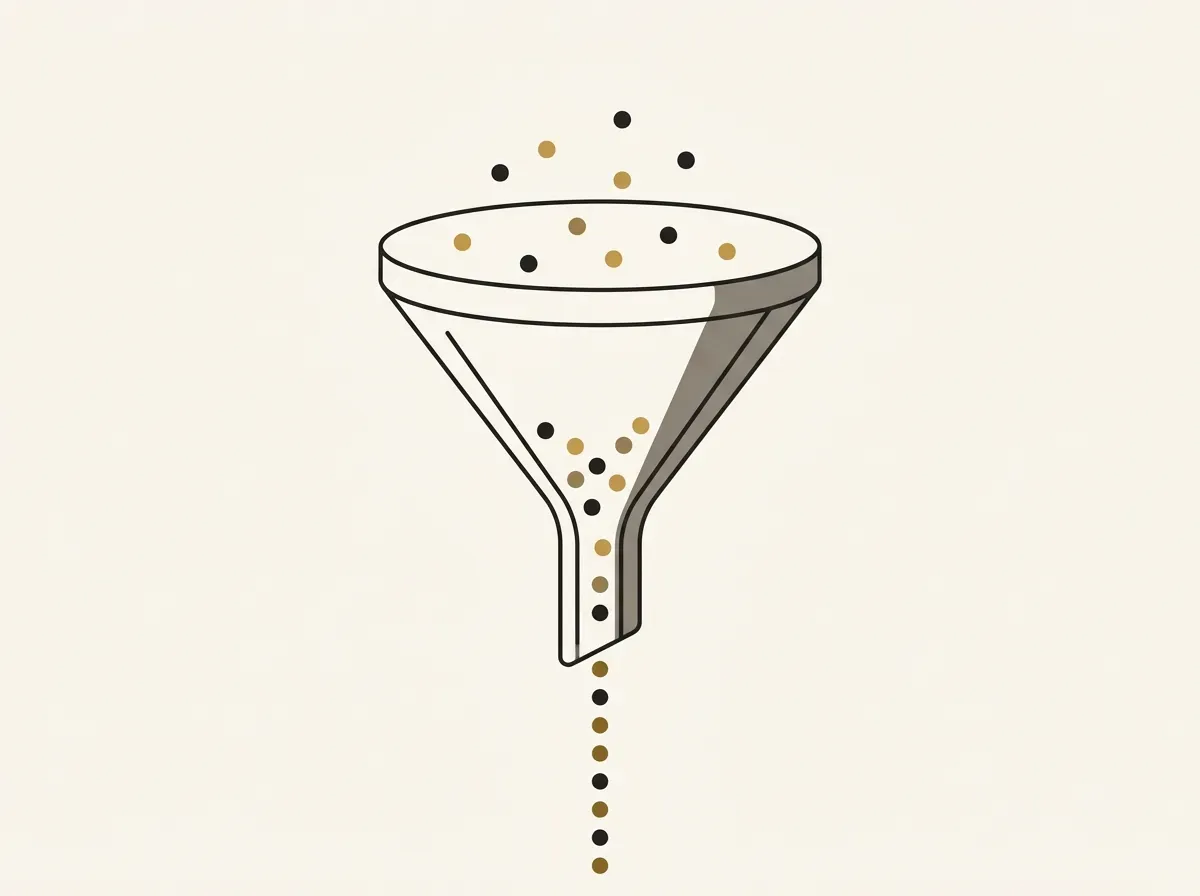
A well-structured interview feels like a natural conversation, but it follows a deliberate path. The most common and effective structure is the funnel technique, which starts with broad, open-ended questions before narrowing down to specifics. This prevents you from biasing the participant early on and helps build rapport.
An interview guide should be organized into four distinct phases.
The Introduction
The first five minutes are critical for setting the tone. Your goal is to make the participant feel comfortable, informed, and valued. Your introduction script should cover:
- Your name and role.
- The purpose of the session: "We're hoping to learn about your experience with..."
- Reassurance: "There are no right or wrong answers. We're testing the product, not you."
- Logistics: Confirm the session length and mention any incentives.
- Consent: Explicitly ask for permission to record the session.
The Warm-Up
Jump directly to questions about your product can feel jarring. Start with broad, context-setting questions about the participant and their world. This builds rapport and provides valuable context for their later answers.
- "Tell me a little about your role and what you're responsible for."
- "Walk me through a typical day for you."
- "What does 'starting a new project' look like in your organization?"
The Main Body
This is the core of the interview, organized into thematic blocks that map directly to your research objectives. For each objective, prepare a handful of open-ended questions designed to encourage storytelling. A semi-structured approach works best here; you have a list of key questions but can probe and ask follow-ups as needed.
The Wrap-Up
End the session gracefully. Leave a few minutes to thank the participant and ask for any final thoughts.
- "That's all the questions I have. Is there anything we talked about that you'd like to add to or clarify?"
- "Do you have any questions for me?"
- Thank them for their time and explain the next steps for receiving their incentive.
Step 3: Write Open-Ended, Unbiased Questions
The quality of your insights depends entirely on the quality of your questions. The goal is to write neutral, open-ended questions that encourage participants to share detailed stories about their past behavior, not speculate about the future.
This means avoiding several common types of biased questions. Leading questions suggest a desired answer, while loaded questions contain an unverified assumption. Both can trigger what psychologists call confirmation bias, where people tend to interpret information in a way that confirms existing beliefs—in this case, the belief embedded in your question.
Use frameworks like TEDW (Tell me about, Explain, Describe, Walk me through) to frame questions that elicit stories.
Here is a comparison of common biased questions and their neutral alternatives.
| Biased Question (Avoid) | Problem | Neutral Question (Use Instead) |
|---|---|---|
| "How much did you enjoy our new, streamlined checkout process?" | Leading: Assumes the user enjoyed it and that it was streamlined. | "Walk me through the last time you checked out." |
| "Was the dashboard clear and easy to understand?" | Closed (Yes/No): Shuts down conversation and encourages simple agreement. | "What were your first impressions of the dashboard?" |
| "What problems did you have with the mobile app?" | Loaded: Assumes the user had problems. | "Tell me about your experience using the mobile app." |
| "Would you use a feature that let you export to PDF and CSV?" | Hypothetical & Double-Barreled: Asks about two things at once and invites speculation, not facts. | "Tell me about a time you needed to get data out of the app. What did you do?" |
For more examples of well-framed questions, Yale University offers a practical list of user interview questions categorized by interview phase.
Common Mistakes and How to Avoid Them
Even with a good structure, several common pitfalls can undermine an interview guide. Research expert Steve Portigal notes that a key challenge is overcoming the natural habits of social conversation, which often conflict with the needs of a research interview.
- Mistake: A simple "laundry list" of questions. A guide isn't just a list; it's a structured flow. Organize questions into thematic blocks tied to your objectives.
- Fix: For each objective, write one key question, then add 2-3 follow-up probes. This keeps the guide focused.
- Mistake: Forgetting to do a dry run. Questions that sound good on paper can be confusing or awkward when spoken aloud.
- Fix: Always pilot test your guide with a colleague. This is a critical step highlighted in nearly every guide to writing interview guides, as it helps you refine wording and check timing.
- Mistake: Following the guide too rigidly. The guide provides structure, but the most valuable insights often come from unexpected tangents.
- Fix: Treat the guide as a checklist, not a script. Be prepared to ask unscripted follow-up questions like "Tell me more about that" or "Why was that important to you?"
- Mistake: Ignoring the guide completely. While flexibility is good, abandoning the guide means you might forget to ask key questions and fail to collect consistent data across participants.
- Fix: Keep the guide visible during the interview. After a participant finishes a thought, glance back at your guide to see which question to ask next to keep the conversation on track.
Run Consistent, Unbiased Interviews at Scale
A well-designed interview guide is the cornerstone of rigorous qualitative research. It ensures that every interview, whether it is your first or your fiftieth, consistently gathers evidence related to your core learning objectives. But maintaining that consistency across dozens of interviews and multiple interviewers is a major operational challenge.
This is where AI-moderated research can help. With a platform like Pulse, you can build your research objectives and question blocks into an AI moderator that conducts hundreds of interviews with perfect consistency. This eliminates interviewer bias and fatigue, ensuring the data you collect is standardized and directly comparable, all while compressing weeks of fieldwork into a single day.
Learn how to run 100 customer interviews by tomorrow morning.
Frequently Asked Questions
How long should an interview guide be?
An interview guide should be long enough to cover your research objectives for the planned session time, typically 45-60 minutes. A common length is 3-5 pages, including the introduction, objectives, and question blocks. The focus should be on themes, not a rigid page count.
What's the ideal number of questions for a 45-minute interview?
There is no magic number, but a good rule of thumb is to have 3-5 core, open-ended questions for each major theme you want to cover. Expect to spend 5-10 minutes on each core question, including probes and follow-ups. A 45-minute session can realistically cover 4-5 major themes in depth.
Should I share the guide with participants beforehand?
No. Sharing the guide can lead to rehearsed, unnatural answers. Participants may prepare what they think you want to hear, which contaminates the data. The goal is to capture their spontaneous thoughts and authentic experiences.
What's the difference between an interview guide and a usability test plan?
An interview guide is for discovery research; its goal is to understand a person's context, motivations, and past behaviors, often through storytelling. A usability test plan is for evaluative research; its goal is to observe a person attempting specific tasks with a product to identify usability problems. While they can be combined, their primary goals are different.