How to Conduct User Interviews: A Step-by-Step Guide
Learn how to conduct user interviews that deliver reliable, decision-grade insights. This guide covers the 5-step process from defining goals to synthesis, plus common mistakes to avoid.
What Is a User Interview?
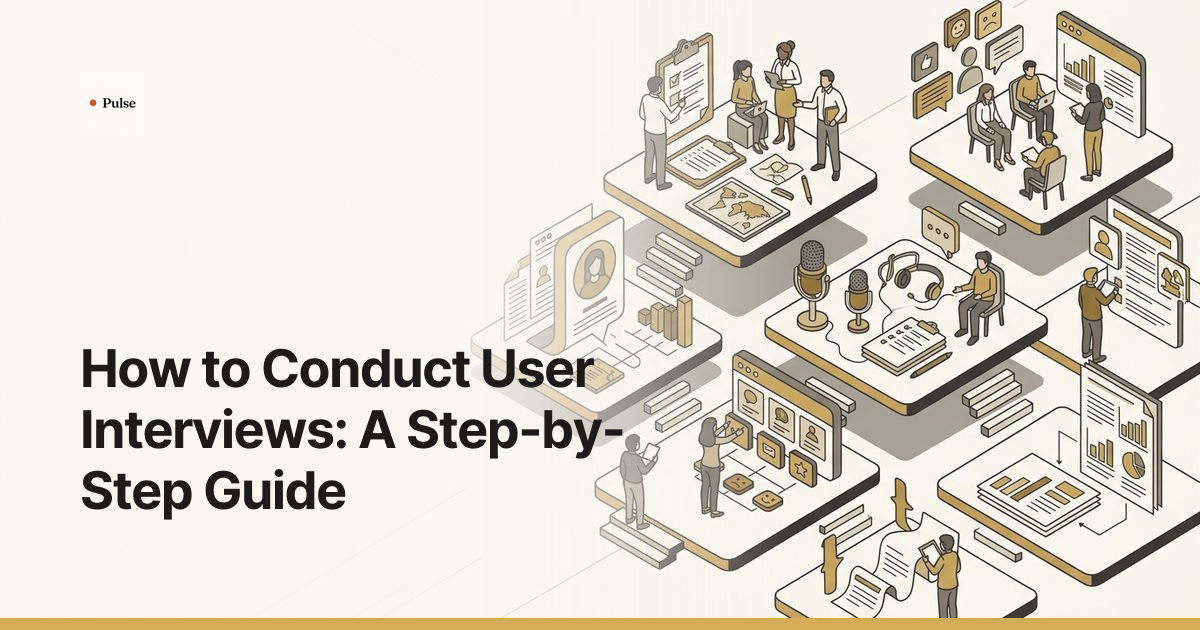
A user interview is a qualitative research method where a researcher asks a participant questions about their experiences and motivations to gain deep insight into their world. It is a tool for discovery, not a sales pitch or a usability test. The primary goal is to understand a user’s problem space, not to validate a preconceived solution or feature idea.
Effective interviews uncover the “why” behind user actions, providing context that quantitative data like surveys and analytics cannot. While analytics can tell you what users did, interviews help you understand why they did it, what they were trying to accomplish, and how they felt along the way. This context is essential for making sound product and business decisions.
The 5 Steps to Conducting Effective User Interviews
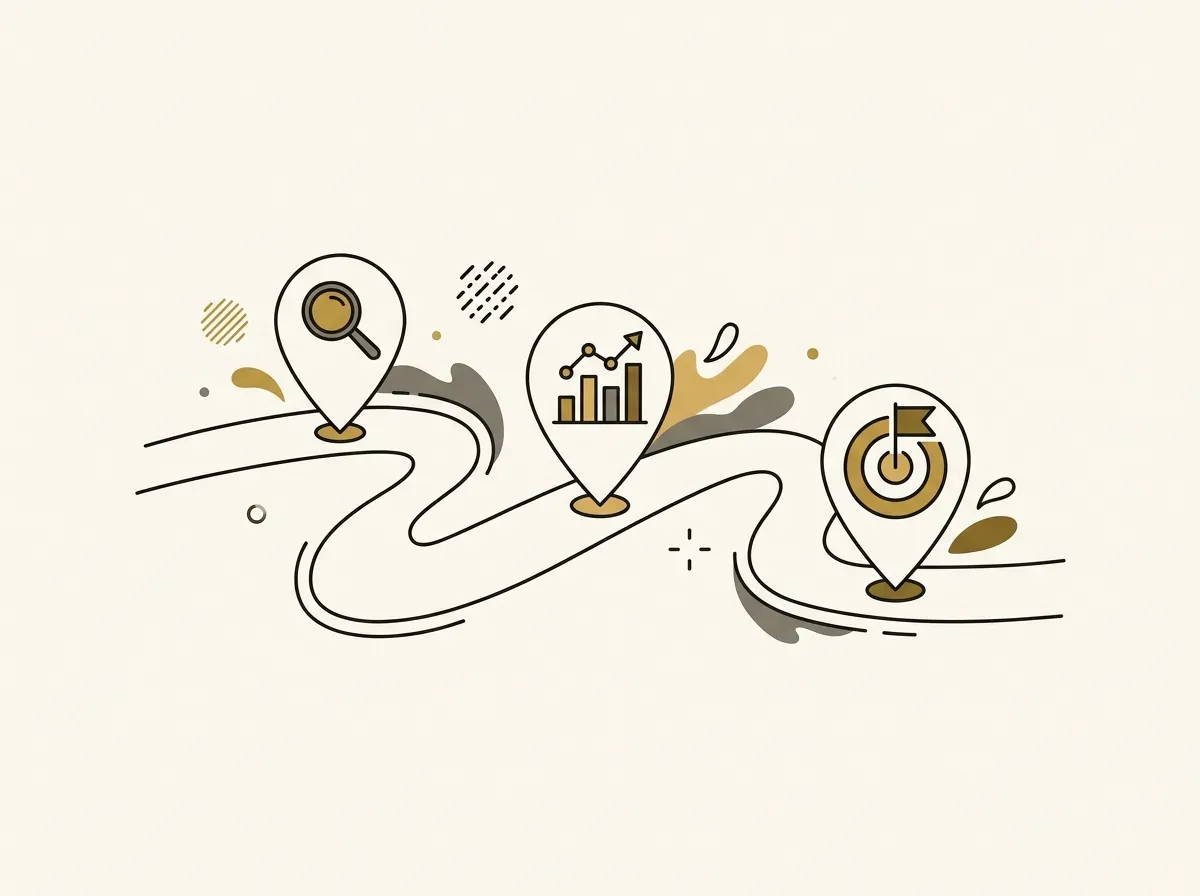
A successful user interview is the result of a structured process, not just a casual chat. Each step builds on the last to ensure the insights you gather are reliable and relevant to the business decisions you need to make. Following this five-step framework helps teams move from vague questions to traceable, decision-grade evidence.
Step 1: Define Clear Research Goals
Before you talk to a single user, you must know what you need to learn. Start with the business decision at stake and formulate a specific, open-ended research question. A good research question identifies and helps eradicate bad ideas quickly. For example, instead of asking, “Do people want a calendar feature?” a better research question is, “How do our users currently manage and schedule their tasks related to our product?” This reframing shifts the focus from validating a solution to understanding the user’s existing behavior and problems.

Step 2: Recruit the Right Participants
The insights you gather are only as good as the people you talk to. Recruiting the wrong participants is the fastest way to get misleading results. Develop a behavioral screener that qualifies participants based on their actual past actions, not just demographics or their stated intentions. For example, instead of asking, “Are you interested in project management tools?” ask, “In the last six months, which project management tools have you used, and for what purpose?” This focuses on concrete behavior, ensuring you speak with people who have relevant, recent experience.
Step 3: Write an Interview Guide, Not a Script
An interview guide is a list of topics and open-ended questions that ensures you cover key areas consistently across all interviews. It is not a rigid script. Your questions should be structured to explore themes, starting broad and getting more specific. Focus on questions about past experiences, like “Tell me about the last time you…”, rather than hypotheticals. This grounds the conversation in actual behavior. Avoid questions that suggest a desired answer; a neutral phrasing is critical for gathering unbiased feedback.
Step 4: Moderate the Session
During the interview, your primary job is to listen. Build rapport to create a comfortable environment, ask your prepared questions, and then probe on interesting answers with follow-ups like “Tell me more about that” or “What were you trying to accomplish there?” As researcher Steve Portigal advises in his book 'Interviewing Users', get comfortable with silence. Pauses give the participant space to think and often lead to richer, more detailed answers that might not have otherwise surfaced.
Step 5: Synthesize Findings Systematically
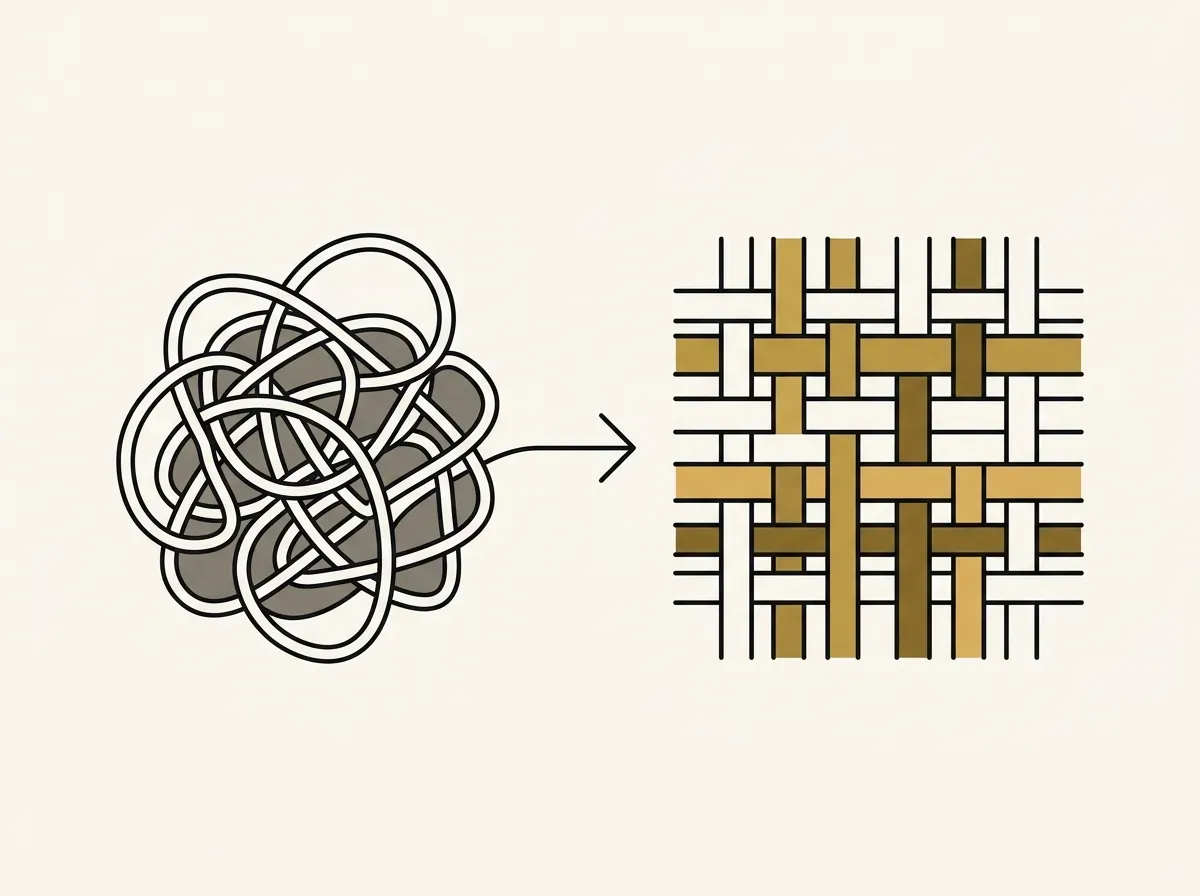
The work is not over when the interview ends. The final step is to systematically analyze the data to find patterns and themes. A common method is Thematic Analysis, which involves familiarizing yourself with the transcripts, coding the data, and grouping those codes into themes. Every insight you report must be traceable back to specific evidence from the interviews. This process turns hours of conversation into a clear, evidence-based narrative that the team can act on.
Common Mistakes and How to Avoid Them
Even with a good plan, several common pitfalls can undermine the quality of interview data. Being aware of these biases and actively working to avoid them is what separates rigorous research from simple anecdote gathering.
Leading the Witness
A leading question is one that suggests a desired answer. For example, asking, “Wasn't it really easy when you used that feature?” pushes the participant toward agreement. A neutral alternative is, “How was that experience for you?” This rephrasing removes the assumption and allows the user to describe their experience in their own words, whether it was easy, difficult, or somewhere in between.
Confusing What People Say with What They Do
Users are poor predictors of their own future behavior. This is known as the intention-behavior gap. Prioritize what participants have done in the past over what they say they will do in the future. For example, Airbnb's research team noticed hosts were sending 1.5 million photo messages per week to explain the check-in process. This observed behavior, a workaround users created themselves, was a far stronger signal of an unmet need than asking users if they would use a check-in feature. This insight directly led to the development of a global check-in tool.
Stopping at a Single Story
A compelling story from one interview can create a powerful bias, causing teams to over-index on a single data point. An individual anecdote is not a finding. A finding is a pattern that emerges systematically across multiple interviews within a specific user segment. Always wait until you have completed and synthesized data from all planned interviews before drawing conclusions.
From Business Question to Interview Guide: An Example
Translating a business problem into effective interview questions is a critical skill. This worked example shows how to connect the dots from a high-level business need to the specific, open-ended questions you would ask a user.
- Business Question: We see a high drop-off rate during onboarding for our new project management tool. Why are users leaving?
- Research Goal: Understand the expectations, motivations, and points of friction for new users in their first session with the product.
- Sample Interview Questions:
- “Walk me through how you currently manage new projects.”
- “Tell me about the last time you tried a new software tool for work. What was that experience like?”
- “Thinking back to when you signed up for our tool, what were you hoping to accomplish?”
- “Can you show me how you got started with the tool after you first logged in?”
Putting Rigorous Interviews into Practice
Conducting effective user interviews is a learnable skill that pays dividends in product strategy and execution. By defining clear goals, recruiting the right people, asking neutral questions, and synthesizing findings systematically, you can generate reliable insights that lead to better decisions. The rigor is not optional; it is what makes the research trustworthy.
For teams that need to run these studies at scale, Pulse automates the moderation and synthesis, allowing you to run hundreds of interviews and get to structured, traceable findings overnight. This compresses the timeline from weeks to hours without sacrificing the quality of the research.
Run 100 interviews by tomorrow morning.
Frequently Asked Questions About User Interviews
How many user interviews are enough?
The goal is to reach thematic saturation, the point where new interviews stop revealing new themes. For a study with a relatively homogenous group of users, most research suggests saturation is reached between 9 and 17 interviews. A Nielsen Norman Group analysis notes that for lean studies with a narrow scope, five interviews can be adequate to surface major themes, but broader discovery questions require more participants to see clear patterns.
Should I record interviews?
Yes, always ask for and receive permission to record the session. Recording allows you to be fully present and engaged in the conversation instead of trying to take perfect notes. It also provides an accurate, verbatim record for analysis, which is essential for ensuring that findings are traceable back to the source evidence and free from recall bias.
How do you compensate participants?
It is standard practice to offer an incentive to thank participants for their time and expertise, especially since B2B participants are often giving up billable or salaried work time. For a typical 60-minute remote interview, a rate of $100 to $200 is a widely accepted standard. A 2025 analysis by User Interviews of nearly 20,000 studies found the most common incentive for a remote, one-on-one B2B interview was $112. Rates for senior professionals or C-suite executives can range from $200 to over $500 per hour, depending on the niche nature of their role.
What is the difference between a user interview and a usability test?
A user interview is a discovery method focused on the user’s life, problems, and context. The goal is to understand their world. A usability test is an evaluation method focused on a user’s interaction with a specific product or prototype. The goal is to identify where the design, not the person, fails.