What Is AI-Moderated Research? A Complete Guide
AI-moderated research uses an AI agent to conduct structured interviews, delivering qualitative insights at scale. Learn how it works and where it excels.
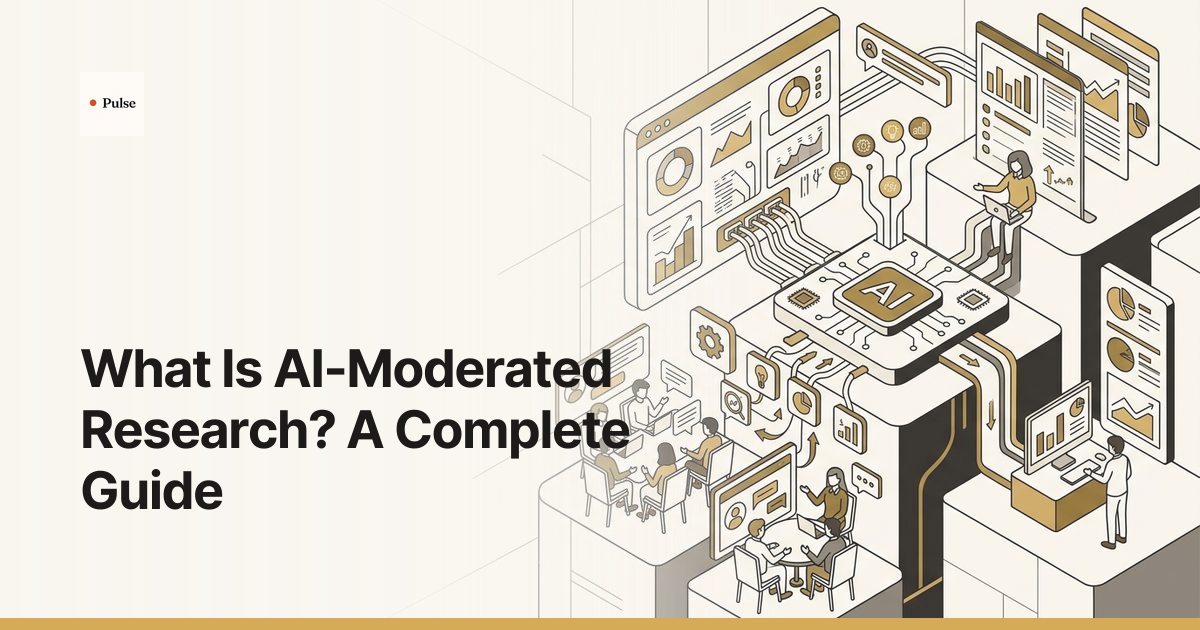
The time it takes to run a qualitative study, from kickoff to final report, is a significant bottleneck for many teams. Industry benchmarks show a typical project can stretch from six to twelve weeks, a timeline driven by the complex logistics of recruiting, scheduling, and analysis. This forces teams to make critical decisions with incomplete evidence because a thorough study would simply take too long. AI-moderated research is a method designed to close this gap by compressing the timeline for in-depth interviews from weeks into hours, without sacrificing the integrity of the research.
What Is AI-Moderated Research?
AI-moderated research is a method where an AI agent, rather than a human, conducts structured interviews with participants through voice or text. The AI follows a predefined script, asks open-ended questions, presents stimuli like concepts or designs, and captures verbatim responses for analysis. This approach allows for qualitative insight at quantitative scale, blending the depth of interviews with the speed of automated methods.
This approach is distinct from "AI-assisted" research. AI-assisted work typically involves using artificial intelligence for post-interview tasks like transcription, summarization, or theme detection on conversational data gathered by humans. AI-moderated research, in contrast, automates the interview itself, a method that is gaining traction for specific types of qualitative data collection.
The core difference from traditional human-moderated interviews is the trade-off between consistency and dynamic probing. A human moderator can sense nuance and go off-script to explore an unexpected tangent. An AI moderator ensures every participant is asked the same questions in the same way, eliminating moderator drift and creating a clean, comparable dataset.
Why AI-Moderated Research Matters for Research Teams
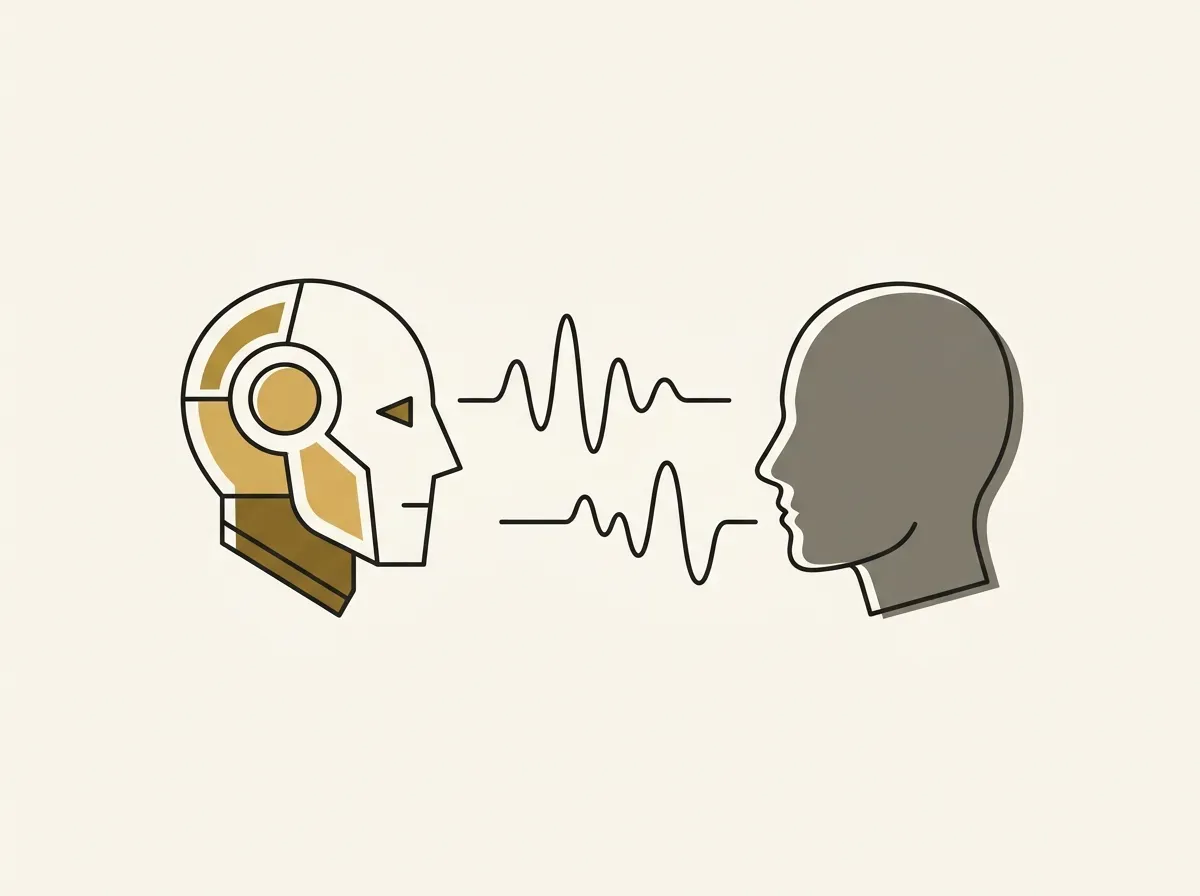
AI-moderated research helps teams get trustworthy qualitative evidence faster and at a scale that was previously impractical. It addresses four chronic challenges in the research process: the speed of fieldwork, the limited scale of typical studies, the risk of human bias in moderation, and the difficulty of tracing findings back to raw data.
Speed
A traditional agency-led study with 20 to 40 interviews can take six to twelve weeks to complete, with much of that time spent on the operational work of finding and scheduling participants. According to Nielsen Norman Group, this kind of complex coordination is a core challenge for research operations. AI-moderated platforms can run fieldwork for a study with 100 interviews in 24 to 48 hours. This compresses the timeline for insight, allowing research to keep pace with product sprints. A comparative study from the UK government found that using AI to support evidence reviews significantly increased the speed of analysis, demonstrating how automation can accelerate the research lifecycle.
Scale
Most qualitative studies are limited to 6-8 interviews, which is enough to identify problems but not enough to know how widespread they are. By automating moderation, teams can run studies with hundreds of participants. For example, the global data analytics firm NielsenIQ uses its AI-moderated interview platform to conduct hundreds of interviews at scale, compressing research that once took weeks into days. This scale allows researchers to move beyond anecdotal evidence, identify patterns that generalize across segments, and gain confidence in their findings.
Consistency
Human interviewers, no matter how well-trained, introduce variability. They can drift from the script, ask leading questions, or unconsciously signal approval or disapproval, which influences participant responses. This interviewer bias is a well-documented phenomenon that can distort research findings. AI moderation eliminates this variable by asking every question with perfect consistency, ensuring that differences in responses come from the participants, not the process.
Traceability
In a traditional study, the final report often presents high-level themes and a few cherry-picked quotes. It can be difficult to audit a finding or understand its full context. In an AI-moderated study, every theme and finding is directly linked to the verbatim transcripts. This creates an auditable evidence trail from a top-line insight all the way back to the specific words of every participant who expressed that sentiment.
How an AI-Moderated Study Works in Practice
An AI-moderated study consists of four main stages, with human researchers responsible for the strategic design and final interpretation. The AI handles the repetitive, time-consuming tasks of data collection and initial structuring, freeing up the researcher to focus on higher-level analysis.

1. Study Design
This is the most critical stage and remains entirely human-led. A researcher defines the business objective and the questions the study needs to answer. They write the screener questions to find the right participants and design the interview guide the AI will follow. This includes the core open-ended questions, any follow-up probes, and the visual or audio stimuli (like concepts or ad copy) to be tested.
2. AI Interviewing
Once the study is designed, the platform automates recruitment and fieldwork. Qualified participants are invited to a one-on-one session. They speak with an AI voice agent in a natural, conversational format. The AI asks the questions from the script, listens to the participant's open-ended responses, and records the entire session.
3. Data Structuring
As interviews are completed, the platform gets to work. It transcribes the audio from every session into text. This unstructured conversational data is then processed and structured for analysis. The system identifies key themes, tags responses by topic, and prepares the data for the researcher to explore. This step, which could take a researcher days of manual coding, happens in minutes.
4. Synthesis and Analysis
The researcher receives a structured dataset. Instead of a pile of transcripts, they get a dashboard showing common themes, key quotes, and patterns across different participant segments. The human researcher explores this data, interrogates the findings, pulls out the most important insights, and builds the narrative that will inform the business decision.
Where AI Moderation Excels (and Where It Doesn't)
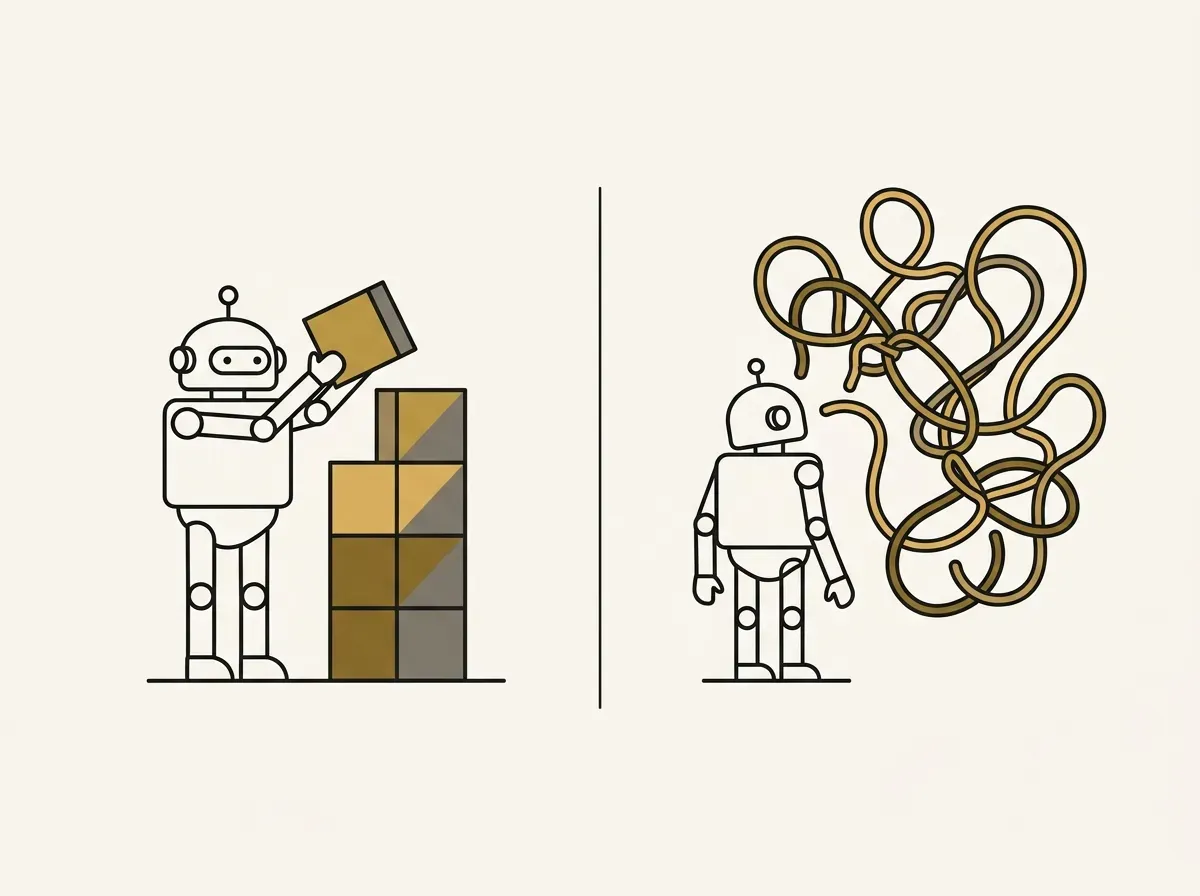
AI moderation is a powerful tool, but it is not the right tool for every research question. Its value depends on using it for the right applications. The core principle is this: use AI moderation to test a hypothesis at scale, and use human moderation to form the hypothesis in the first place.
Best-Fit Applications
- Concept and Message Testing: When you need to get reactions to several well-defined concepts from a large, representative audience.
- Feature Prioritization: To understand the "why" behind user needs at scale before committing to a product roadmap.
- Usability Studies: For capturing initial reactions to a flow or design across many users to identify common points of friction.
- Brand Tracking: To gather open-ended perceptions about a brand from hundreds of customers on a recurring basis.
Where Human Moderation Remains Essential
AI is not a replacement for an experienced human researcher in situations that require deep empathy, cultural interpretation, or dynamic exploration.
- Exploratory and Ethnographic Research: When you don't yet know what questions to ask, a human is needed to follow the conversation wherever it leads.
- Sensitive Topics: While some studies show participants may disclose more sensitive information to an AI because they feel less judged, a human is essential to manage participant distress. Research has found that self-disclosure can be easier with avatars than with humans, but this does not replace the need for genuine empathy when dealing with vulnerable participants.
- Complex Narratives: Recent studies highlight a clear "AI empathy gap." AI moderators struggle to interpret sarcasm, contradiction, or complex stories that require a deep understanding of human experience and cultural context. They can simulate empathetic responses but lack genuine emotional understanding.
- Executive Interviews: Building rapport with and probing senior stakeholders requires a level of social and professional nuance that AI cannot replicate.
Putting AI-Moderated Research to Work
For teams considering this method, the most important factor is the quality of the study design. The "garbage in, garbage out" principle applies with absolute force; a brilliantly executed AI interview study based on a poorly framed question will only deliver flawed insights faster. The human researcher's expertise in framing the business problem and writing unbiased questions remains the most valuable part of the process.
When the design is sound, AI moderation opens up new possibilities. Teams can get rich qualitative evidence for decisions that previously relied on gut instinct or proxy data from surveys.
Pulse runs AI-moderated interviews that deliver research-grade insight. The platform handles the design, fieldwork, and synthesis, turning hundreds of conversations into a structured, traceable dataset. It allows teams to answer critical business questions overnight, with evidence they can stand behind. You can run more studies, test more ideas, and build a deeper understanding of your customers.
Frequently Asked Questions
How is AI-moderated research different from a chatbot survey?
A chatbot survey typically uses a text interface and follows a rigid, branching logic with predefined answer choices. AI-moderated research uses a voice interface to conduct a more natural, open-ended conversation. It is designed to capture rich, unstructured qualitative data, not just to collect answers to multiple-choice questions.
Can an AI moderator ask intelligent follow-up questions?
Current AI moderators excel at following a structured interview guide with predefined probing questions. For example, it can be scripted to ask "Tell me more about that" if a certain keyword is mentioned. It cannot, however, generate truly novel, context-aware follow-ups based on a deep understanding of the participant's story in the way a human can.
What sample sizes are typically used in these studies?
While you can run a study with as few as 10 participants, the real advantage of AI moderation appears at scale. Teams commonly run studies with 50 to 200 participants. This provides enough data to see how themes differ across customer segments and to have higher confidence that the findings are representative, not just anecdotal.
Is the data quality reliable enough for strategic business decisions?
Yes, provided the study is well-designed. The reliability comes from the combination of a strong, human-led research design and consistent, unbiased AI execution. Because every theme and finding is traceable back to the source interviews, stakeholders can see the evidence for themselves, which builds trust in the results.