Customer Discovery Interviews: How to Conduct Them + Questions to Ask
Learn how to conduct effective customer discovery interviews to validate your product idea. This guide covers a 5-step process and questions to ask.
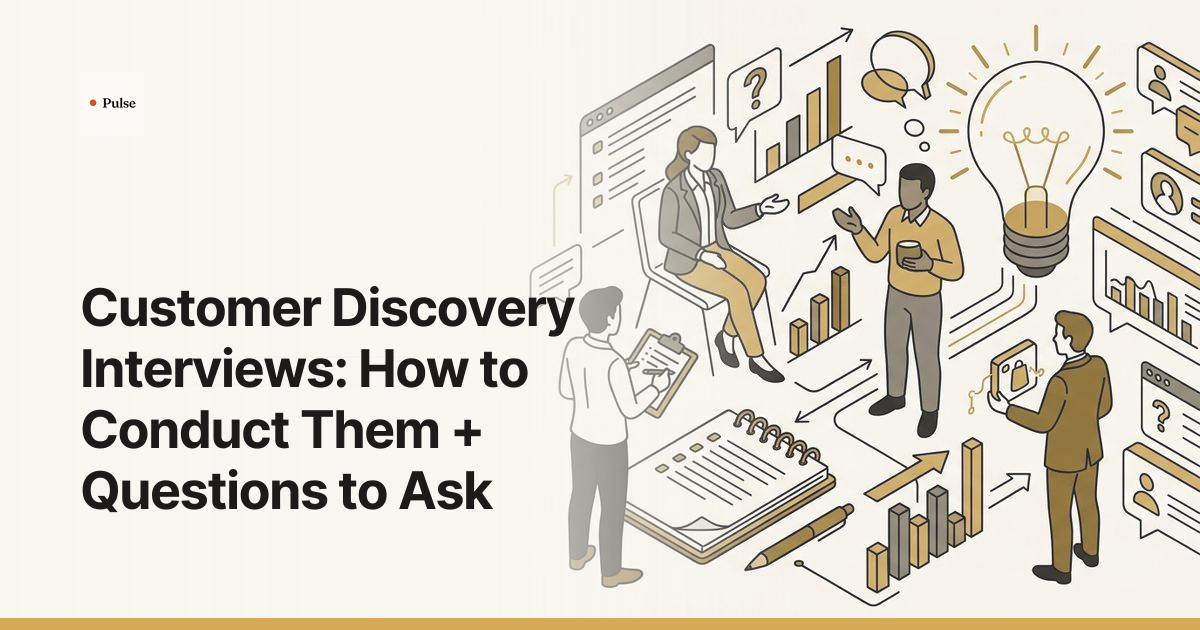
Building a product that nobody needs is the most common reason new ventures fail. A 2024 analysis of 431 failed startups by CB Insights found that 43% failed due to poor product-market fit, making it the single biggest killer of new products. The most direct way to avoid this fate is to talk to potential customers before you build anything. This is the work of customer discovery interviews: a structured process for understanding a customer’s world so you can build something they will actually use and pay for.
This guide provides a step-by-step process for conducting effective customer discovery interviews. You will learn how to define your goals, find the right participants, and ask questions that uncover real problems instead of polite opinions.
What Are Customer Discovery Interviews?
Customer discovery interviews are semi-structured conversations designed to understand a potential customer's problems, needs, and existing workflows. The primary goal is learning, not selling a solution or validating a specific design. These interviews happen before a product is fully developed, often before a single line of code is written.
This method was first formalized by entrepreneur Steve Blank as the foundational step of his Customer Development methodology, detailed in his book The Four Steps to the Epiphany. His core principle, "get out of the building," insists that founders must test their assumptions about a customer's problems by speaking directly with them. This is different from a sales call, which pitches a solution, and from a usability test, which evaluates how easy a specific product is to use. In discovery, the product is the customer's problem itself.
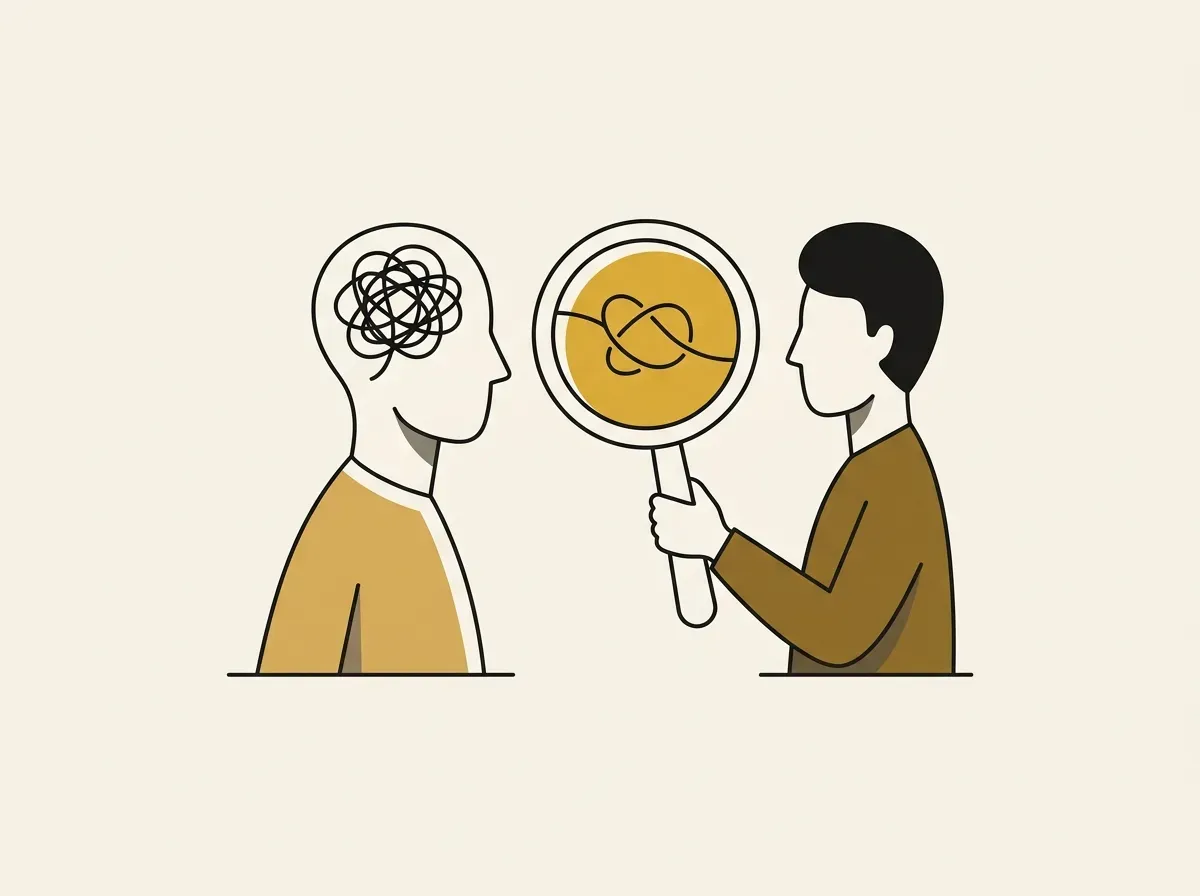
Why Customer Discovery Is Critical Before You Build
Running customer discovery interviews is the most effective way to de-risk product development. By validating that a customer's problem is real, urgent, and worth solving, you avoid investing time and capital into building a solution in search of a problem. This process grounds your product strategy in direct evidence from the market.
The data on product failures consistently points to a disconnect with customer needs. As the CB Insights analysis shows, poor product-market fit is the most common fatal mistake. Customer discovery directly addresses this risk by forcing teams to confront their core assumptions with real-world evidence. It is the disciplined practice of ensuring you are building something people will pay for.
How to Conduct Customer Discovery Interviews: A 5-Step Process
A successful discovery process moves from broad assumptions to specific, actionable insights. Following a structured process ensures your interviews are consistent, focused, and produce reliable findings.
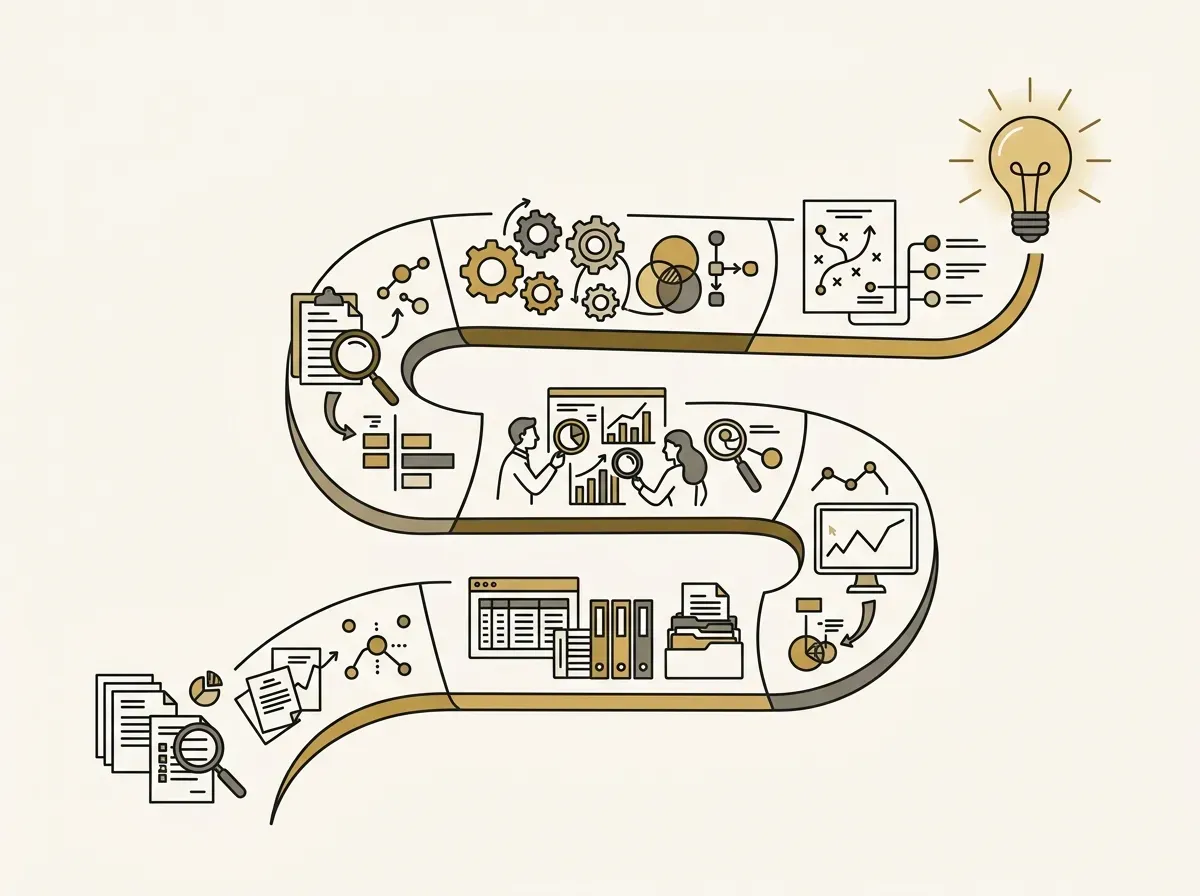
Step 1: Define Your Learning Goals
Start by identifying your riskiest assumptions. What must be true about your customer and their problem for your product idea to succeed? Frame these assumptions as questions you need to answer. For example, an assumption like "Companies struggle to analyze customer feedback" becomes a learning goal: "How do product teams currently analyze customer feedback, and what are the most frustrating parts of that process?"
Step 2: Find and Screen Participants
Your insights are only as good as the people you talk to. Define your target customer segment with specific criteria. You need to speak with people who have direct, recent experience with the problem you are exploring. Create a screener survey to filter for these attributes, ensuring you are not interviewing people who are merely adjacent to the problem or who last experienced it years ago.
Step 3: Craft Your Interview Guide
Your interview guide is a list of open-ended questions, not a rigid script. It should be structured to explore the customer's context, their problems, and any workarounds they currently use. Focus on questions about past behavior, which provide factual evidence, rather than asking for opinions about the future. A good guide helps you cover key topics consistently across all your user interviews.
Step 4: Conduct the Interview
The moderator’s job is to listen, not to talk. Start by building rapport and setting the expectation that you are there to learn about their world. Your goal is to get them telling stories about specific past experiences. Ask follow-up questions like "Why was that important?" or "Can you tell me more about that?" to dig deeper. Crucially, resist the urge to talk about your solution; pitching your idea immediately changes the dynamic and prevents honest feedback.
Step 5: Synthesize and Share Findings
A single interview is an anecdote; a pattern across multiple interviews is a finding. After each conversation, document your key takeaways. Look for recurring themes, pain points, and behaviors across all your interviews. This synthesis process is what turns raw conversations into structured insights that can inform product strategy. For teams running dozens of interviews, platforms like Pulse can accelerate synthesis from weeks to hours by automatically identifying themes and tracing them back to the original conversations.
Customer Discovery Questions to Ask (and Avoid)
The quality of your discovery depends entirely on the quality of your questions. Good questions prompt stories about past behavior; bad questions ask for opinions and hypotheticals. This approach, popularized by Rob Fitzpatrick in his book The Mom Test, is about framing questions so that you get the truth, not just a compliment.
Avoid leading questions that suggest a correct answer. Instead, use neutral, open-ended questions to let the participant guide the conversation.
| Effective Questions (Behavioral & Problem-Focused) | Ineffective Questions (Hypothetical & Leading) |
|---|---|
| "Walk me through the last time you dealt with [problem area]." | "Would you use a product that did X?" |
| "What was the hardest part of that process?" | "Do you think this is a good idea?" |
| "How are you currently handling this?" | "What features are missing from the market?" |
| "What, if anything, have you done to try and solve this?" | "How much would you pay for a solution like this?" |
| "Tell me more about why that was frustrating." | "Wasn't it difficult when the system crashed?" |
The principle is simple: people are reliable reporters of what they have done in the past but poor predictors of what they will do in the future. Ground your questions in specific, past events to get factual data.
Common Mistakes in Customer Discovery (and How to Avoid Them)
Even with a good process, several common pitfalls can undermine your research.
- The Problem: Pitching instead of listening. Many founders get excited and start describing their solution. This shuts down learning and turns the interview into a sales pitch.
- How to Fix It: Enforce a strict "no solution talk" rule for the first 80% of the interview. Focus only on the participant's problems and workflow.
- The Problem: Interviewing the wrong people. Speaking to people outside your target segment produces irrelevant or misleading data.
- How to Fix It: Design a rigorous screener that filters for direct, recent experience with the problem you are investigating, not just demographic alignment.
- The Problem: Asking for opinions instead of facts. Questions like "Would you use this?" generate polite but useless data.
- How to Fix It: Consistently reframe questions to be about past behavior. Instead of "What do you want?" ask "What have you tried?"
- The Problem: Treating one interview as a definitive finding. A single compelling story can create confirmation bias, leading you to overvalue an anecdote.
- How to Fix It: Commit to a rigorous synthesis process across a sufficient number of interviews. Look for patterns that appear in at least three to five conversations before treating something as a theme.
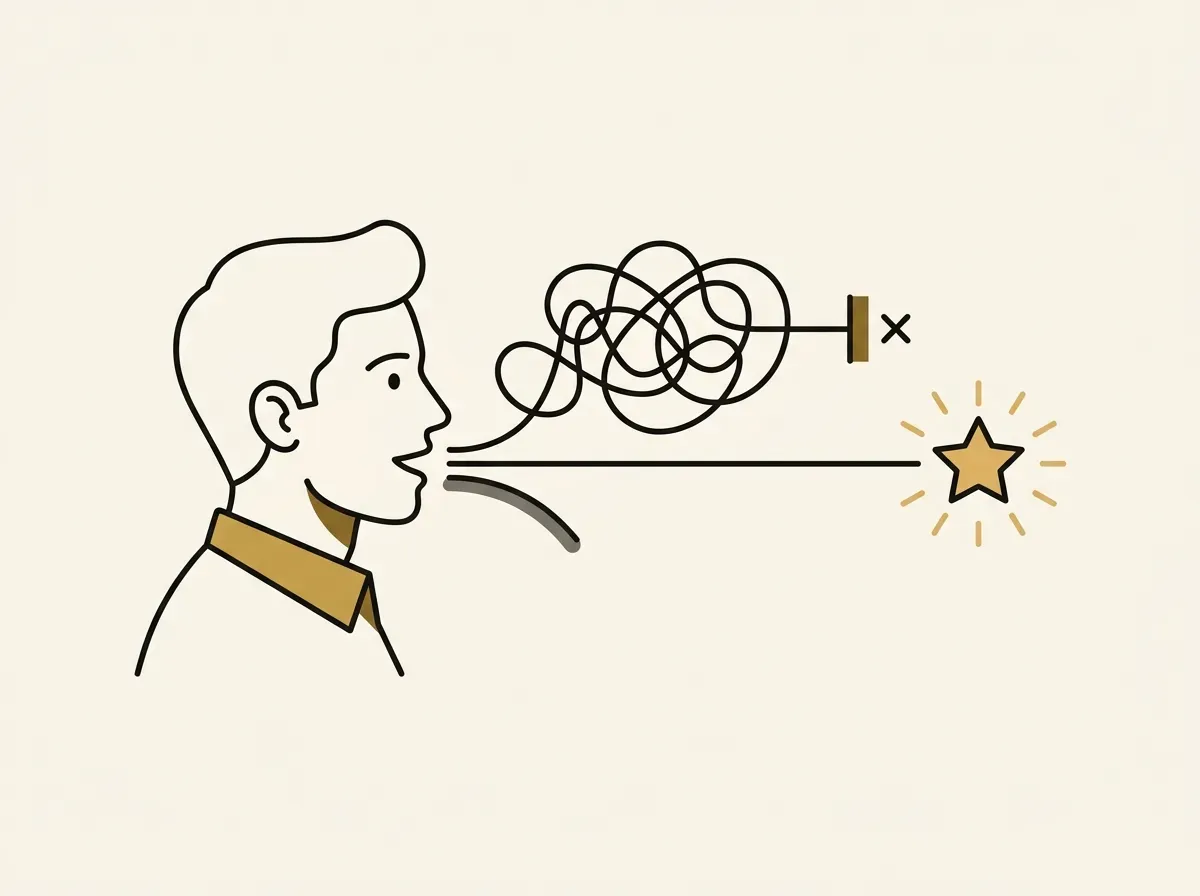
Run Customer Discovery Interviews at Scale
Successful customer discovery is not about finding someone to validate your idea. It is a disciplined search for the truth about a customer's problems. It depends on asking good questions to the right people and listening carefully to the answers. This process gives you the evidence needed to build a product that the market will actually pull from you.
Once you have your discovery questions, you can run AI-moderated interviews with Pulse to get research-grade answers from 100 customers by tomorrow morning. Find out what your customers really need. Try Pulse.
Frequently Asked Questions About Customer Discovery
How many customer discovery interviews are enough?
The right number depends on when you reach thematic saturation, the point at which new interviews stop revealing new themes. A 2017 study on saturation distinguished between "code saturation" (identifying most themes), which occurred at 9 interviews, and "meaning saturation" (understanding those themes deeply), which required 16 to 24 interviews. While there is no magic number, research shows that for discovery work, a sample size of 5 interviews is often not enough.
Should you pay participants for discovery interviews?
Yes, you should always compensate participants for their time, especially in a B2B context. As of September 2026, typical incentive rates for a 60-minute remote interview vary by seniority. A May 2026 guide from CleverX suggests rates from $150-$300 for individual contributors, $300-$500 for senior professionals, and $600-$1,500+ for C-suite executives. Fair compensation respects their expertise and dramatically reduces no-show rates.
What's the difference between customer discovery and user research?
Customer discovery is a specific type of user research that happens before a solution exists. Its goal is to validate the problem. Broader user research can happen at any stage of the product lifecycle. For example, usability testing and user feedback surveys are types of user research that evaluate an existing solution to find areas for improvement.